The Future of Spintronics: How Chiral 2D Materials Could Redefine Quantum Computing
Source PublicationSmall
Primary AuthorsLei, Campos‐Lendínez, Spasojevic et al.
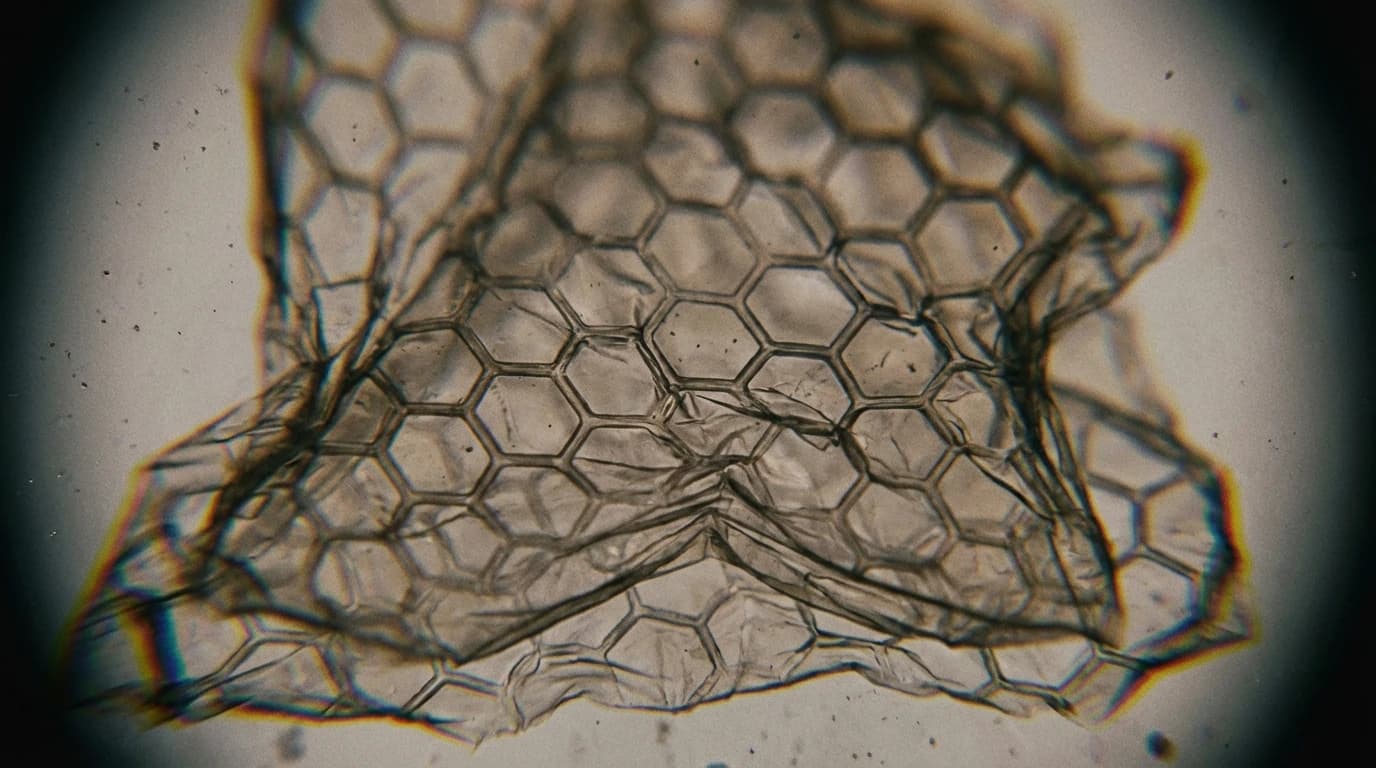
Computing relies on controlling electron charge, but advancing to quantum systems requires manipulating electron spin—a notoriously fragile property at room temperature. For years, scientists have struggled to impart a specific geometric twist, or chirality, to ultra-thin materials to filter these spins effectively. Now, a new laboratory study demonstrates that chiral 2D materials can break this bottleneck.
These results were observed under controlled laboratory conditions, so real-world performance may differ.
Why Chiral 2D Materials Matter Now
Quantum technologies demand stable, readable states to process information accurately. Traditional electronics simply move charges around, generating excess heat and hitting strict physical limits regarding miniaturisation.
Spintronics offers an elegant alternative by using the electron's magnetic spin—rather than its charge—to store and transmit data. However, finding materials that can reliably filter and hold these spins under ambient conditions has been an exceedingly difficult task for materials chemists.
The solution relies on the chiral-induced spin selectivity (CISS) phenomenon. When electrons pass through a twisted molecular structure, their spin aligns in a uniform direction. Until now, reliably building this three-dimensional twist into flat, two-dimensional structures was a major barrier for the industry.
Engineering the Spin Filter
In this study, researchers successfully modified a two-dimensional form of germanium known as 2D germanane. They attached chiral cysteine molecules directly to the material using targeted covalent bonds.
By connecting this newly functionalised material to a ferromagnetic electrode, the team measured its ability to control spin polarisation dynamically. They observed that altering the external magnetic field created two distinct, electrically measurable quantum states.
Furthermore, the study measured how swapping the exact mirror-image configuration of the cysteine molecules reversed the spin direction. This gives engineers a precise, on-demand method to tailor electron transport. It effectively proves that molecular engineering can dictate quantum behaviour at the material surface.
The Next Decade of Quantum Switches
This ability to write, erase, and read spin states at room temperature suggests a significant leap forward for computing hardware. Over the next five to ten years, chiral 2D materials could move from laboratory benches to commercial spintronic prototypes.
Currently, quantum computing often requires temperatures near absolute zero to maintain stable states. By proving that spin polarisation can be finely tuned under ambient conditions, this research offers a route to less resource-intensive hardware. The data suggests these engineered materials may enable:
- Highly efficient molecular switches that operate with minimal energy loss.
- More stable qubits for quantum information processing.
- Advanced spintronic devices that function reliably outside of extreme laboratory conditions.
Instead of relying on massive magnetic fields or complex cooling infrastructure, future devices could use these ultra-thin layers to process complex data. Tech companies and hardware developers will likely focus on scaling this synthesis method for commercial manufacturing.
If the integration of these materials with standard electrodes continues to show promise, it could completely alter how we approach data storage. By demonstrating precise control over electron spin, this research sets a clear trajectory for the next generation of computing architecture.