The Future of Cyanuric Acid Testing is Hiding in a Drop of Water
Source PublicationAnalytical Methods
Primary AuthorsCaspin, Mindlina, Sharon et al.
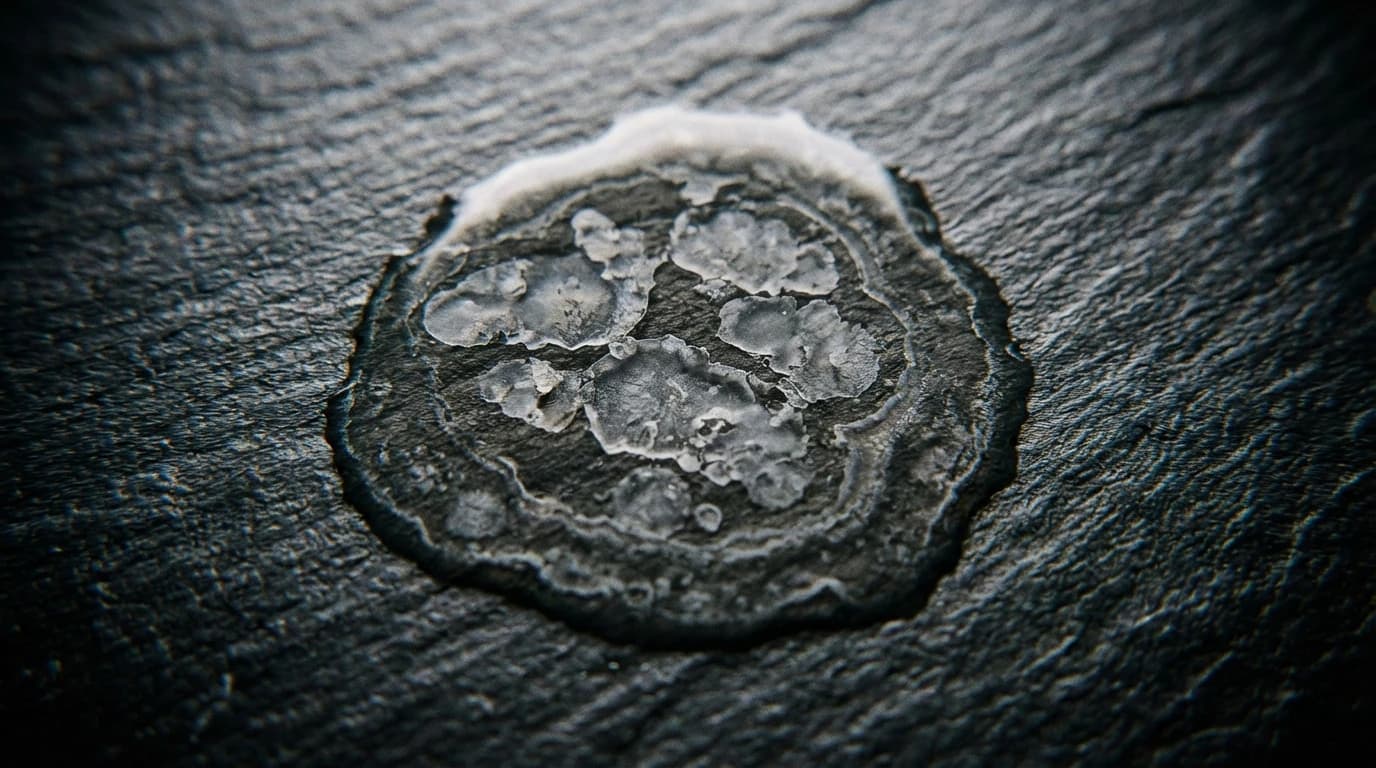
The Hook: The Invisible Thief's Footprints
Imagine trying to identify an invisible thief by the unique, frosty footprints they leave on a drying pavement. You cannot see the culprit directly, but the exact shape and spread of the tracks tell you precisely who they are and how heavy their loot is. This is exactly how a clever new method for water analysis works.
The Context: Why Cyanuric Acid Testing Matters
Cyanuric acid (CYA) is a common chemical used to stabilise chlorine in water systems. Keeping tabs on its levels usually requires chemical reagents and specialised lab equipment. Finding a cheaper, simpler way to monitor water quality is a major goal for environmental scientists.
Routine cyanuric acid testing is essential to ensure our water remains safe and properly sanitised. Until now, pulling this off without adding extra chemicals to the sample seemed nearly impossible.
The Discovery: Reading the Frosty Footprints
In a recent lab study, researchers found a way to measure CYA using nothing but a camera and a single drop of water. When a droplet of tap water containing CYA dries up, it leaves behind a specific, visible signature. The team measured these patterns by placing a 50-microlitre drop on a surface and letting it evaporate.
As the water vanishes, white, tree-like columns grow from the outer edge toward the centre. To make this work, the system relies on three simple elements:
- A consistent 50-microlitre droplet of the water sample.
- A basic optical camera set up with dark-field illumination.
- A deep learning algorithm trained to analyse the final dried pattern.
The AI looks at photos of the dried drops and calculates the exact concentration of CYA. The researchers successfully measured levels ranging from 0 to 120 parts per million.
The Impact: A Clearer Picture of Water Quality
This approach means we can skip the expensive chemical reagents entirely. It is compatible with normal chlorine levels used for water sanitation and works best in neutral to slightly acidic conditions.
The study suggests this technique could eventually make water testing highly accessible and incredibly cheap. While it currently takes about two hours for the droplet to dry at room temperature, the potential benefits are massive.
If scaled up, this method might allow anyone with a basic camera and a controlled lighting setup to test their water. It shows that sometimes, the smartest answers are hiding right in front of us.