The Dimmer Switch in Sporadic Alzheimer's disease: How We Might Turn the Lights Back On
Source PublicationNeurobiology of Disease
Primary AuthorsJiang, Saleem, Fisher et al.
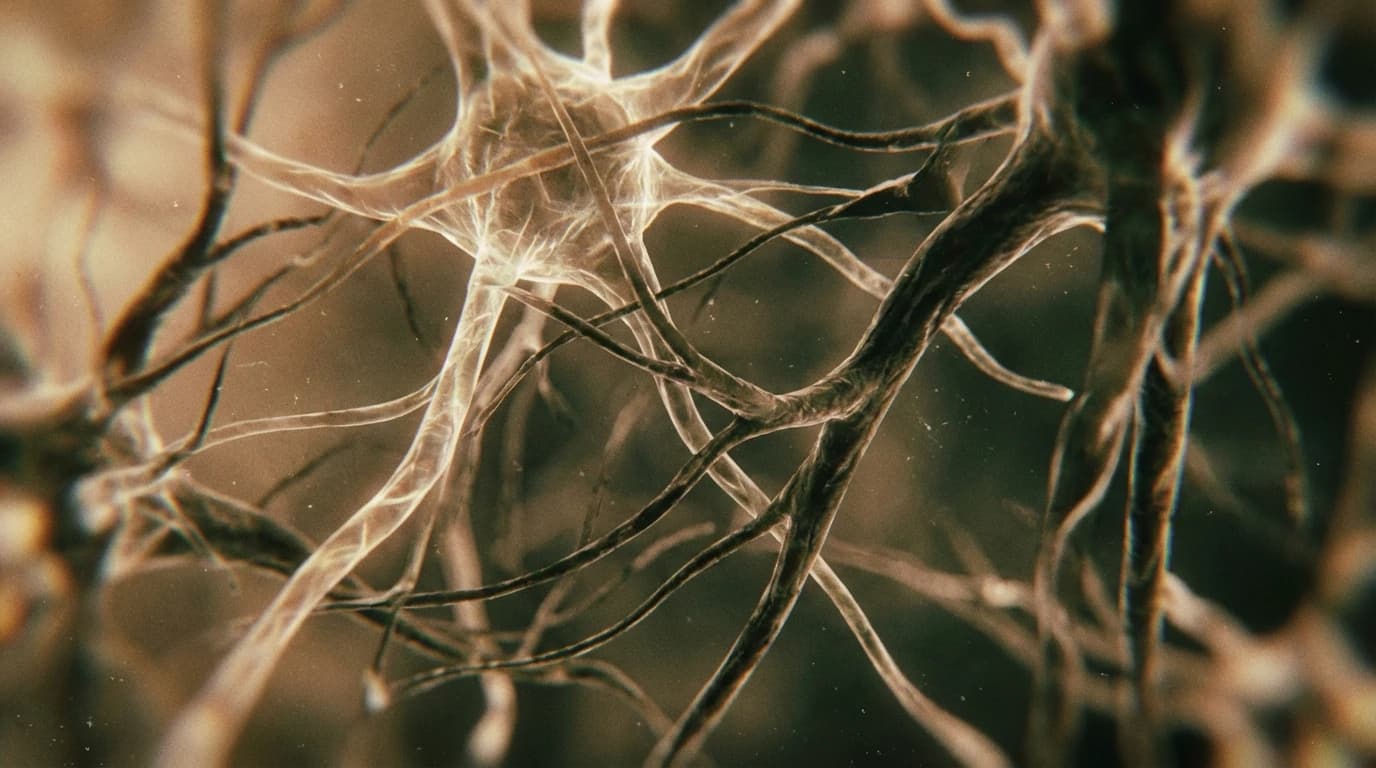
The City Grid of Sporadic Alzheimer's disease
Imagine your brain is a bustling city at night. Every neuron is a building, flashing its lights to send urgent messages across the skyline.
In a healthy brain, the signals are crisp, bright, and constant. But in Sporadic Alzheimer's disease, it is as if a rogue technician has sneaked into the city's central power station.
They have quietly turned down the master dimmer switch. The lights fade, the messages get lost in the dark, and the city's vast communication network starts to fail.
A Cellular Dimmer Switch
Most cases of dementia are not strictly inherited. They autumn under the umbrella of sporadic disease, occurring without a single, obvious genetic trigger.
Researchers have long known that brain cells in these patients lose their ability to chat with one another. The exact mechanism, however, has remained stubbornly hidden.
Recently, scientists recognised a suspicious character at the scene of the crime. An enzyme called SGK1, which typically flares up in response to cellular stress, appears in unusually high amounts in the brains of people with the condition.
Rebooting the Network in the Lab
To figure out what SGK1 was actually doing, researchers grew human brain cells in a laboratory. They took stem cells from four patients with the disease and four healthy controls.
Using precise chemical signals, they coaxed these samples into becoming mature cortical neurons. After letting these cells grow for over 100 days, the team measured their electrical activity.
The patient-derived neurons were incredibly sluggish. The researchers recorded significant drops in their voltage-gated sodium currents, which are the fundamental electrical charges cells use to communicate.
The frequency of their spontaneous signals also plummeted. The rogue technician had indeed dimmed the lights.
Then, the team applied a highly selective chemical inhibitor to block SGK1. The results were immediate and striking.
By stopping this specific enzyme, the sluggish neurons suddenly recovered their normal electrical buzz. The healthy control cells, meanwhile, remained completely unaffected by the treatment.
Turning the Lights Back On
This laboratory study measured direct changes in electrical currents, but it suggests something much larger. It indicates that elevated SGK1 might silence brain cells regardless of a patient's specific genetic background.
The research suggests several exciting possibilities for the future of neurology:
- Elevated SGK1 acts as a common biological bottleneck, driving electrical hypoexcitability.
- These defective transmissions can be captured in lab-grown cells decades before a patient shows clinical symptoms.
- Inhibiting this enzyme could offer a fresh pathway to restore synaptic transmission.
Catching these changes early is incredibly difficult in living human brains. By recreating the disease in a dish, scientists can watch the dimmer switch engage in real time.
If future drugs can stop this stress enzyme from turning down the power, we might just keep the brain's city lights burning bright.