The Clever Chemistry Making Covalent Adaptable Networks Tougher
Source PublicationAngewandte Chemie International Edition
Primary AuthorsRenner, Korotkov, Mühlbacher et al.
The Hook: The Kitchen Prep Station
Imagine a busy restaurant kitchen where chefs are frantically swapping ingredients between pots. In polymer chemistry, these chefs are catalysts, and they speed up the process of breaking and forming chemical bonds.
These results were observed under controlled laboratory conditions, so real-world performance may differ.
But there is a problem. When the kitchen gets too hot, these free-floating chefs tend to bail out and evaporate.
Now, materials scientists have found a clever fix. They tethered the chefs to heavy, immovable prep stations.
The chefs can still chop and swap ingredients just as fast. However, they can no longer run away, and those heavy prep stations actually help hold the kitchen walls up.
The Context: Fixing Covalent Adaptable Networks
This kitchen dilemma perfectly describes a challenge in developing covalent adaptable networks. These are smart plastics designed to heal themselves, change shape, or be easily recycled.
Unlike traditional plastics, covalent adaptable networks can rearrange their internal chemical bonds. To do this efficiently, they rely on chemical catalysts to speed up the bond-swapping process.
Typically, engineers use a liquid catalyst called TBD. While TBD is highly effective at its job, it is also highly volatile and tends to degrade or vanish when the material heats up.
The Discovery: A Two-in-One Additive
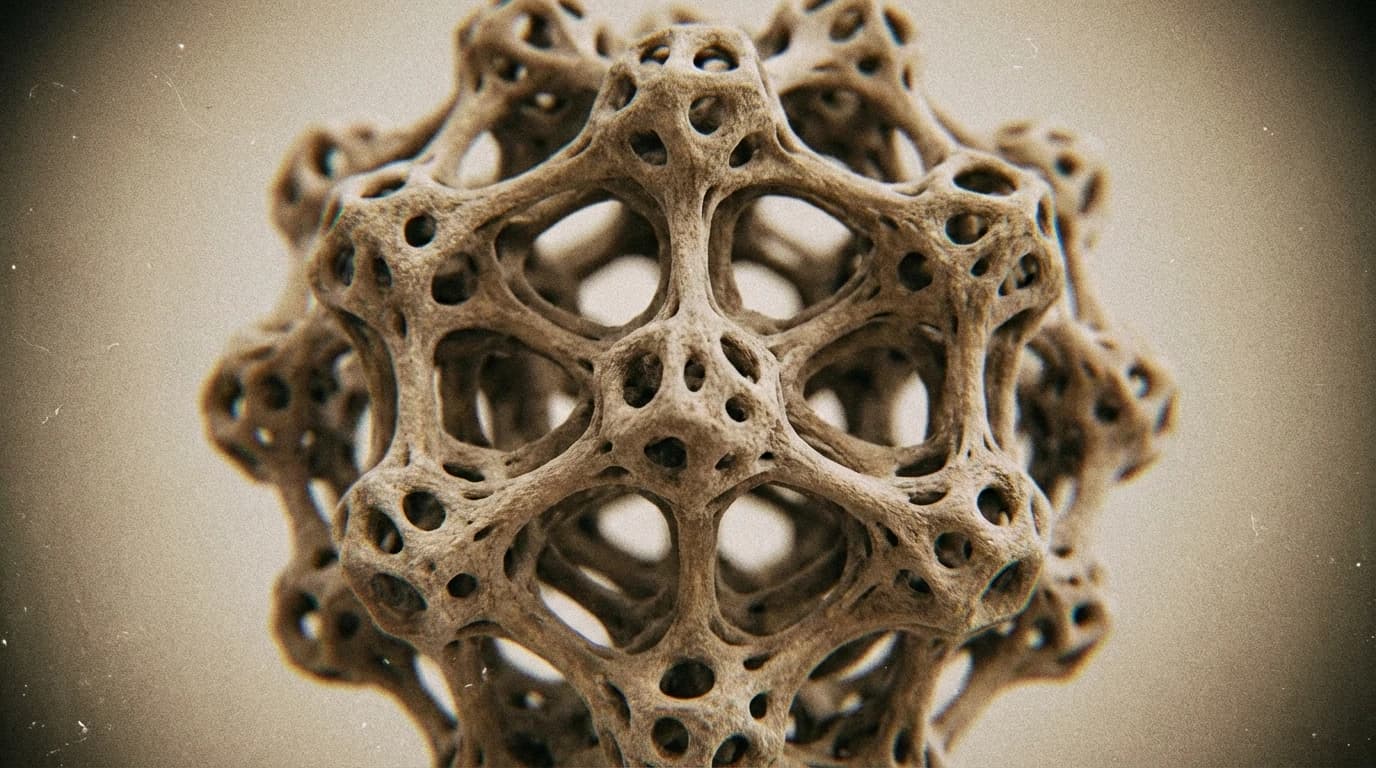
To keep the catalyst in place, researchers anchored TBD onto a metal-organic framework (MOF). You can think of a MOF as a microscopic, highly porous sponge.
When they tested this new hybrid additive, the results were highly encouraging. The tethered catalyst performed its primary job flawlessly while providing additional benefits.
The lab measurements revealed three distinct improvements over the old method:
- It catalysed bond exchanges just as effectively as the free-floating version.
- It demonstrated a 37 percent increase in thermal stability because the catalyst could no longer vaporise.
- The microscopic sponges acted as physical reinforcements, reducing material sag and increasing mechanical strength.
Instead of just acting as a chemical trigger, the catalyst system became an integral part of the material's skeleton.
The Impact: Smarter, Stronger Plastics
This dual-action approach solves two major engineering headaches at once. It provides the chemical speed needed for dynamic plastics while offering the physical toughness required for everyday use.
The findings suggest that this method could be scaled up for commercial manufacturing. Because the system is highly modular, engineers could swap in different catalysts or sponges depending on the specific plastic they want to create.
Future applications might include highly durable components for cars or aeroplanes that can repair their own microscopic cracks. By simply giving the chemical chefs a sturdy place to stand, we may soon see a new generation of resilient, recyclable materials.