The Chemical Ghost: Solving the Final Mystery of Nicotine Biosynthesis
Source PublicationCell
Primary AuthorsChang, Xu, Deng et al.
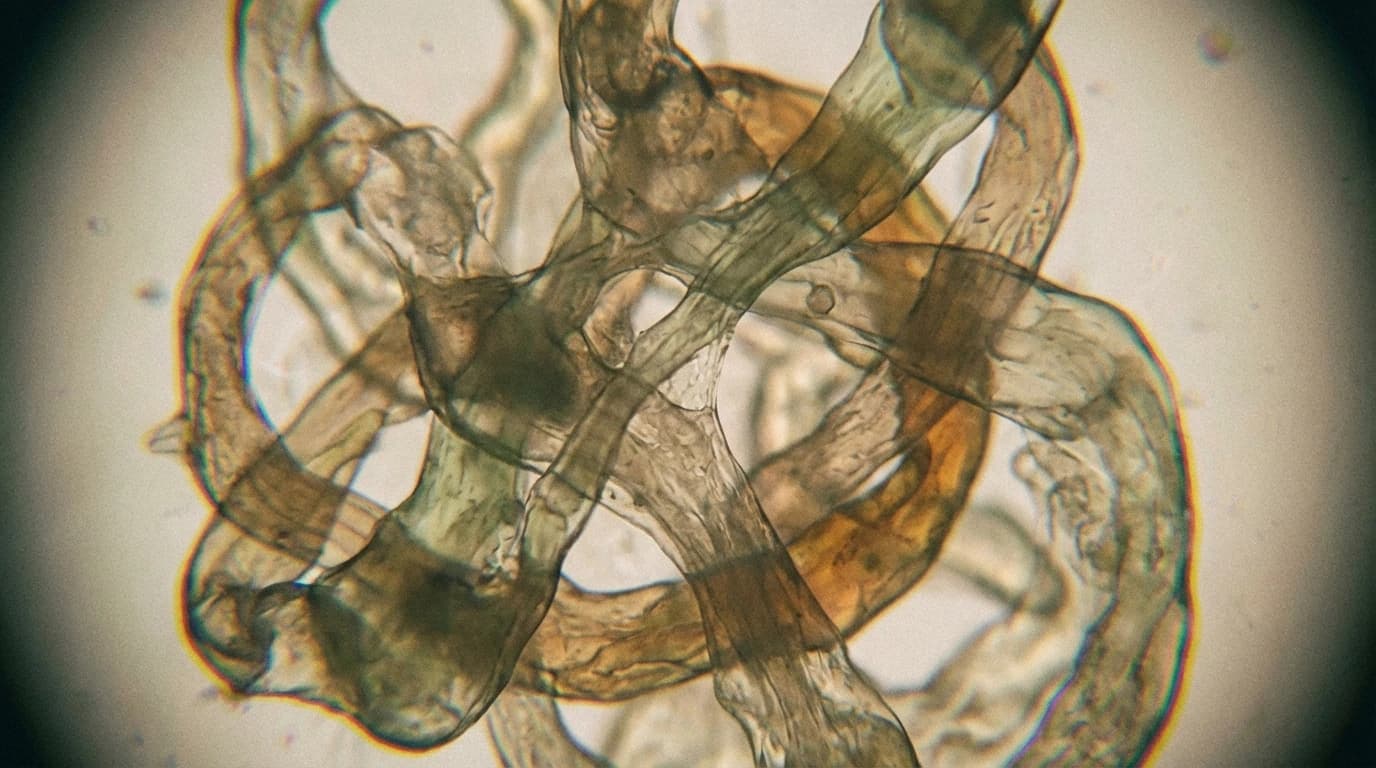
A wild tobacco leaf sits quietly under the brutal summer sun, appearing entirely defenceless against swarms of hungry caterpillars. Yet beneath its green, waxy surface, a microscopic chemical weapons factory operates at full capacity. For millions of years, this plant has manufactured one of nature’s most potent neurotoxins to paralyse and kill the insects that dare to feed upon it.
These results were observed under controlled laboratory conditions, so real-world performance may differ.
Scientists have long known the end product of this silent botanical warfare. But the precise assembly line—the exact sequence of molecular events that turns simple cellular raw materials into a highly addictive, insect-killing alkaloid—has remained stubbornly hidden. The plant's internal engineering kept its final secrets closely guarded.
This missing information has frustrated biologists for decades. Nicotine has shaped human agriculture, global economies, and public health in profound ways. We have harvested it, smoked it, and synthesised it for industrial pest control.
Despite our deep familiarity with the chemical itself, the biological mechanism was a black box. The difficulty lay in the final, volatile stages of the chemical reaction. Researchers knew the basic ingredients, but the exact enzymes required to force those molecules together without poisoning the plant itself eluded detection.
The Missing Link in Nicotine Biosynthesis
Now, a team of researchers has mapped the complete biological assembly line. They discovered that the plant uses a highly coordinated five-part molecular machine, known as a metabolon, to construct the chemical.
This complex structure gathers at the edges of the plant cell's storage compartments, known as vacuoles. Here, it carefully manages the volatile intermediate chemicals, acting as a secure biological containment facility.
The researchers measured the specific enzymes at work, detailing a process of precise chemical assembly. They observed that the molecules are temporarily stabilised by sugars, condensed through a specific chemical bond called a Mannich-like reaction, and finally stripped of their sugar to yield pure nicotine.
To prove their map was accurate, the team rebuilt this entire five-part machine both in test tubes and inside living cells. When they removed even a single component, the entire factory shut down, and nicotine production halted entirely.
Engineering Future Defences
This mapping does more than solve an old botanical mystery. By identifying exactly how tobacco plants manufacture and safely store their toxic defence, scientists can attempt to replicate the process elsewhere.
The study found that a specific transport protein, called a MATE transporter, is required to move the chemical safely across cellular boundaries. When the researchers introduced this complete transport and manufacturing system into other plant species in the laboratory, those heterologous plants successfully produced nicotine.
In doing so, those newly engineered plants gained natural pest resistance. While currently demonstrated at the bench scale, this suggests a new method for botanical engineering, as future systems could rely on these internal deterrents:
- Engineering pest resistance directly into other susceptible plant species.
- Providing a biological blueprint for understanding how plants manufacture other complex alkaloids.
- Revealing the fundamental mechanisms behind natural chemical scaffold formation.
The biological machinery that constructs nicotine offers a fascinating window into how plants build a wide variety of essential alkaloids. Nature’s oldest poisons, it seems, still have much to teach us about advanced chemical engineering.