The Chemical DNA of Zintl Thermoelectric Materials and the Future of Waste Heat
Source PublicationChemical Society Reviews
Primary AuthorsLi, Shi, Li et al.
"Imagine a busy motorway where cars, representing electrons, zoom past without traffic jams. However, the road itself is made of thick shock absorbers that stop earthquakes, representing heat vibrations, from travelling along it."
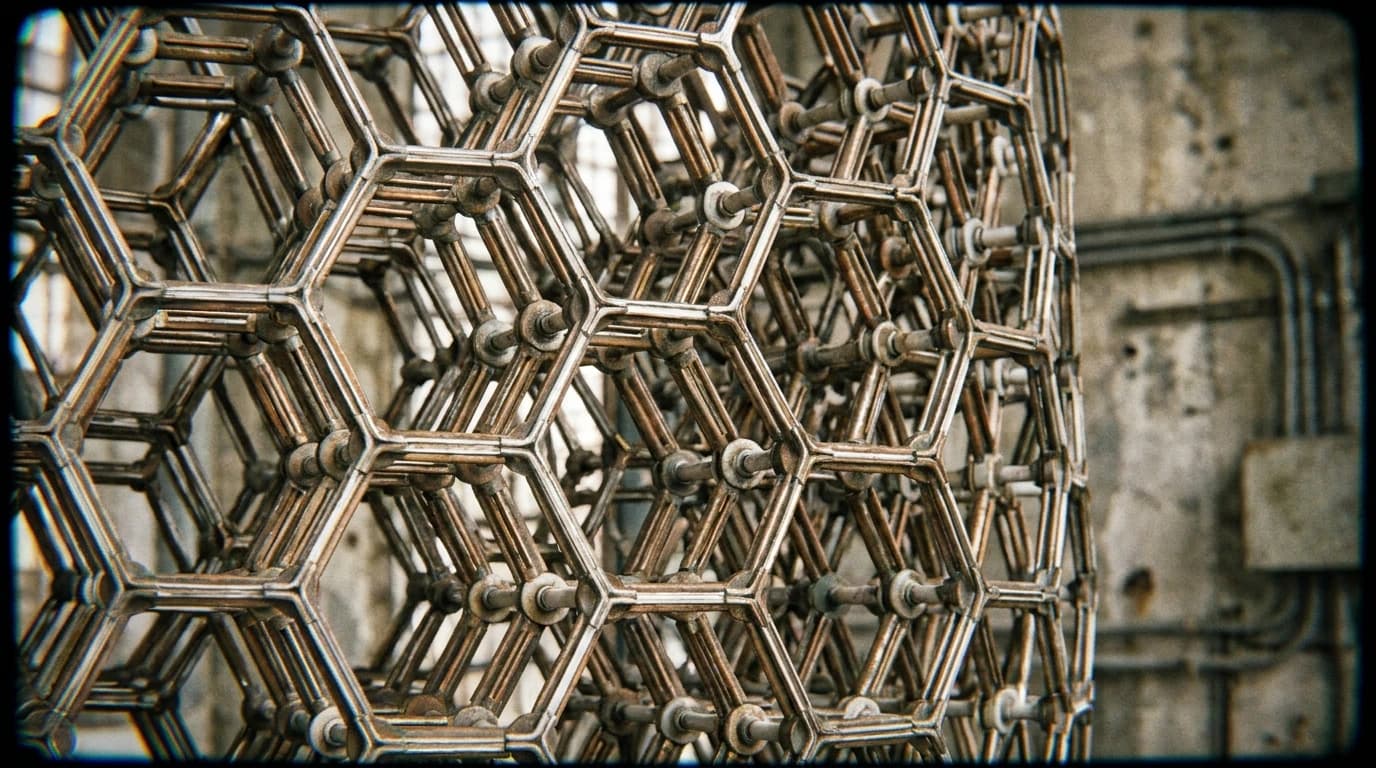
Is there a hidden elegance in the chaos of biological design? When we look at living things, we often see a messy but highly functional system, built from a genetic code that thrives on adaptation. We can ask the same question about the inorganic building blocks of our physical world. Every material harbours a kind of chemical DNA, an atomic arrangement that dictates its behaviour.
These results were observed under controlled laboratory conditions, so real-world performance may differ.
Right now, humanity wastes an enormous amount of energy. Car engines, computer servers, and industrial factories generate heat that simply vanishes into the air. What if we could capture that waste heat and turn it directly into usable electricity?
The Chemical Genome of Zintl Thermoelectric Materials
This is where thermoelectric technology comes in. Devices made from these materials can convert heat into electricity, or use electricity to create solid-state cooling without any moving parts. Among the many options available, researchers are closely examining one specific family of compounds. The recent scientific review systematically evaluates Zintl thermoelectric materials, tracking their progress from basic chemistry to practical engineering.
These materials are highly unusual. They rely on a mixture of ionic and covalent chemical bonds. This mixed bonding creates what scientists call a phonon-glass electron-crystal effect. In plain English, the material acts like a highly ordered crystal for electrons, allowing electrical current to flow freely. At the same time, it acts like disordered glass for phonons, which are the tiny vibrations that carry heat. Heat gets trapped, but electricity keeps moving.
Let us take a brief philosophical detour. Consider how evolution uses genomic organisation in living creatures. A biological genome arranges DNA to balance rigid structural defence with flexible, adaptive behaviour. Nature organises this genetic information to ensure survival in harsh environments. In a very similar way, the atomic lattice of a Zintl compound acts as its structural genome. Its internal organisation perfectly balances two opposing physical forces: high electrical conductivity and high thermal resistance. Why would nature organise a material's chemistry this way? Because this specific, heterogeneous arrangement of atoms naturally resists the flow of heat while giving electrons a clear path, much like an evolved organism perfectly adapted to survive a specific challenge.
Engineering the Atomic Lattice
The researchers evaluated how these structural characteristics shape the material's properties, focusing heavily on Mg3(Sb,Bi)2-based compounds. The review suggests that by intentionally tweaking this chemical genome, we can dramatically improve performance. Scientists are currently testing various optimisation strategies. They are engineering the band structure and deliberately introducing tiny defects to control how electrons and heat move through the material.
However, the study notes several practical hurdles. While the lab results are promising, these compounds must remain chemically stable at high temperatures. They also need greater mechanical reliability before they can be used in everyday engines or power plants. Mass manufacturing and interface engineering remain significant challenges.
If researchers can solve these issues, the implications are massive. Mastering this atomic programming could lead to completely silent refrigerators and self-powered sensors that run entirely on the waste heat of their surroundings.