The Carbon Cage: Refined Synthesis of Fullerene-Fused Tetrahydropyridines
Source PublicationOrganic Letters
Primary AuthorsGuo, Zhou, Qiu et al.
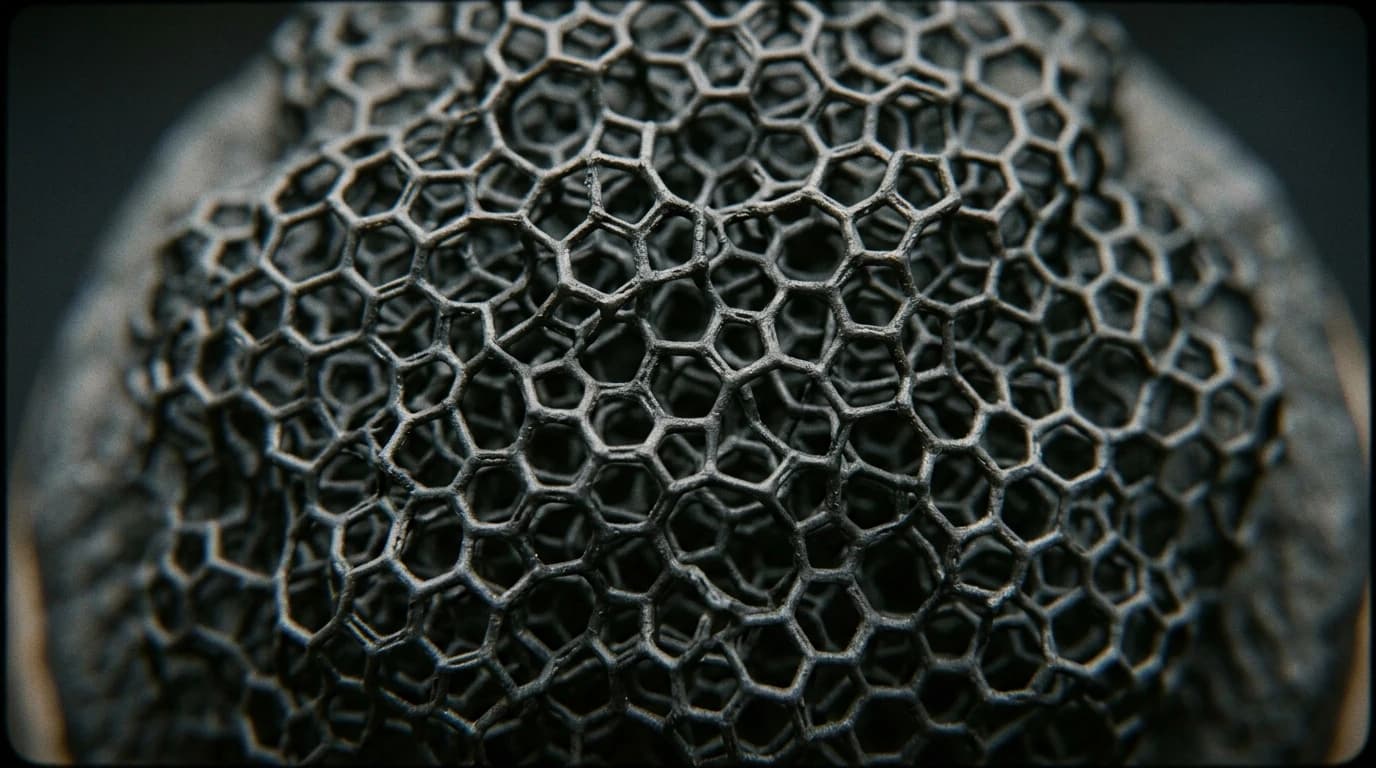
Inside a vibrating steel chamber, the clatter of microscopic collisions replaces the hiss of boiling solvents. For decades, chemists struggled to functionalise the [60]fullerene—a hollow carbon sphere resembling a football—without relying on toxic metal catalysts or expensive ligands. The sphere's perfect symmetry is its own prison, resisting the chemical bonds that would turn it from a curiosity into a tool.
These results were observed under controlled laboratory conditions, so real-world performance may differ.
In the quest for renewable energy, the interface between materials is where the battle for efficiency is won or lost. Perovskite cells, the rising stars of renewables, often lose power at the junctions where materials meet. While fullerene derivatives can bridge these gaps, their production has historically been environmentally taxing and technically difficult.
The Mechanics of Fullerene-Fused Tetrahydropyridines
The challenge lies in the nitrogen. To integrate this element into the carbon structure, researchers typically require high temperatures and aggressive reagents. However, a new study demonstrates that magnesium nitride and chalcones can be fused directly to the sphere through ball-milling. This mechanical approach forces the molecules to react through kinetic energy, bypassing the need for traditional liquid-phase chemistry.
The resulting fullerene-fused tetrahydropyridines emerge from a process that is both cleaner and more efficient. By eliminating the need for precious metal catalysts, the method reduces the environmental footprint of carbon-based semiconductors while using readily available starting materials.
Powering the Perovskite Future
The utility of these molecules extends beyond the laboratory bench. When one of these synthesised products was applied as an interlayer within a perovskite solar cell, it acted as a molecular bridge. This layer smoothed the flow of electrons, which the study measured as a distinct increase in power conversion efficiency.
These molecules do not merely sit between layers; they actively facilitate the movement of charge, preventing the energy loss that plagues current hardware. This mechanical synthesis suggests a future where high-performance solar components are manufactured through friction rather than fire. As we seek to decarbonise the grid, these carbon-fused structures may provide the structural integrity required for long-lasting, high-yield renewable energy.