Surviving Volcanoes: The Strange Secret Behind Fern Genome Evolution
Source PublicationSpringer Science and Business Media LLC
Primary Authorschang, DAI, Wang et al.
Imagine Your DNA is a Restless Editor
Imagine your genetic code is a massive instruction manual for building a house. Most chapters stay exactly where they are. But imagine certain paragraphs have a mind of their own, physically cutting themselves out and pasting themselves onto random pages.
Note: This article is based on a preprint. The research has not yet been peer-reviewed and results should be interpreted as preliminary.
Sometimes, these restless paragraphs ruin the instructions entirely. Occasionally, however, they accidentally create a brilliant new design, like adding a reinforced roof to survive a severe storm.
In genetics, these jumping paragraphs are called Transposable Elements (TEs). A fascinating new study suggests these jumping genes are the secret behind fern genome evolution.
The Mystery of the Lava Fern
Ferns are ancient survivors. They thrived long before dinosaurs walked the Earth. Yet, scientists still know surprisingly little about how their DNA adapts to extreme environments.
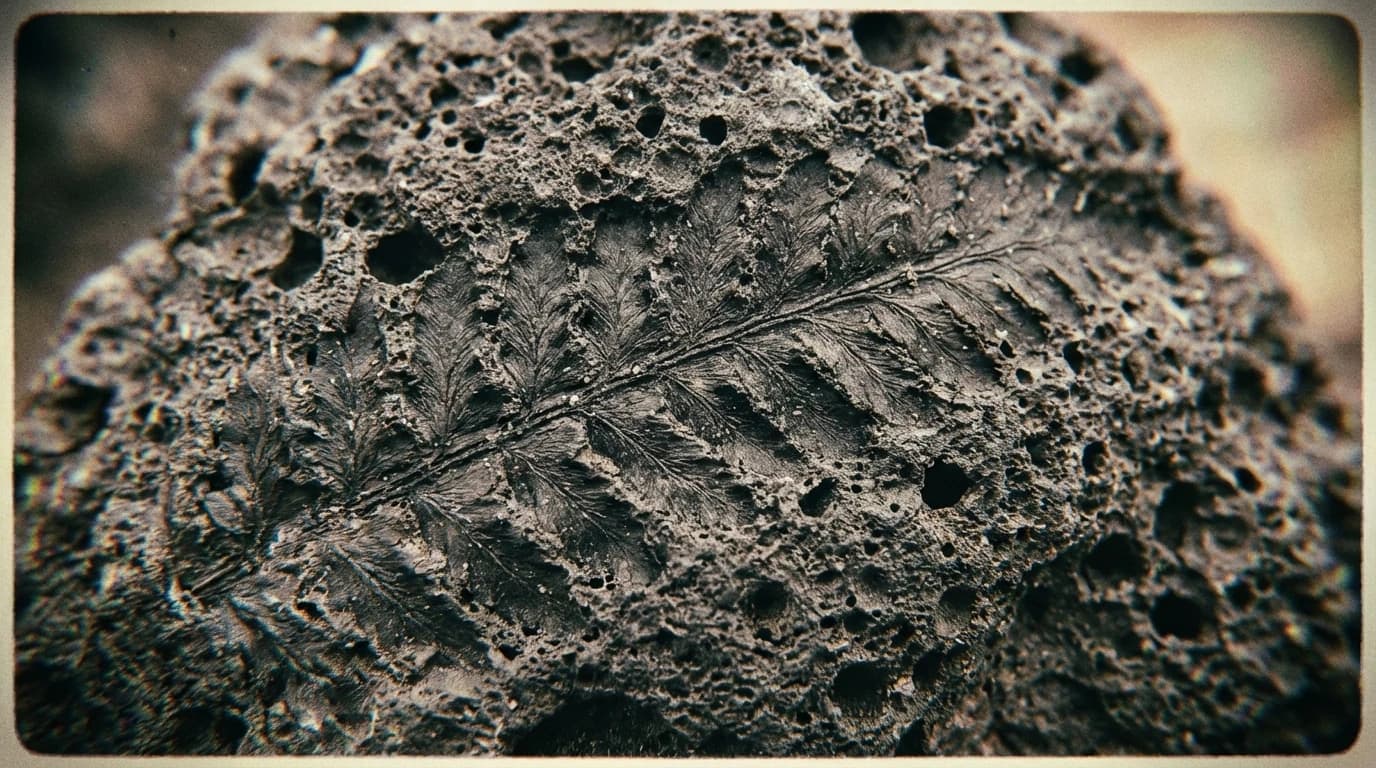
Enter Dryopteris fragrans, a remarkably tough plant. This specialist fern grows directly in sun-exposed volcanic-lava habitats, adapting to an environment that would destroy most other vegetation.
Researchers wanted to know how this plant manages to live in such a hostile place. To find out, they mapped its entire genetic blueprint. They looked for massive structural changes, expecting the fern to have duplicated its entire genome—a common survival trick in the plant world.
Decoding Fern Genome Evolution
The researchers did not find any recent whole-genome duplication. Instead, their measurements revealed that the jumping genes, or TEs, were doing the heavy lifting.
In this study, scientists tracked exactly what these restless elements did to the fern's DNA. They found that the TEs actively reshaped the plant's survival instructions in three distinct ways:
- They stretched out specific genes by forming unusually long introns.
- They inserted themselves into promoters, altering how loudly a gene expresses itself.
- They increased alternative splicing, allowing one gene to produce multiple different proteins.
Essentially, the jumping genes randomly edited the manual until the fern became perfectly adapted to volcanic rock.
What This Means for Plant History
While these exact mechanisms have currently only been mapped in the D. fragrans strain, the data strongly suggests that TEs are not just genetic junk.
Instead, they could be the primary engine driving non-seed plant adaptation. When the environment gets tough, these plants might rely on internal genetic chaos to find a solution.
This deepens our understanding of how early life conquered dry land. It shows that sometimes, survival requires letting your genetic code rewrite itself.