Sunlight and the Surprising Microplastics Effects on Marine Zooplankton
Source PublicationEnvironmental Pollution
Primary AuthorsLi, Tang, Liu et al.
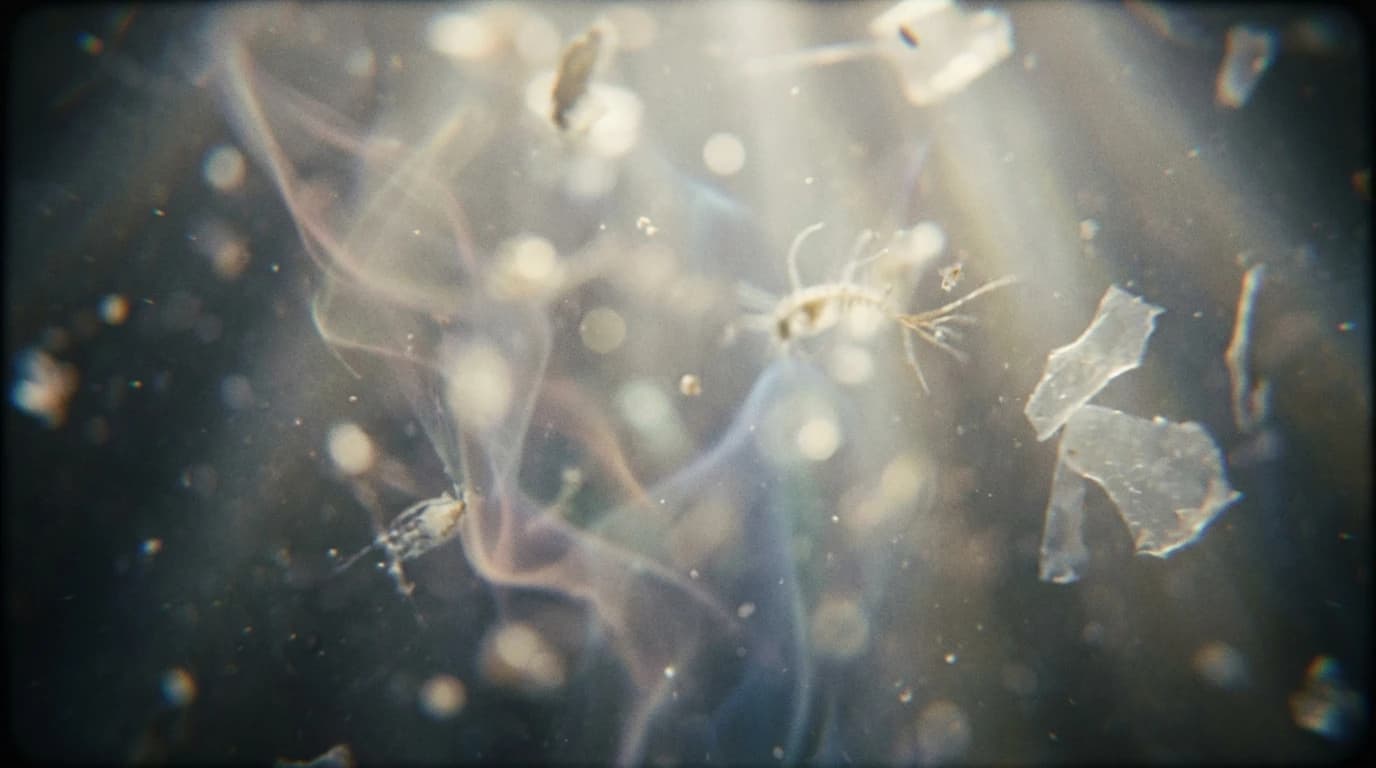
Do environmental stressors always stack like bricks? We tend to assume that if you add pollution to radiation, the result is a simple, catastrophic sum. Yet, nature is rarely so linear. A fascinating new laboratory study challenges this additive assumption, revealing a counter-intuitive interaction between ultraviolet radiation and plastic pollution.
The researchers focused on Brachionus plicatilis, a type of rotifer and a staple of the marine food web. They introduced polymethyl methacrylate (PMMA) microplastics alongside natural levels of UV-B radiation. Logic suggests the rotifers would suffer doubly. They did not.
Unpacking Microplastics Effects on Marine Zooplankton
Instead, the team observed an antagonistic effect. The UV-B radiation appeared to interfere with the toxicity of the plastics. But how? It wasn't that the radiation neutralised the plastic chemically; rather, it altered the behaviour of the rotifer itself.
Under the glare of UV-B, the zooplankton slowed down. The study measured a distinct decrease in filtering and feeding rates. Essentially, the radiation stressed the organisms enough that they lost their appetite. Because they were eating less, they ingested fewer microplastics from the water and their food source, Chlorella. The data indicated decreased bioconcentration and biomagnification factors in the UV-exposed groups.
It is a grim sort of irony. The rotifers were spared the full brunt of plastic accumulation only because another stressor inhibited their natural feeding mechanisms. The researchers also noted that UV-B activated specific apoptotic (cell death) processes and enhanced antioxidant defences, suggesting a complex physiological trade-off.
This complicates our understanding of the ocean's upper mixed layer. While we often model microplastics effects on marine zooplankton in isolation, this research suggests that in the wild—where sunlight is omnipresent—the uptake of plastics might differ significantly from dark laboratory controls. It is a reminder that in ecology, sometimes one poison limits the intake of another.