Solar system formation: Irradiation model challenges the CO photodissociation hypothesis
Source PublicationScientific Publication
Primary AuthorsDominguez, Lucas, Tafla et al.
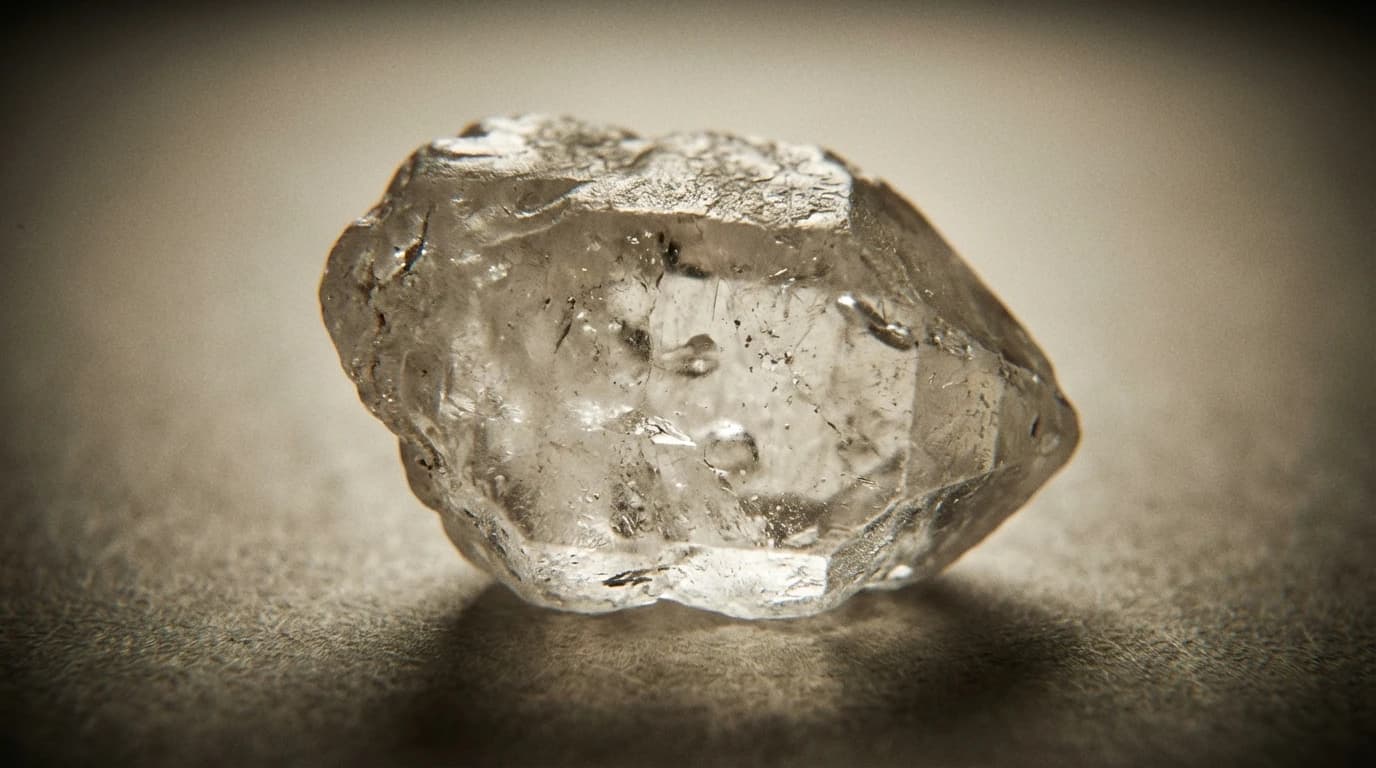
Energetic particle irradiation of silicate dust facilitates a rapid, low-temperature exchange of oxygen isotopes, potentially resolving a major chronological inconsistency in planetary science. Historically, reconciling the isotopic composition of the Sun with that of terrestrial bodies has been a persistent stumbling block in our understanding of solar system formation.
These results were observed under controlled laboratory conditions, so real-world performance may differ.
The central puzzle is the distribution of oxygen-16 ($^{16}$O). The Sun is rich in it; Earth, Mars, and asteroids are not. For years, the favoured explanation has been 'selective photodissociation'. This theory suggests that ultraviolet light from the young Sun broke apart carbon monoxide gas in the protoplanetary disc, creating a reservoir of heavy-oxygen water. While chemically sound, this model is logistically fraught. It requires this specific water to form in the cold outer solar system and then travel inward to react with dust grains. This implies finely tuned mixing timescales that must align perfectly with the disc's fluid dynamics.
Technical contrast: Gas transport vs. solid-state damage
The distinction between the established theory and the new proposal is stark. The 'selective photodissociation' model is a transport-heavy hypothesis; it demands that oxygen-depleted water be created in the outer system via UV interaction with CO gas, then migrated inward to react with dust. It is a logistical challenge involving fluid dynamics and timing. In contrast, the newly proposed 'irradiation-induced exchange' is a local, physical process. High-energy particles bombard silicate grains (SiO$_2$), disrupting their crystalline order. This structural damage renders the mineral chemically active, permitting an isotopic swap with water ice at near-absolute zero temperatures (10 K). Efficiency replaces transport; the alteration occurs where the dust sits, driven by the young Sun’s activity rather than fluid mixing.
In laboratory settings, the researchers demonstrated that irradiating SiO$_2$ and Al$_2$O$_3$ creates sufficient defects to allow this anomalous exchange with water ice. The magnitude of the shift ($Δ^{17}$O) observed in the lab matches the depletion seen in terrestrial bodies. When applied to an astrophysical model, the data suggests this process could occur rapidly—within 10 to 100 years—during the Sun's active T-Tauri phase. This timeframe is significantly tighter than the slow migration required by the CO photodissociation model.
Implications for solar system formation timelines
If valid, this model neatly explains the composition of Calcium-Aluminium-rich Inclusions (CAIs). These are the oldest solids in the solar system and remain enriched in $^{16}$O. Under the new hypothesis, CAIs formed before the irradiation process peaked or were resistant to the damage, preserving the Sun's original isotopic signature. Conversely, later-forming chondrules and bulk solids were exposed to the particle flux, resulting in the $^{16}$O depletion we measure today. While the laboratory results confirm the mechanism is physically possible, the model relies heavily on assumptions regarding the intensity and geometry of cosmic rays in the early solar nebula. It trades the uncertainty of gas transport for the uncertainty of radiation exposure levels.