Chemistry & Material Science5 March 2026
Slowing Down Sunlight: A New Reactor Design for Photochemical Synthesis
Source PublicationACS Applied Materials & Interfaces
Primary AuthorsLiu, Wang, Yang et al.
These results were observed under controlled laboratory conditions, so real-world performance may differ.
The Bottleneck in Photochemical Synthesis
Standard photomicroreactors already provide excellent mass transfer and fairly uniform light distribution across chemical batches. However, conventional designs face strict boundaries when it comes to actively manipulating light fields. The inherent optical properties of standard construction materials severely restrict wavelength-specific activation. Because conventional reactors cannot easily localise or amplify photon density, the potential for driving highly efficient photochemical transformations remains constrained.Slowing Down the Photons
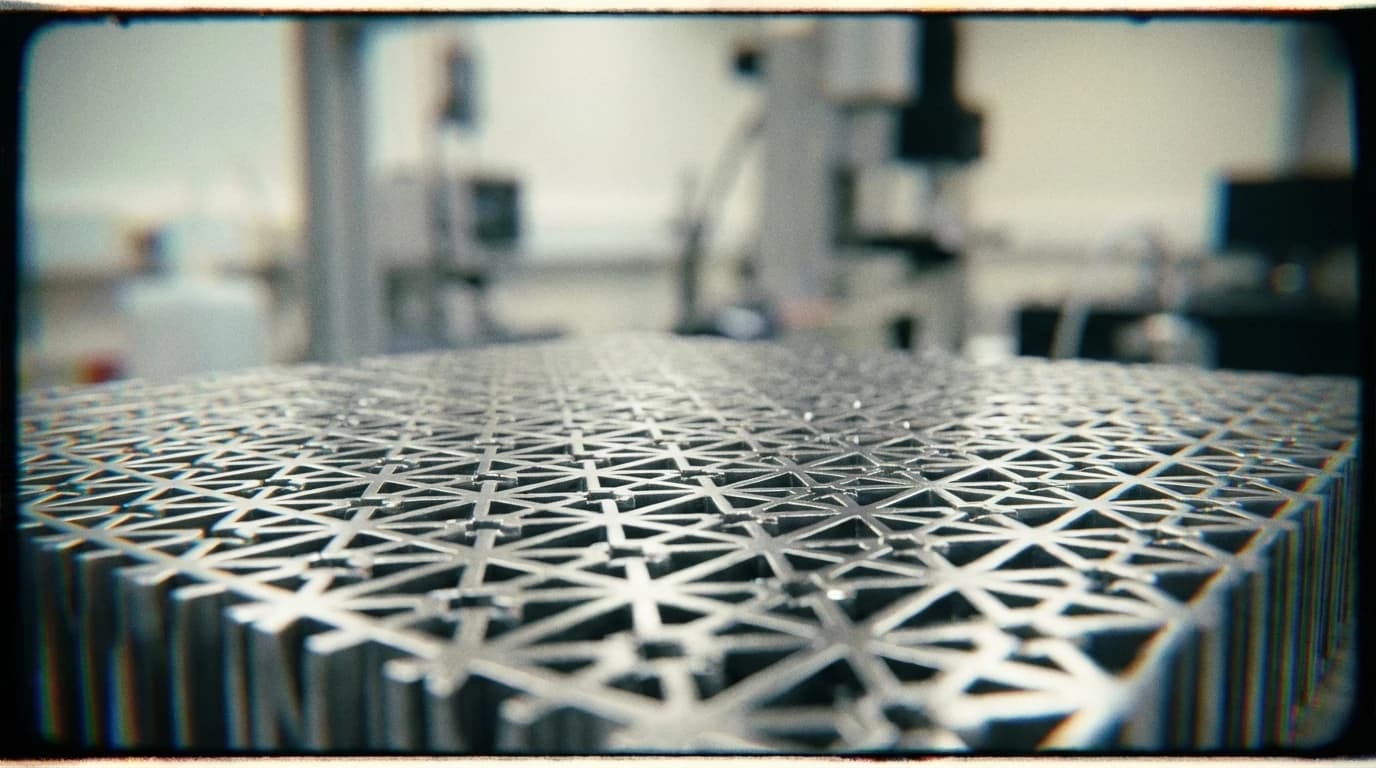
To address this limitation, the research team designed a photonic-crystal-integrated photomicroreactor (PC-PM). They embedded active photonic crystals directly within the microreactor architecture. This new design exploits the 'slow-light effect' to selectively enhance localised photon density. By physically slowing the transit of specific, targeted wavelengths of light, the PC-PM artificially prolongs the light-matter interaction. The study measured a strict 20% increase in chemical yield when the PC-PM was tested against conventional reactors under real sunlight irradiation.Current Limitations and Unknowns
Despite the clear yield improvement, a rigorous assessment requires acknowledging the scope of the current data. The researchers measured performance under specific sunlight conditions to establish this proof-of-concept. Because the evidence is currently limited to this specific reactor design and testing environment, further validation is necessary to determine how broadly this precise photon management strategy can be applied across different classes of photochemical transformations.Future Implications for Fine Chemicals
This methodology suggests a viable model for entirely solar-powered chemical production. The ability to manage individual photons precisely could alter how the industry approaches the creation of high-value-added fine chemicals. Future applications of this exact technology may include:- More efficient, solar-driven synthesis of fine chemicals.
- The development of highly specific, wavelength-targeted photoreactors.
- New paradigms for high-efficiency photon management in chemical engineering.