Sleep Deprivation and Memory: Visualising the Structural Decay of the Mind
Source PublicationSLEEP
Primary AuthorsBalendran, Liu, Wu et al.
For decades, the search for therapies to arrest cognitive decline has stagnated. We observe the outcome—dementia, confusion, the erasure of self—but the precise mechanical failures within the neural circuit have remained obscured by our inability to see them. We treat the smoke, not the fire. This limitation has left drug discovery programmes wandering in the dark, guessing at targets rather than aiming at verified structural breaks.
Sleep Deprivation and Memory: The Physical Toll
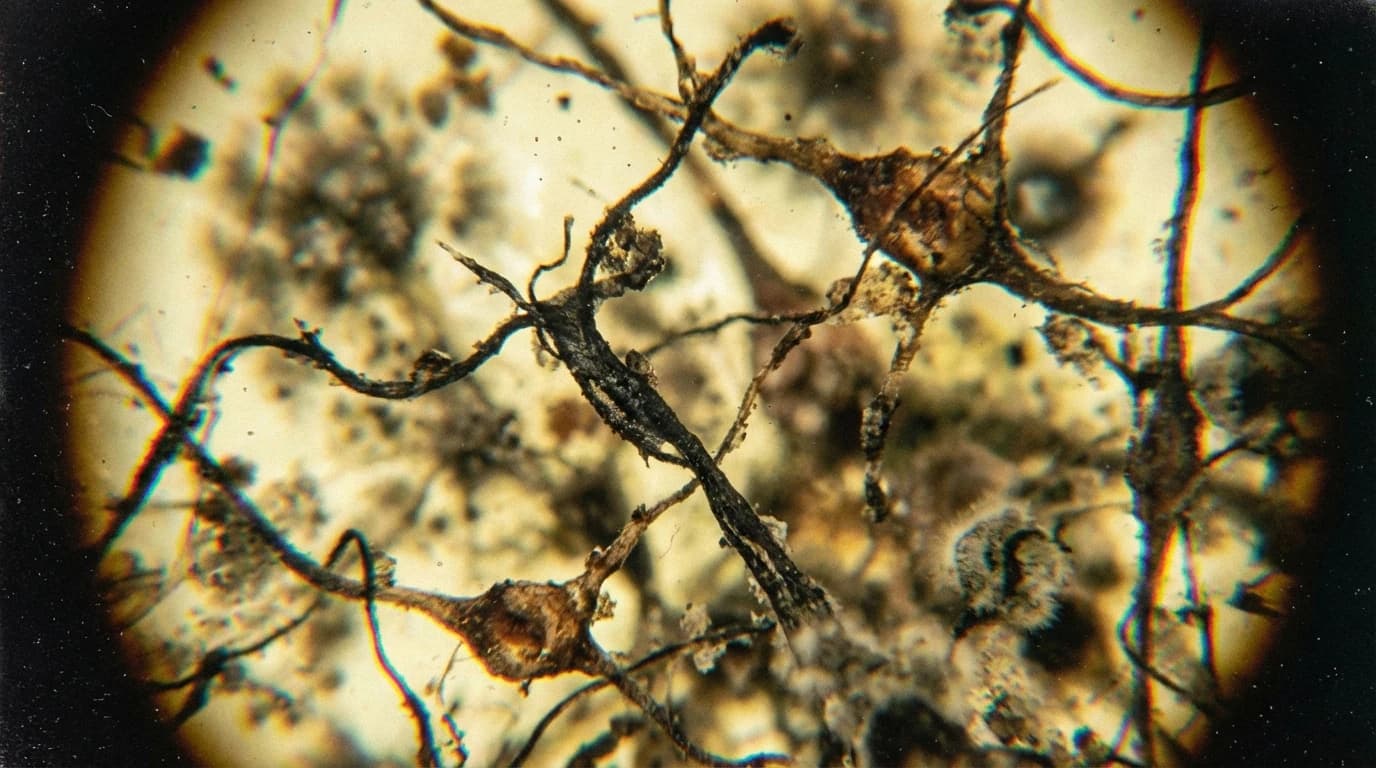
New research is finally lighting up the dark room. By employing Brainbow 3.0, a multicolour genetic labelling tool, scientists have mapped the immediate fallout of sleeplessness on the brain's architecture. The focus here is specific: SST+ interneurons in the entorhinal cortex (EC). These cells act as the gatekeepers for the hippocampus. When the gatekeepers fail, the memory fails.
The findings are stark. Following a learning event involving fear conditioning, male mice were either allowed to sleep or kept awake. In the sleep-deprived group, the cellular machinery did not merely pause; it degraded. In the lateral EC, the dendritic spines—tiny protrusions that receive signals—shrank significantly. In the medial EC, the density of these spines dropped altogether. It is not subtle. The hardware of the brain is physically altering in the absence of rest.
Epistemically, we must distinguish the observation from the implication. The study measured a reduction in spine size and density, alongside a drop in cFos expression (a marker of cellular activity) within SST+ interneurons. These data suggest that sleep loss disrupts the delicate balance between excitation and inhibition. Without this equilibrium, the hippocampus receives garbled signals, potentially explaining why sleep deprivation and memory loss are so tightly bound clinically.
The Trajectory of High-Fidelity Mapping
This application of Brainbow 3.0 signals a shift in how we approach genomic medicine and drug discovery. We are moving from systemic guesses to circuit-level precision. If we can identify the specific interneuron subtypes that wither without sleep, we can design molecules to protect them.
Consider the wider implication for pharmaceutical development. Currently, we throw broad-spectrum chemicals at the brain. Future tools, evolved from this genetic labelling capability, could allow us to screen drugs based on their ability to maintain spine density in the EC during stress. We are looking at a future where we do not just chemically sedate the brain to induce sleep, but actively reinforce the structural integrity of memory circuits against the wear and tear of consciousness.