Simulating Quantum Noise: An Early Look at Nitrogen-vacancy centers in Diamond
Source PublicationSpringer Science and Business Media LLC
Primary AuthorsLópez-García, Vasilakou, Cerrillo
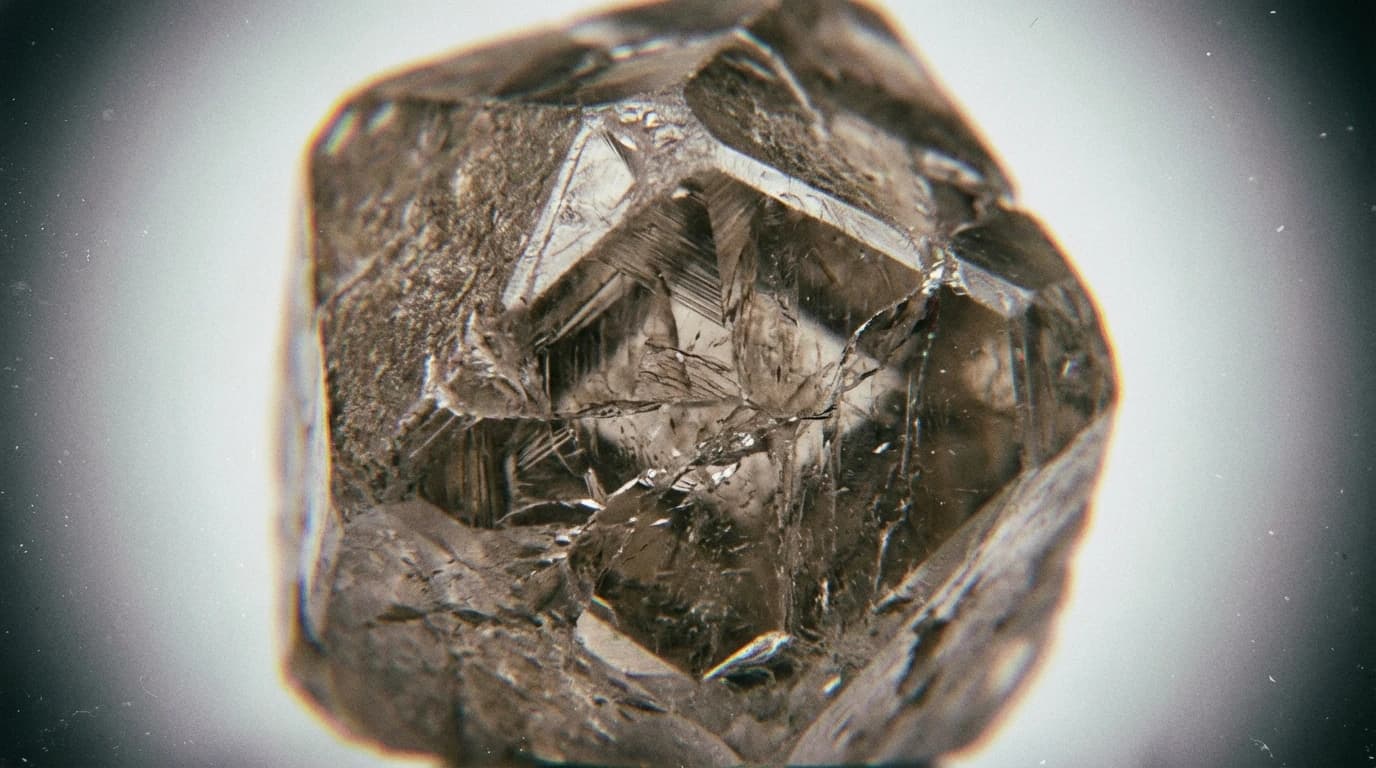
Researchers have successfully used a quantum computer to simulate how atomic impurities disrupt nanoscale sensors, specifically focusing on Nitrogen-vacancy centers in diamond. Historically, predicting this quantum noise has proved exceptionally difficult because traditional computers fail to process the rapid mathematical expansion of interacting quantum states.
In a new preliminary study, scientists outline an early-stage method to model the behaviour of these defects. While they act as highly sensitive quantum sensors, surrounding spin impurities frequently degrade their precision.
Understanding Nitrogen-vacancy centers and Quantum Noise
Previously, physicists relied on classical computers to model how external noise affected quantum sensors. However, classical systems quickly choke on the mathematics of many interacting spins, an issue known as the rapid exponential growth of the Hilbert space.
To bypass this computational bottleneck, the researchers turned to quantum hardware. By using two superconducting transmon qubits—one acting as the sensor and the other as a single spin impurity, modelling either a nuclear spin or an additional defect—they built a direct physical simulation of the problem rather than a purely mathematical one.
Measuring the Impurity
The team applied quantum state tomography to measure the exact states of the two-qubit system. They specifically simulated benchmark protocols, such as Ramsey and Hahn-echo sequences, to observe the mechanics of the noise.
Through these protocols, the researchers measured how different spin-sensor coupling regimes altered the system's coherence over time. The data confirmed the presence of quantum entanglement between the simulated sensor and the impurity using the Peres-Horodecki criterion.
Interestingly, while the researchers also analysed entanglement generation using CHSH inequalities, they observed no violation. Despite this lack of CHSH violation, the overall presence of entanglement was still confirmed.
Current Limitations and Unsolved Problems
Despite the rigorous experimental design, this study strictly modelled a simplified two-spin system. It cannot yet replicate the broader, many-spin environments where a sensor interacts with multiple impurities simultaneously. Expanding this simulation beyond two spins remains a necessary next step.
Future Applications
If researchers can scale this approach, quantum processors could eventually model massive, many-spin environments. Such a capability may allow engineers to design detection schemes that maximise sensor sensitivity even under the effect of impurities.
The authors suggest that future iterations of this simulation method could offer several distinct advantages:
- Allowing precise mapping of how different spin-sensor coupling regimes impact coherence.
- Identifying detection protocols that maximise sensitivity despite quantum noise.
- Providing a scalable alternative to classical simulation for intractable many-spin environments.
For now, these early measurements demonstrate a versatile platform for investigating quantum noise. The current findings suggest a viable path forward, but routine simulation of complex environments requires further expansion of the model.