Seaweed blue carbon: Why wild kelp falls short for climate accounting
Source PublicationAnnals of Botany
Primary AuthorsCalderón Márquez, Smyth, Smale et al.
"Think of carbon accounting like depositing money into a savings account. Trees and peat bogs are like fixed-term deposits where the carbon stays locked away for decades. Wild seaweed is more like loose cash blowing in the wind; some of it might end up in the bank, but it is far too difficult to track exactly how much stays there permanently."
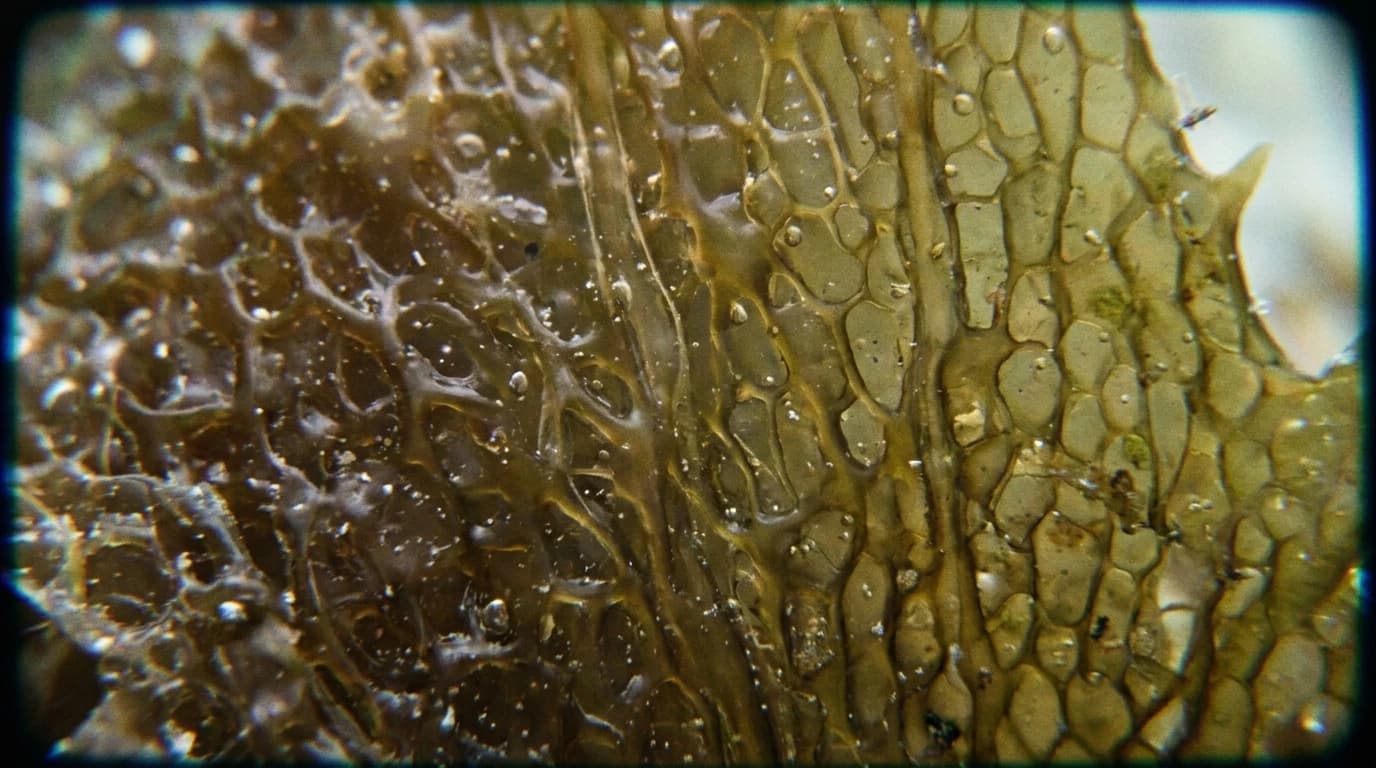
The Problem: Quantifying Seaweed blue carbon
The bottom line is clear. While seaweed blue carbon is an exciting concept for climate mitigation, wild seaweed ecosystems do not yet meet the strict standards required for official carbon accounting. Policymakers desperately want to use coastal environments to offset greenhouse gas emissions. Seaweed grows incredibly fast. It covers vast areas of our global oceans. This rapid growth makes it an attractive candidate for climate strategies, particularly across Europe where coastal management is expanding. However, a major question remains. Do wild seaweed forests actually lock away carbon long enough to balance the books? To answer this, researchers needed to look at the hard data.
The Solution: Evaluating the Evidence
Scientists conducted a comprehensive systematic review of 16 empirical studies from European waters—a limited regional scope that highlights the need for broader testing. They wanted to determine if wild seaweed could truly meet policy-grade standards. The research team evaluated the existing data against three strict pillars of carbon accounting. First, they looked for permanence. Does the carbon stay stored safely for over 100 years? Second, they assessed the feasibility of monitoring. Can scientists accurately measure, report, and verify the exact amount of carbon captured? Finally, they calculated the net climate benefit. Does the seaweed actually reduce overall greenhouse gases after accounting for natural losses and variability?
The Mechanism: Missing the Mark
The findings present a stark reality for climate planners. No current evidence from wild seaweed ecosystems consistently satisfied all three accounting pillars. Carbon storage in these marine environments is highly unpredictable. It remains highly context-specific. Furthermore, proving durable storage remains exceptionally difficult. Most monitoring programmes are restricted to small, site-based observations. They cannot easily scale up to national inventory-level reporting. The study also noted greenhouse gas emissions originating from the seaweed ecosystems themselves. These natural emissions, combined with temporal variability, frequently reduced or completely offset any net climate benefit. The data suggests a significant mismatch between how seaweed naturally cycles carbon and what formal accounting frameworks demand.
The Impact: Conservation Over Carbon Credits
What does this mean for the future of ocean policy and climate action? The study suggests we must pause before treating wild seaweed as a guaranteed carbon offset asset. Current evidence simply does not support including wild seaweed in formal blue carbon accounting frameworks. The maths does not yet add up. Instead, the research strongly supports a precautionary approach. Policymakers should prioritise conservation-led management. Protecting these marine environments remains absolutely vital, but we must base our policies on solid data. Future scientific research may eventually develop better frameworks to accurately track seaweed carbon. Scientists must still address the feasibility of long-term monitoring and verify true net climate benefits. Until then, we must protect wild kelp forests through conservation, rather than relying on them to balance our global carbon budgets. We must value them for what they are today, not just what we hope they will do for our emissions tomorrow.