Rewriting the Genetic Clock: A New Approach to Hutchinson-Gilford progeria syndrome
Source PublicationSpringer Science and Business Media LLC
Primary AuthorsCha, Kim, Kwon et al.
Imagine a clock where the second hand sweeps past the hours in a blur. For most of us, cellular ageing is a slow, almost imperceptible rust. But for a rare few, the biological machinery spins wildly out of control.
Deep within the nucleus of their cells, a structural defect twists and warps the delicate scaffolding that protects our genetic code. The cells deteriorate in fast-forward. Their natural repair mechanisms fail as a toxic, misshapen protein quietly accumulates along the nuclear membrane, suffocating the cell from the inside out.
The Cruel Mechanics of Hutchinson-Gilford progeria syndrome
This rapid, fatal deterioration is the defining feature of Hutchinson-Gilford progeria syndrome. Children born with the condition appear perfectly healthy at first. Yet within months, their tiny bodies begin to mirror the frailties of extreme old age, from brittle bones to failing hearts.
The biological culprit is a mutant protein known as progerin. It stubbornly clings to the inner wall of the cell nucleus, warping its spherical shape into a blistered, fragile mess. This distortion cripples the cell's ability to fix routine DNA damage.
Existing treatments offer only modest extensions of life. They attempt to block the chemical tag—a farnesyl group—that glues progerin to the membrane. However, these drugs act bluntly, disrupting other essential proteins that rely on the same chemical tags to function.
A Precise Genetic Edit
Now, early-stage, non-peer-reviewed preprint research suggests a highly specific way to snip this toxic tether. Because the findings are currently limited to laboratory models, they remain preliminary and require further validation.
Still, the elegance of the proposed solution is striking. Rather than designing a bespoke fix for every possible mutation that causes the disease, the researchers developed a tool called FATE (Farnesylation Amino acid Targeted Editing). FATE acts as a highly selective genetic editor.
It specifically targets the genetic sequence responsible for the farnesyl glue on the lamin A protein. Importantly, it ignores other proteins in the body that rely on similar chemical tags.
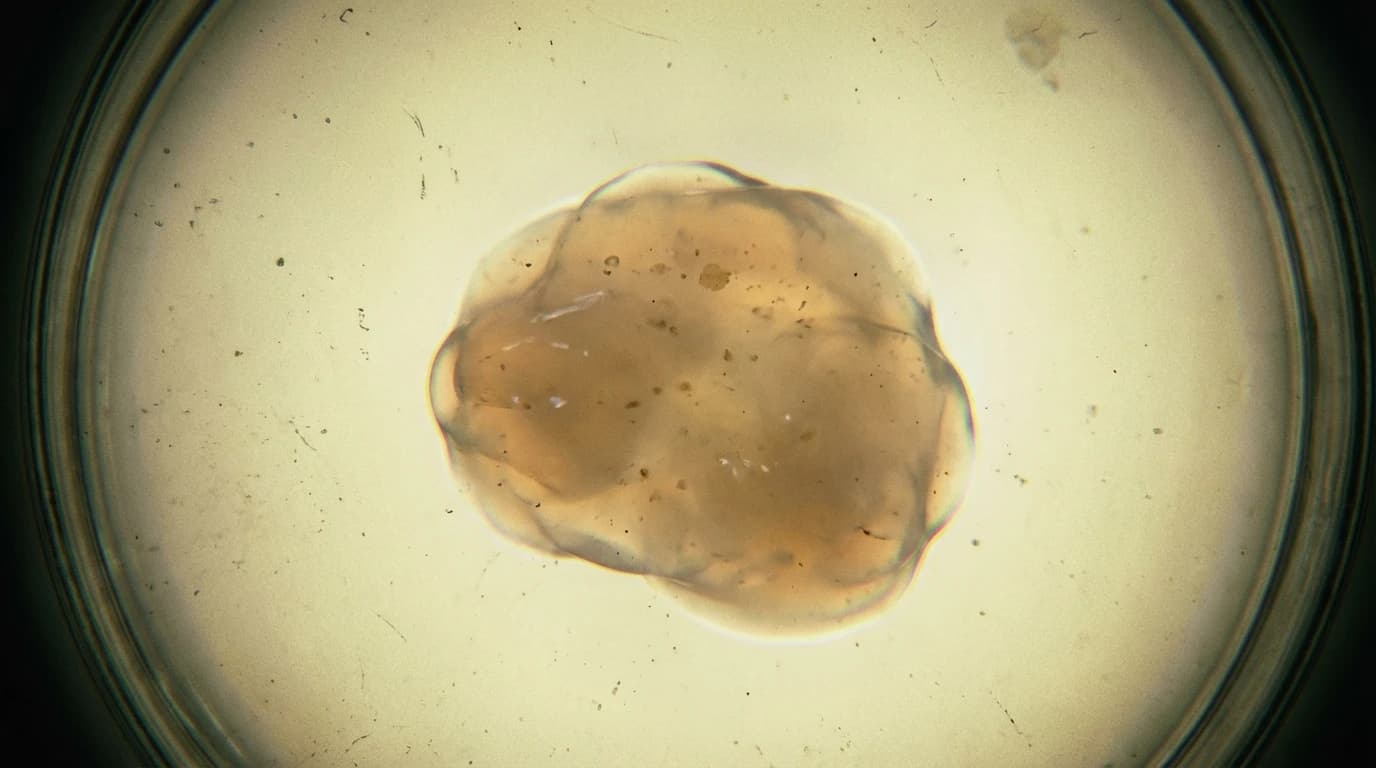
To test this in a controlled laboratory setting, the team grew human neuromuscular organoids—tiny, lab-grown bundles of nerve and muscle tissue derived from stem cells. They observed that in these tissues, progerin physically trapped a vital DNA-repair protein called 53BP1, preventing it from doing its job.
When the scientists delivered FATE mRNA into the organoids using lipid nanoparticles, they measured several distinct changes:
- The toxic progerin was eliminated from the nuclear membrane.
- The trapped 53BP1 protein regained its normal mobility.
- The cells successfully reformed their essential DNA repair centres.
- The overall architecture of the tightly packed DNA normalised.
Rewriting the Future
These measurements suggest that FATE could fundamentally correct how these cells organise and protect their DNA. By delivering the editor as transient mRNA, the researchers achieved a precise correction without leaving permanent, potentially harmful editing machinery behind in the cell.
This mutation-agnostic approach means the therapy might eventually work for various atypical forms of the condition, not just the most common variants. While this RNA-based editing must still undergo extensive clinical testing, it offers a compelling new direction for researchers.
It suggests that the biological clock of progeria might one day be slowed. Instead of merely managing the symptoms, scientists could carefully edit the structural flaws at the very centre of the cell.