Replacing Noble Metals: The Rise of Magnetic Nanocatalysts in Industrial Synthesis
Source PublicationScientific Publication
Primary AuthorsPayamifar S, Abdouss M, Sarreshtehdar Aslaheh H, Poursattar Marjani A.
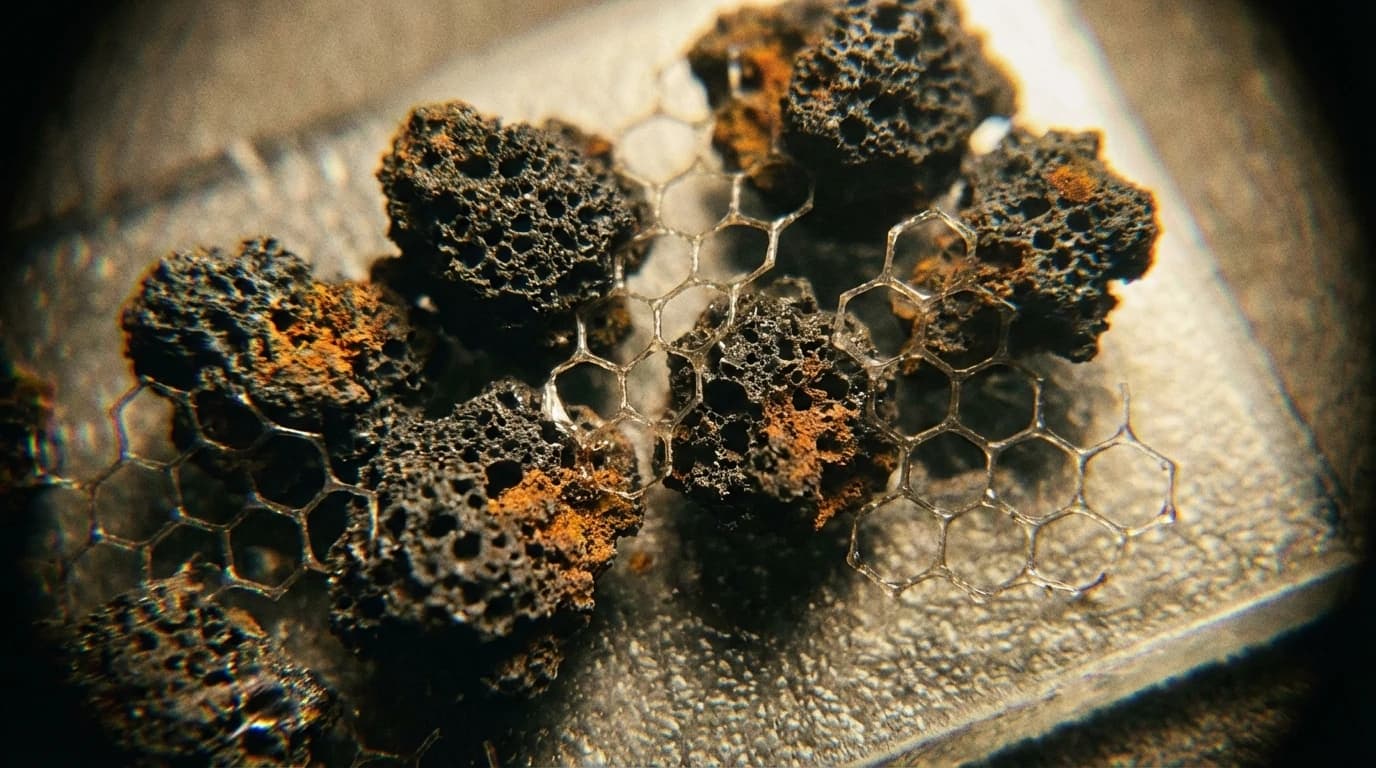
The Hook: The Promise of Magnetic Nanocatalysts
Chemists have long struggled to separate expensive noble metals from chemical mixtures without losing valuable material. A comprehensive review suggests that combining iron oxide with graphene to form magnetic nanocatalysts provides an affordable, highly recoverable alternative. This approach addresses the persistent challenge of recovering microscopic reactive particles from liquid suspensions.
These results were observed under controlled laboratory conditions, so real-world performance may differ.
The Context: Noble Metals Versus Iron Composites
Industrial and synthetic organic chemistry heavily depend on reducing nitroarenes to aromatic amines. Historically, engineers have relied on conventional noble-metal catalysts to drive these essential transformations.
While noble metals are highly reactive, they present ongoing challenges regarding cost and sustainable recovery. Iron oxide, specifically magnetite (Fe3O4), offers a fundamentally different chemical approach. By binding magnetite to a graphene oxide support, researchers create a hybrid material. This composite possesses a large surface area and inherent magnetic properties.
The Discovery: Superparamagnetic Recovery
The review, assessing literature through 2025, analyses the synthesis and applications of these iron-graphene composites. Scientists measured the conversion rates of nitroarenes using environmentally friendly reducing agents, such as hydrogen gas or sodium borohydride.
The data indicates that Fe3O4@graphene oxide composites perform exceptionally well under moderate reaction conditions. The reactions are fast and highly selective. This means the process yields the desired aromatic amines efficiently while minimising unwanted by-products.
The true advantage lies in the extraction phase. Instead of complex separation steps, chemists simply apply an external magnetic field. The nanoparticles are pulled to the side of the vessel, allowing the clean liquid to be drained away.
The review highlights several specific advantages measured in laboratory settings:
- Easy separation and reuse driven by excellent superparamagnetic behaviour.
- Good biocompatibility and notably low toxicity compared to conventional alternatives.
- Straightforward synthesis and economical recyclability.
The Impact: A Greener but Imperfect Future
Transitioning to this method could slash the financial overhead of industrial amine production. Reusing the catalyst repeatedly lowers operational costs and significantly supports the sustainability of the process.
However, as an analytical observer must note, the current literature primarily highlights bench-scale synthesis and controlled laboratory applications. While the review champions these composites as highly promising and eco-friendly, the ultimate test will be scaling these adaptable nanocatalysts to meet the continuous, high-volume demands of global chemical manufacturing. Until then, noble metals remain the entrenched standard.