Quantum Skyrmions: How Physicists Are Tying Light Into Unbreakable Knots
Source PublicationSpringer Science and Business Media LLC
Primary AuthorsGao, Wang, Zhou et al.
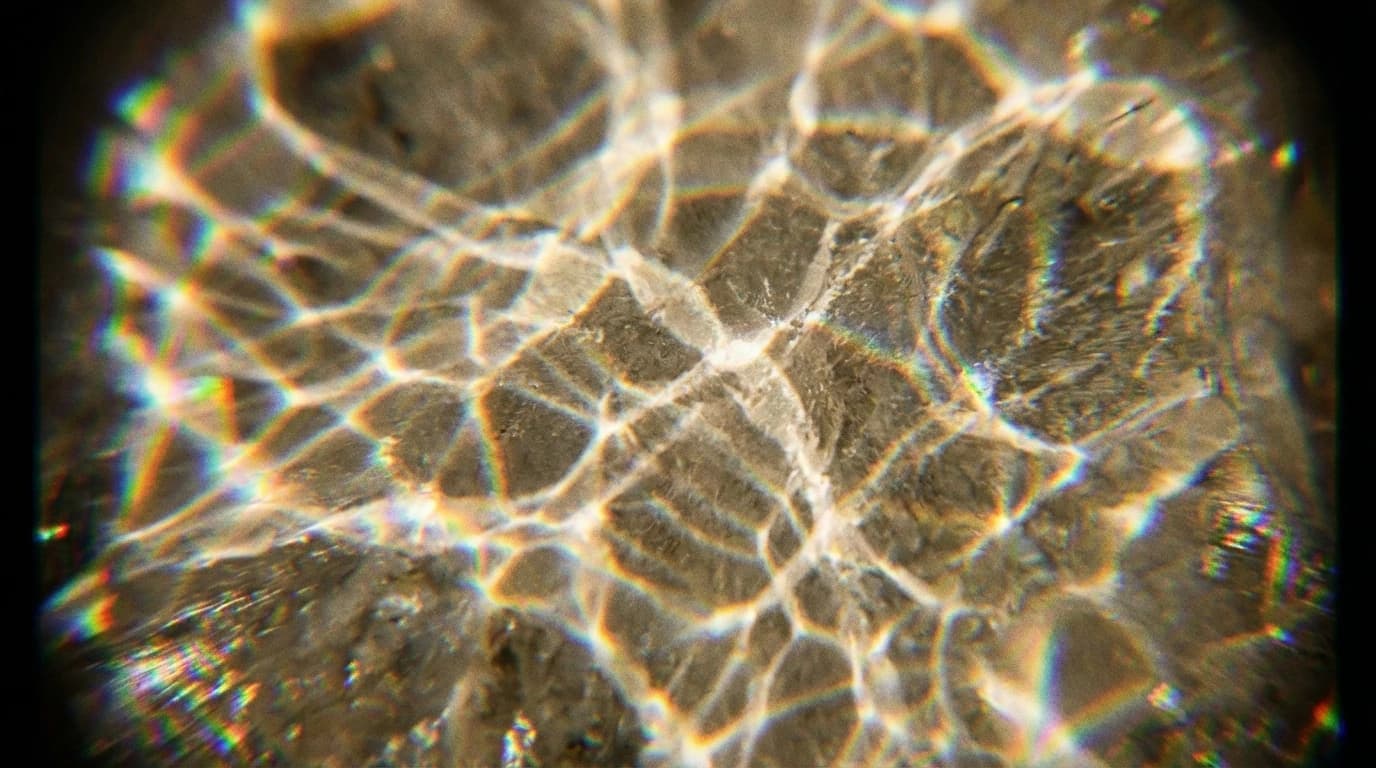
The Hook: Mailing a House of Cards
Imagine trying to send a perfectly constructed house of cards through the standard post. The slightest bump in transit, and the entire thing collapses into a chaotic pile.
Note: This article is based on a preprint. The research has not yet been peer-reviewed and results should be interpreted as preliminary.
Standard quantum information exhibits this delicate behaviour. The moment it interacts with the noisy outside world, the connection known as entanglement shatters. This fragility makes it incredibly difficult to organise and store quantum data.
Why Quantum Skyrmions Matter
But what if you could tie those cards into a mathematical knot that cannot be easily undone? That is the basic concept behind quantum skyrmions.
These structures are essentially tiny, stable tornadoes of light. Because their shape is locked into a specific topological pattern, they resist being deformed by outside interference.
Physicists already know how to create these light tornadoes. Yet, to build a functioning quantum internet, engineers need a way to hit 'pause'. They must store these optical knots in a quantum memory bank without destroying their unique shape.
Freezing Light in Cold Atoms
In a new early-stage study, researchers managed to do exactly that. Operating in a controlled laboratory setting, they successfully stored and retrieved a quantum skyrmion using a specific cloud of extremely cold atoms.
The experiment worked in a clear, step-by-step process:
- First, the team generated a pair of entangled photons, shaping one into a specific topological pattern.
- Next, they fired this shaped photon into the centre of a cold atomic gas, effectively pausing the light.
- Finally, they retrieved the photon after exposing it to intentional storage noise.
When the researchers measured the retrieved light, the results were striking. The standard entanglement between the two photons had degraded, battered by the noisy storage environment.
However, the topological shape of the skyrmion—measured by its Skyrme number—remained resilient. The core structure held its ground even as the delicate quantum link faded.
Building a Resilient Quantum Internet
This early-stage research suggests that topology could act as a robust shield for quantum data. If the shape of the light stays stable, physicists might have a highly reliable method for routing information over long distances.
A future quantum internet will require memory systems that do not instantly lose their data at the first sign of interference.
By proving that these optical knots can demonstrate resilience inside cold atomic ensembles, the researchers offer a promising new direction. Future networks may rely on these tiny light tornadoes to keep our most sensitive data secure.