Quantum photonics: Bending time to build ultra-fast computers
Source PublicationScientific Publication
Primary AuthorsMohammadiaria
"Imagine a guitar string. Normally, time is just the metronome ticking in the background while you play a song. This new method turns time itself into the guitar string, allowing scientists to pluck 'chords' of time to send massive amounts of data at once."
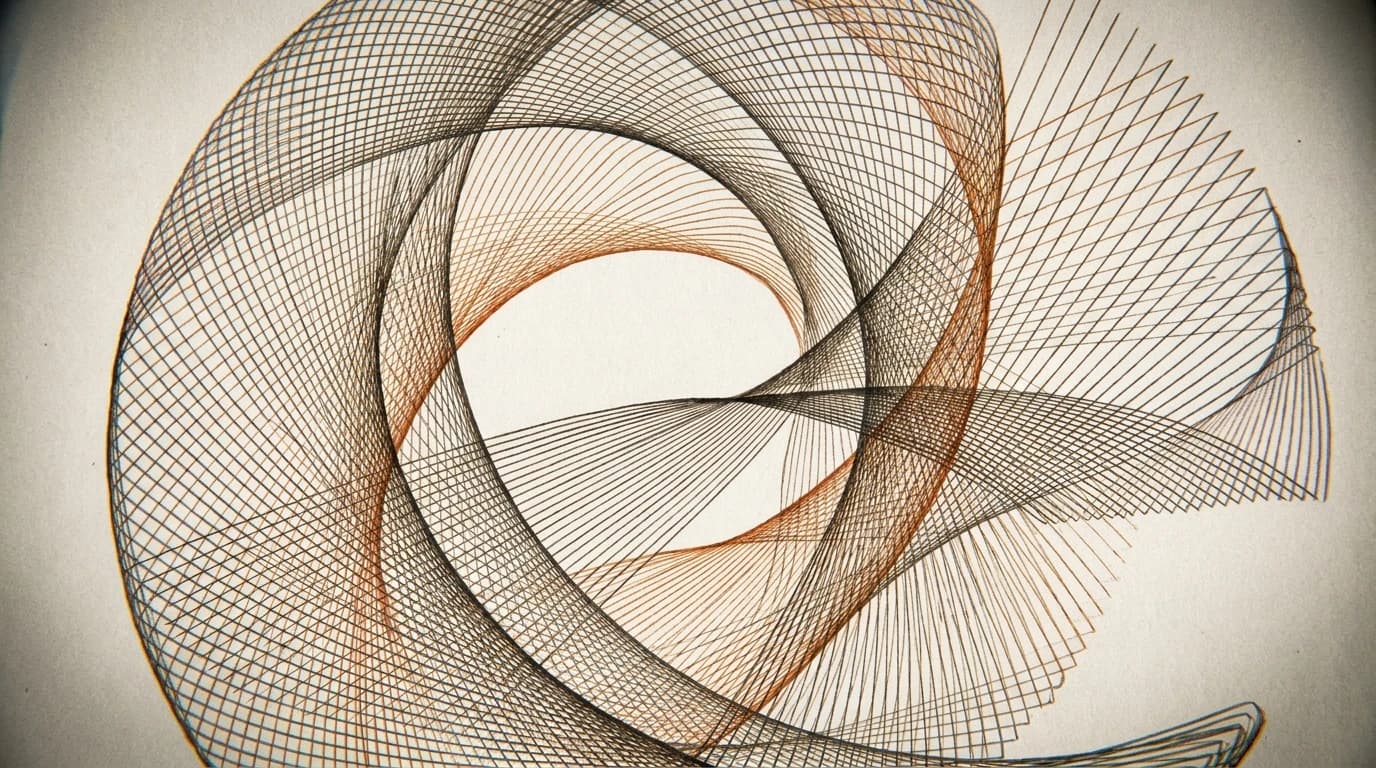
Scientists have discovered a way to manipulate time at the microscopic level to process information. This discovery allows researchers to pack massive amounts of data into tiny light pulses. It provides a direct blueprint for ultra-fast computing and highly secure data transfer.
Quantum photonics and the problem of time
In the field of Quantum photonics, time is usually just a background clock. It ticks forward at a steady, passive rate. Researchers face a massive problem when trying to send more data through optical cables. They are strictly limited by the standard rules of time and frequency. If you want a shorter pulse of light to send data faster, you need a wider range of colours, or frequencies, to create it. This rigid trade-off naturally restricts how much information we can push through our current global networks. We need a way to bypass this physical limit.
The solution: Bending the clock
Researchers have designed a theoretical framework that fundamentally changes the behaviour of time. Instead of a steady tick, they made the local clock rate completely adjustable. They used special surfaces that create miniature fields of acceleration. These fields warp the flow of time for particles of light. Time stops being a flat, passive track. It becomes a curved, physical shape. Inside this curved space, time is broken down into distinct, measurable steps. The scientists call these discrete steps temporal states.
How the mechanism works
The study used advanced numerical modelling to observe these extreme effects. When scientists simulated firing ultra-short bursts of light into these curved-time zones, something highly unusual occurred. The light pulses lasted just femtoseconds, which is a millionth of a billionth of a second. The light waves became trapped in the curved time. They stacked on top of each other, creating complex chords and overlapping patterns of light. In the areas where time was curved the most, the light waves accumulated phase changes incredibly fast. The model suggests this rapid change generates extreme bandwidth. The data showed potential effective bandwidths exceeding 500 terahertz. This completely shatters the normal limits of optical signal transmission.
The impact on future technology
This research suggests we can encode digital information directly into the geometry of time itself. The team notes that this curved-time method works across many different advanced materials. These include graphene and tiny semiconductor particles known as quantum dots. By treating time as a physical structure that we can actively mould, engineers could build networks that carry vast amounts of data without the usual bottlenecks. This may ultimately lead to ultra-fast quantum communication systems and entirely new types of logic processors. While currently based on advanced simulations, the findings offer a clear, physical pathway forward. We are looking at a future where we control the clock to process data at unprecedented speeds.