Predicting Forest Survival: How Early-Stage Data on Acacia auriculiformis Could Reshape Reforestation
Source PublicationSpringer Science and Business Media LLC
Primary AuthorsGnahoui, Houetchegnon, HOUEHANOU et al.
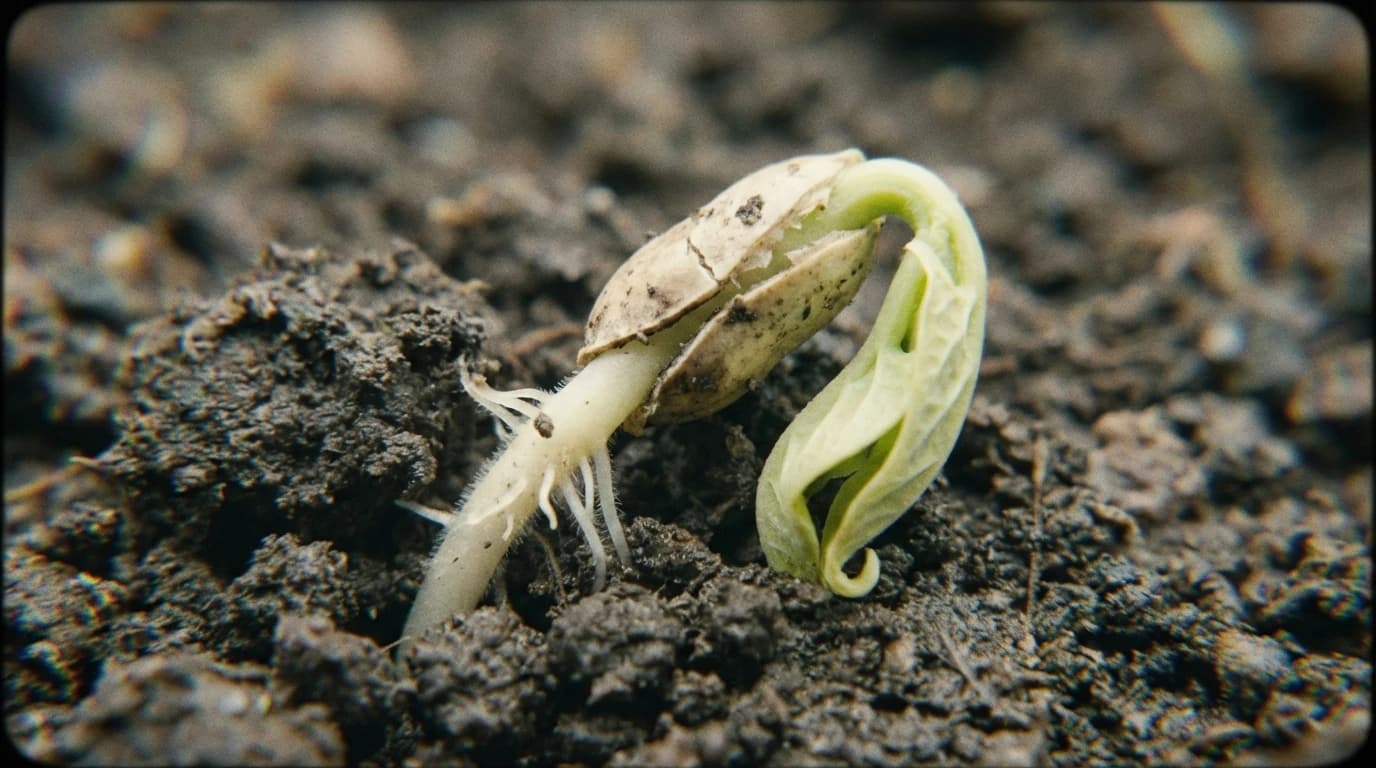
Forest restoration faces a severe predictive bottleneck: ecologists struggle to anticipate exactly how young trees will react to shifting climates and degraded soils. An early-stage field study on Acacia auriculiformis in Benin offers a statistical method to break this very bottleneck. By tracking saplings over three years, researchers are building data-driven models to forecast local forest survival with greater precision.
Note: This article is based on a preprint. The research has not yet been peer-reviewed and results should be interpreted as preliminary.
Understanding the mechanisms of plant species dynamics is now a major issue in conservation ecology, especially given the impact of climate change and severe ecosystem degradation from human activity. To ensure newly planted forests survive these stresses, ecologists need predictive tools that account for both weather and soil conditions simultaneously.
This dual approach allows conservationists to plant the right tree in the exact right soil chemistry. By evaluating direct and indirect pedoclimatic effects, researchers can move toward highly targeted restoration efforts.
Tracking Acacia auriculiformis in Benin
The researchers monitored permanent plots of young Acacia auriculiformis across two classified forests in West Africa. They measured physical traits like basal diameter, total height, and branch count alongside plant mortality rates over a three-year period.
Using a structural equation model, the team mapped out how soil and climate variables directly and indirectly affected the saplings. The measurements show that rainfall positively affects growth, though the exact benefit varies depending on the specific site location.
Temperature effects were surprisingly highly localised. Warmer conditions boosted growth in the Kétou forest but reduced seedling diameter and survival in the Toui-Kilibo site. Additionally, the study identifies soil pH as a strict limiting factor for the growth and survival of these young trees.
The Next Decade of Localised Reforestation
While these findings are early-stage and specific to a single species in West Africa, they suggest a major shift in how we might organise regional planting initiatives over the next five to ten years. Instead of relying on broad climate assumptions, forest managers could use localised 'pedoclimatic' models to predict specific site viability.
This level of precision targeting means fewer wasted resources and higher survival rates for young forests. Over the coming decade, this type of predictive modelling may lead to:
- Hyper-localised planting strategies based on exact soil pH and temperature variations.
- Better species-matching protocols that account for complex climate and soil interactions prior to planting.
- Improved survival rates for targeted restoration projects in highly degraded or anthropised ecosystems.
By treating the forest floor as a complex matrix of data, ecologists can better anticipate species dynamics. As these models undergo further refinement, they offer a highly pragmatic vision for targeted ecological restoration.