Powering the Control Centre: How Mitochondria Nuclear Interaction Fuels Your DNA
Source PublicationNature
Primary AuthorsMenendez-Montes, Marin-Vicente, Mukherjee et al.
"Like plugging an ultra-fast charging cable directly from a generator into a computer's main processor, rather than sending batteries via snail mail."
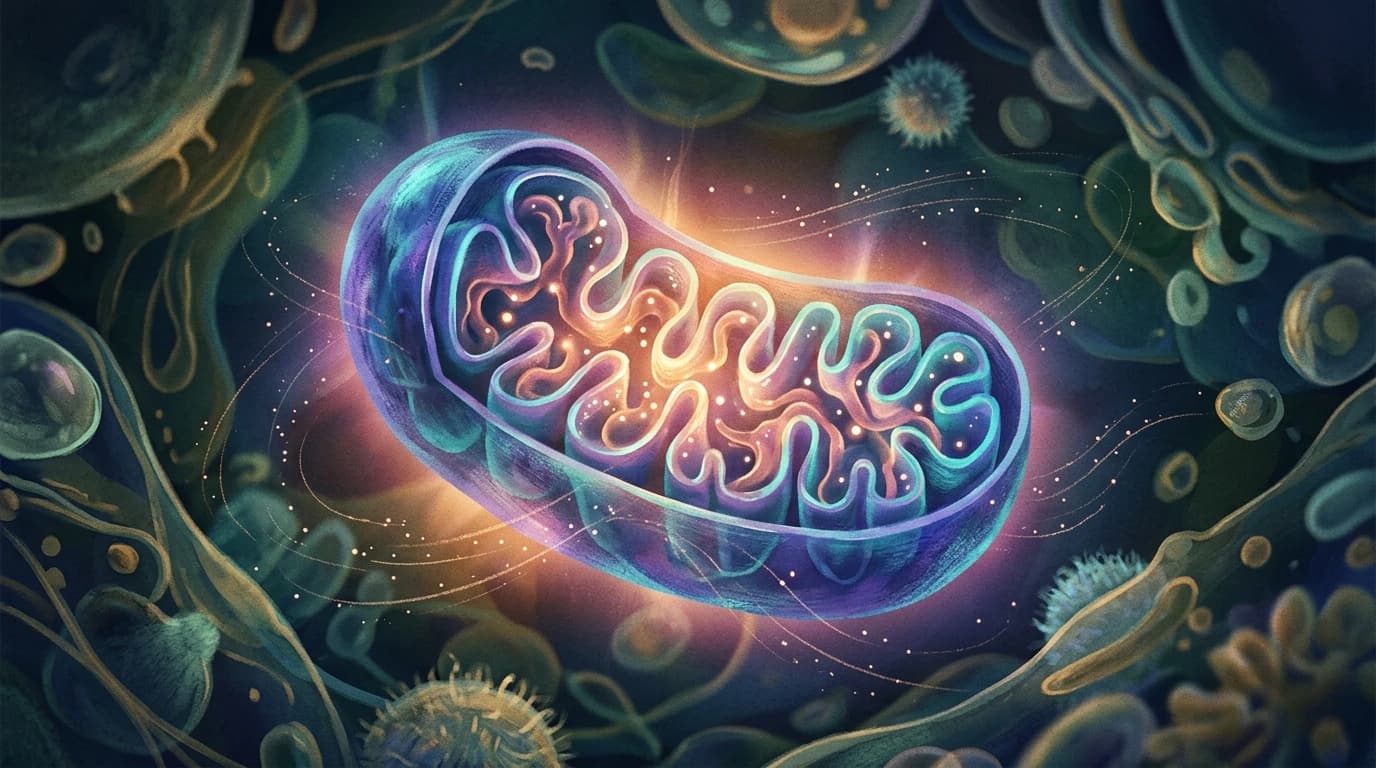
Imagine trying to play a high-end video game, but your console is plugged into an electricity outlet three rooms away, relying on a series of patchy extension cords. It is laggy and inefficient. Your cells face a similar challenge: the nucleus is the main processor running the genetic code, and it requires constant, high-voltage power.
The Mechanics of Mitochondria Nuclear Interaction
We used to think mitochondria simply floated around in the cellular soup, releasing energy molecules for the nucleus to collect. However, new research shows they actually plug directly into the nuclear membrane. This physical contact, known as mitochondria nuclear interaction, acts like a dedicated power cable, delivering energy straight to the control centre.
Using molecular screens, scientists discovered that a mitochondrial protein called VDAC1 binds directly to a nuclear pore protein called RANBP2. When researchers blocked this connection in laboratory cells, nuclear energy levels plummeted. This energy drop stopped the nucleus from organising gene expression and modifying histones.
When scientists deleted this connection in mice, the embryos could not survive, developing severe heart and brain defects. This shows that the direct fuel line is not optional; it is required for basic development. In the future, this discovery could help researchers understand how cancer cells hijack cellular energy to survive.