Power and Fertiliser: The Battery Turning Wastewater into Wealth
Source PublicationAdvanced Materials
Primary AuthorsChen, Yu, Wang et al.
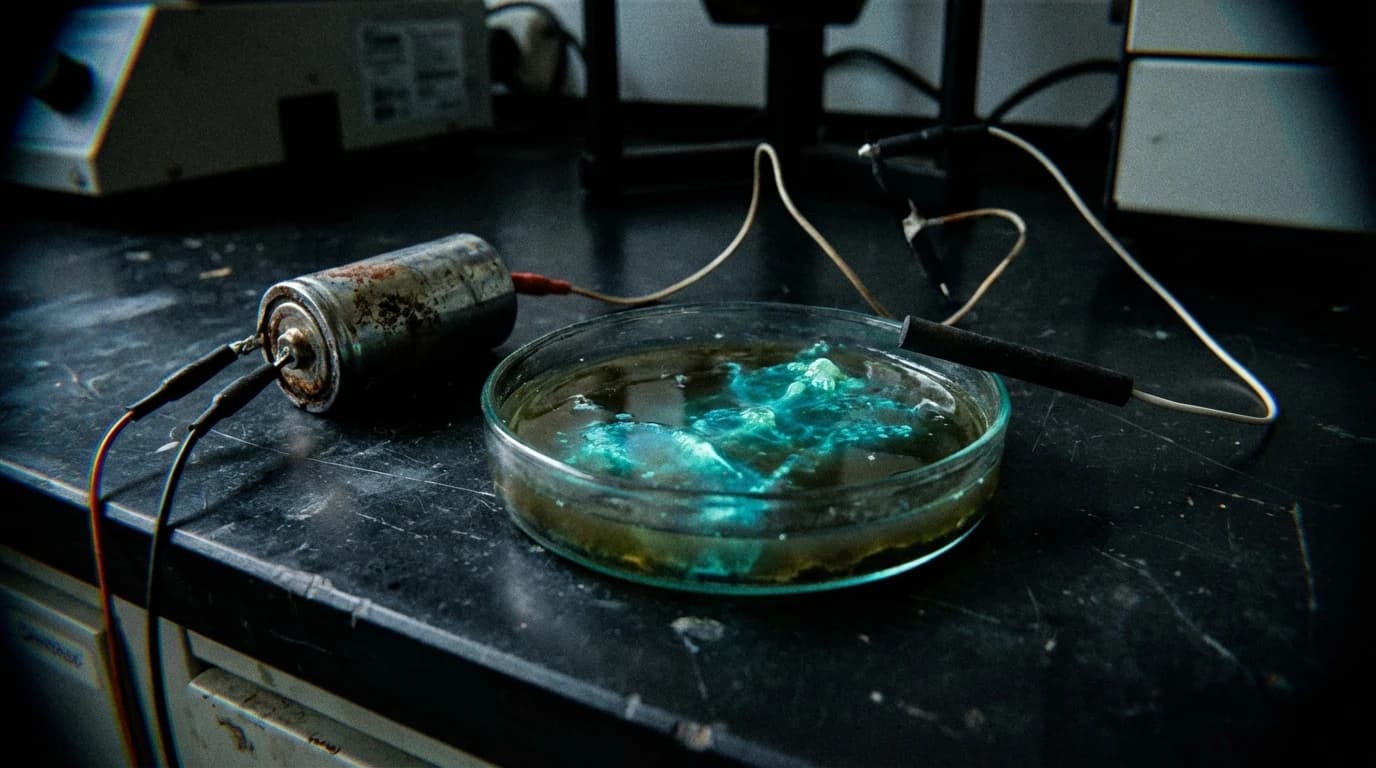
For over a century, the Haber-Bosch process has been the industrial titan of ammonia production, essential for global agriculture yet notorious for its staggering carbon footprint. A new study presents a clever usurper: an aluminium-nitrate battery that not only synthesises ammonia but generates electricity into the bargain.
The system is a marvel of electrochemical multitasking. Unlike standard batteries that simply store and release energy, this device utilises a spontaneous reaction between aluminium and nitrate at the anode, coupled with nitrate reduction at the cathode. The researchers employed copper-nickel (CuNi) alloy films—crafted via a precise technique known as pulse laser confined bombardment—to serve as highly efficient catalytic sites. This setup successfully suppresses the wastage of hydrogen, a common headache in similar electrochemical cells.
Perhaps most intriguingly, the battery boasts an 'apparent' Faradaic efficiency peaking at nearly 184 per cent. While this might sound like a violation of thermodynamic laws, it is merely a matter of clever accounting: ammonia is being produced at both ends of the battery simultaneously, effectively doubling the output for the input current. Stability tests demonstrate the system running smoothly for over 50 hours, suggesting it is more than just a laboratory curiosity. By feeding on nitrate-rich wastewater, this technology offers a pragmatic path to decarbonising the fertiliser industry while feeding the grid.