Polymeric photonic microspheres: How structural colour could shape future genomic medicine
Source PublicationAngewandte Chemie International Edition
Primary AuthorsZheng, Liang, Sun et al.
"Imagine building a Lego house. If you use mostly blue bricks, the house naturally forms a wide, flat shape. If you use mostly red bricks, it suddenly builds itself into a tall tower. The scientists found a way to change the 'bricks' so the microscopic beads automatically build themselves into completely different light-reflecting shapes."
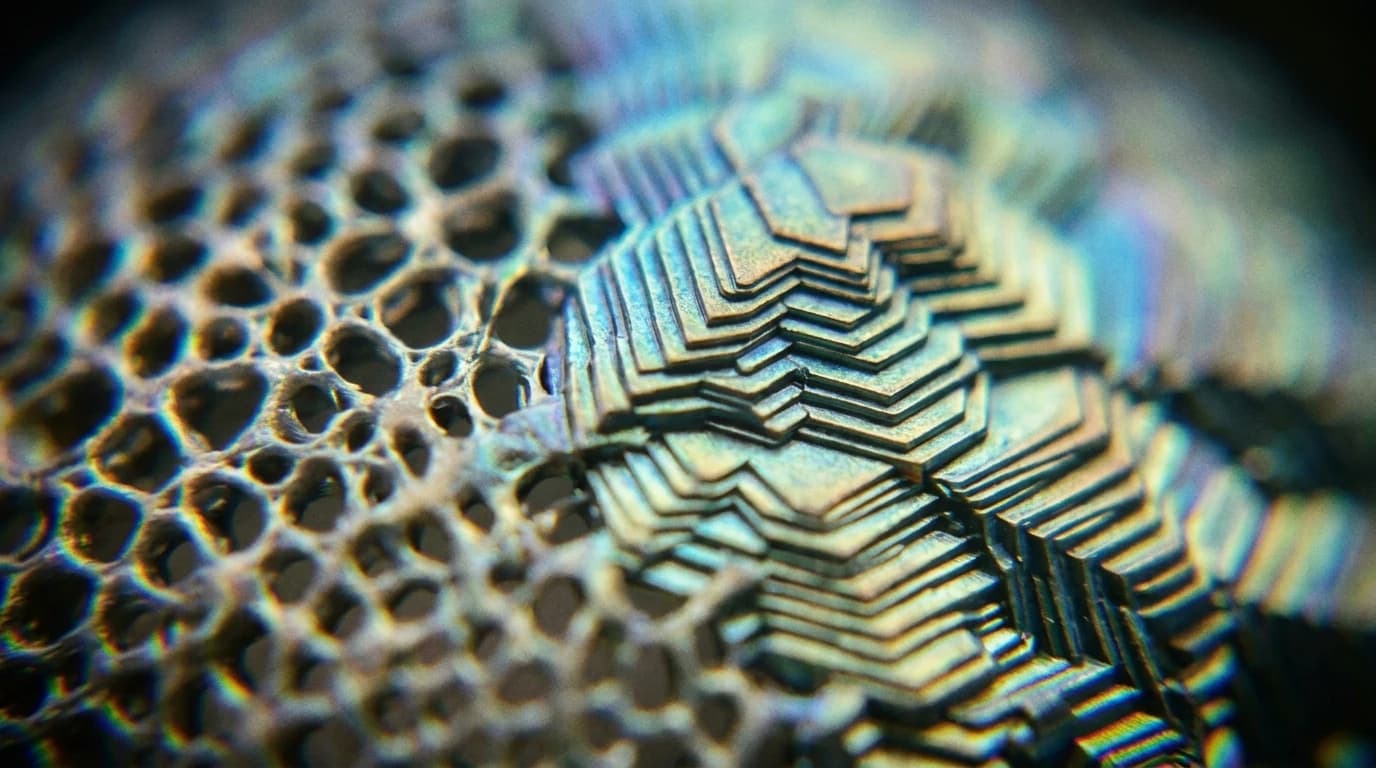
For decades, progress in advanced cellular therapies and genomic medicine has faced a persistent hurdle in research programmes. To see how modified cells behave over time, scientists need to tag them with bright markers. The problem? Traditional pigments and fluorescent dyes are often toxic, unstable, or fade too quickly. This makes tracking long-term cellular behaviour incredibly difficult. We need a safer, brighter way to light up the microscopic world.
These results were observed under controlled laboratory conditions, so real-world performance may differ.
Researchers may have found an answer in structural colour. Instead of using chemical dyes, they created polymeric photonic microspheres. These are tiny, safe plastic beads that reflect light to create vibrant colours, much like a peacock feather. The team wanted to know how to control the exact colour and shine of these beads.
The secret lies in how the beads build themselves in benchtop laboratory models. The scientists used special molecules called block copolymers, which have water-loving and water-repelling parts. They discovered that by changing the amount of the water-loving segment, they could force the beads to form completely different internal shapes. When the water-loving part was less than 50 percent, the beads formed a spongy structure. This gave them a solid colour that looked the same from any angle.
But when they increased the water-loving part above 50 percent, the molecules repelled each other at the edges. This forced the bead to build itself in concentric layers, like an onion. These layered beads produced strong, shiny reflections. This study measured how tweaking the molecule's architecture directly changes the physical structure of the bead.
Polymeric photonic microspheres in genomic medicine
What does this mean for the trajectory of healthcare? Because these beads are safe and their colours are highly programmable, they could replace toxic dyes in biomedical research. In future research programmes, scientists might use these polymeric photonic microspheres to tag different types of engineered cells at the same time. When tracking a new gene therapy, researchers need to know exactly where modified cells travel and how long they survive. Fading dyes make this a guessing game. Permanent structural colours could remove that doubt.
Imagine monitoring complex cellular interactions over weeks or months, using beads that never lose their colour. You could assign a spongy red bead to a specific immune cell and a shiny blue bead to a targeted tissue. This suggests a future where tracking the efficacy of genomic treatments is safer and much more accurate. By mastering how molecules assemble themselves, we might just illuminate the next generation of medical breakthroughs.