Plastic waste and chemical additives found in stranded Mediterranean seabirds
A study of 31 stranded Yelkouan shearwaters along the Italian coast found plastic debris inside 90.3% of the birds, alongside widespread tissue contamination by synthetic plasticisers.
Reading level
The full story with proper science words explained.
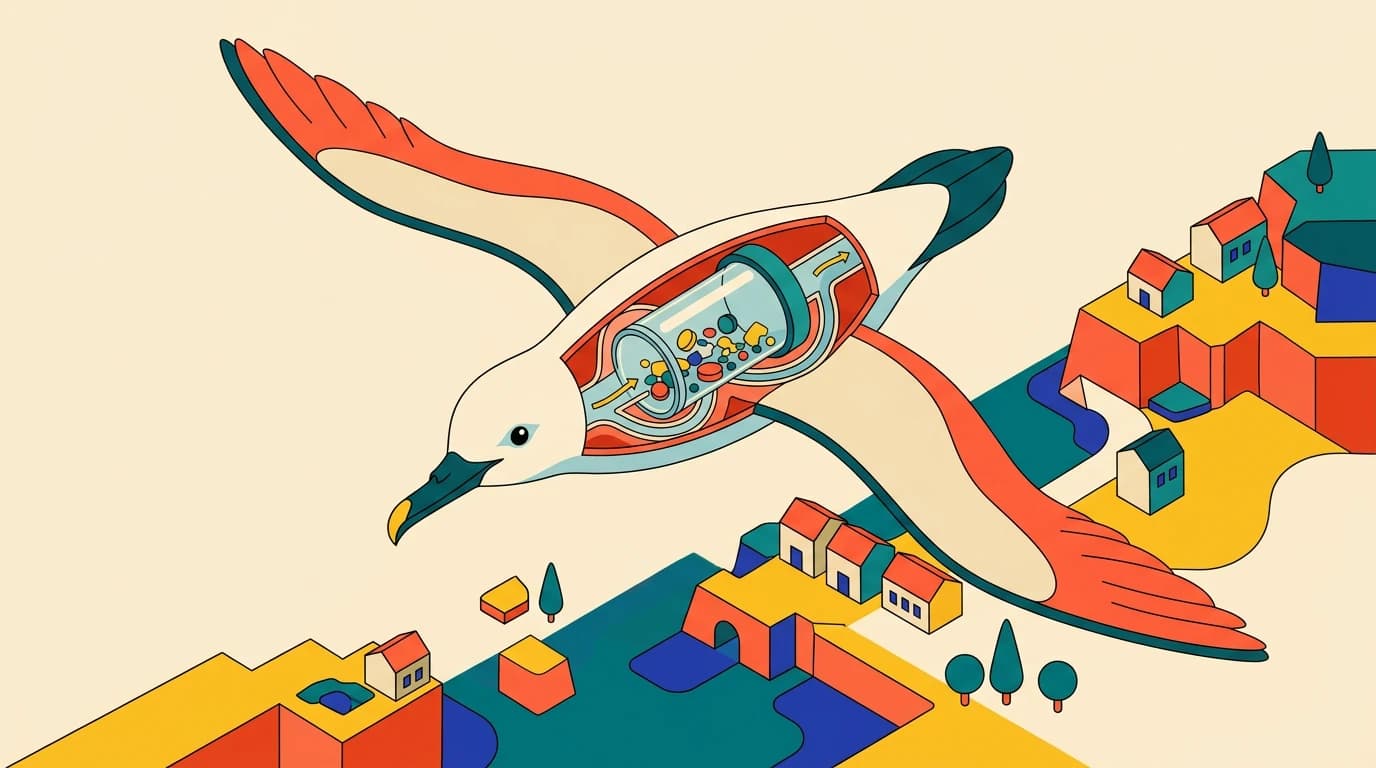
A hidden trap in the waves
Almost every dead Yelkouan shearwater found along Italy's western coast had swallowed marine litter. Out of 31 stranded birds, 28 contained man-made waste. This finding shows that seabird plastic ingestion is widespread across this key Mediterranean breeding area.
Scientists carefully checked each bird's gastrointestinal tract, the full digestive route running from stomach to gut. They counted 569 scraps of debris, weighing 685.8 milligrams in total. That works out at about 20 bits per bird, with debris levels passing established safety limits.
What settles in the gut
Most of the collected waste consisted of tiny microplastics. Nearly 95% of these bits were lodged inside the gizzard, a muscular digestive chamber birds use to grind food. The gizzard traps hard pieces while softer food moves along.
The team analysed these fragments with FTIR spectroscopy, a test that uses infrared light to identify materials. Most pieces turned out to be common polyethylene and polypropylene plastics from everyday packaging.
However, the danger is chemical as well as physical. The team checked body tissues for 11 phthalic acid esters (PAEs), which are synthetic chemicals used to make rigid plastics soft and bendy. They tested muscle, liver, kidney, and the uropygial gland—a preen gland near the tail that secretes waterproofing oil.
Chemicals across body tissues
Five types of PAEs showed up above detection limits. One common additive, known as DBP, appeared in every single tissue sample tested. It built up in highest amounts within the oily preen gland.
Surprisingly, birds with the most stomach plastic did not always carry the highest chemical loads. No clear pattern linked gut debris counts to tissue phthalate levels.
What remains unknown
This mismatch leaves an open question. Researchers cannot tell whether these chemicals came straight from swallowed litter, contaminated prey, or surrounding seawater. The work also focused on just 31 birds from one coast, so wider effects remain unmeasured.
Science words
- Gastrointestinal tract
- The entire digestive route running from the stomach through the intestines.
- Gizzard
- A muscular bird stomach compartment that grinds down food and often traps hard objects.
- FTIR spectroscopy
- A laboratory method using infrared light to identify unknown plastics and materials.
- Phthalic acid esters (PAEs)
- Chemical additives used to make plastics softer and more bendy, which can act as toxic pollutants.
- Uropygial gland
- A preening gland near the tail base that makes oil to keep feathers waterproof.
Check it yourself
This story is based on a real research paper in Environmental Pollution by Baini, Cozzo, Galli et al. We write with AI help and check it against the paper, but the original is the final word.