Physics & Astronomy14 January 2026
NdBi: Finding Order in the Chaos of a Topological Antiferromagnet
Source PublicationAdvanced Science
Primary AuthorsAlmoalem, Chan, Kuthanazhi et al.
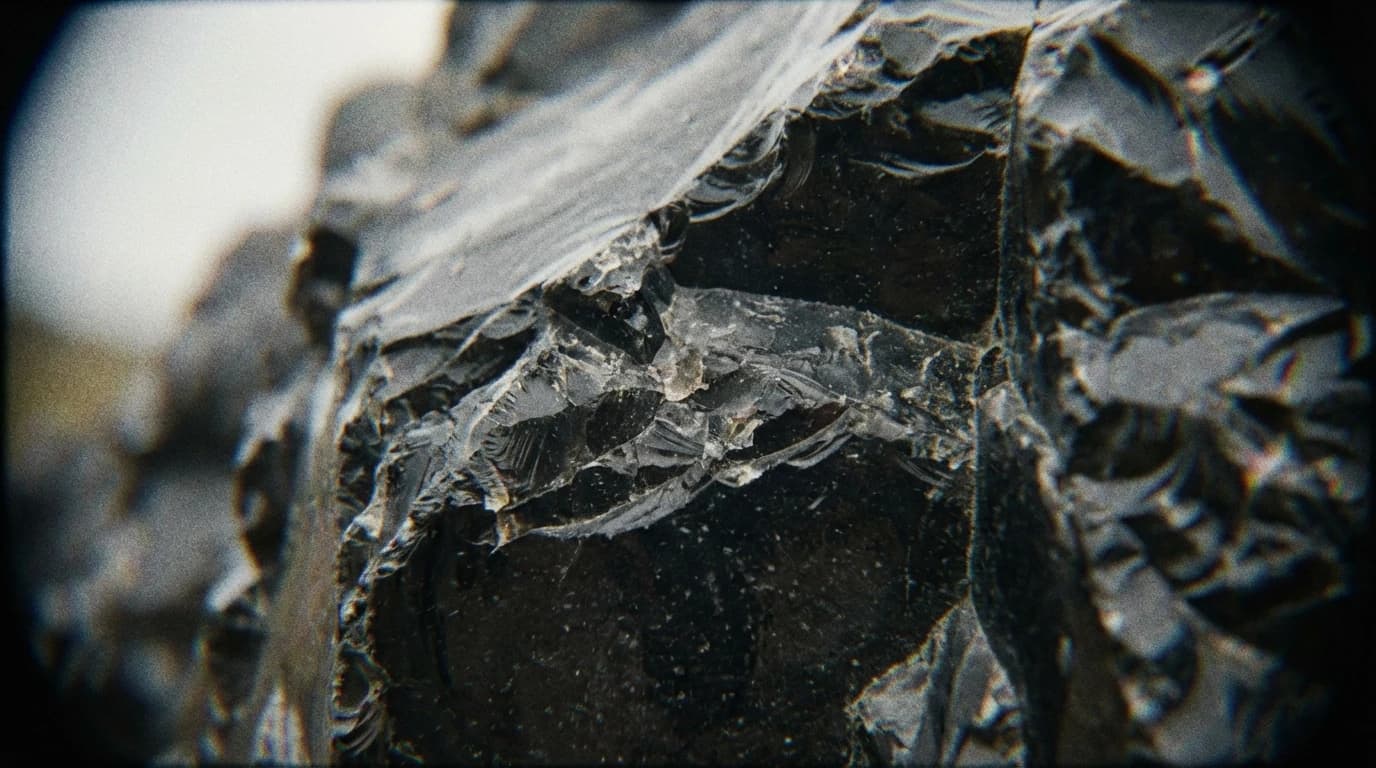
Is there not a strange beauty in the supposed messiness of biological chaos? We look at a cell and see a riot of proteins and fluid, yet underneath lies a rigid, geometric logic. Biology thrives on this structured disorder. Condensed matter physics, it seems, is finally catching up. For years, the hunt for materials capable of hosting chiral edge states—pathways where electricity flows without resistance—has been stymied by actual, unhelpful mess. Electronic disorder. Magnetic confusion. The materials were simply too dirty to be useful.
A new study posits that the answer lies in simplicity. The researchers turned their attention to NdBi (neodymium bismuth). It is a binary compound, chemically cleaner than the complex alloys tried previously. It is also a Topological Antiferromagnet.
The team utilised spin-polarized scanning tunnelling microscopy (STM) to map the surface of this material. What they measured was striking. They identified distinct signatures of ferromagnetic and antiferromagnetic terminations. Specifically, they found that 'step edges' on the surface—literal atomic drop-offs—act as magnetic domain walls. It is here, along these boundaries, that the 1D edge modes live. The data shows these modes are robust, but they are also sensitive; they vanish entirely once the material is heated above the Néel temperature.
One cannot help but draw a parallel to the architecture of life. Consider the genome. It is not merely a linear string of data; it is folded, looped, and organised into topological domains. Nature uses physical shape—topology—to regulate gene expression. If the structure collapses, the function ceases. NdBi appears to operate on a similar, albeit inorganic, principle. The topology forces the magnetism, and the magnetism guides the current. It is a hierarchy of constraints.
The implications are significant. Because NdBi is a rare-earth monopnictide, it lacks the intrinsic disorder that plagued earlier candidates. The authors suggest this material could finally provide a reliable platform for hosting Majorana modes—exotic states essential for fault-tolerant quantum computing. We are not just observing a new crystal. We may be seeing the hardware of the future, built on the oldest trick in the book: using boundaries to create order.
A new study posits that the answer lies in simplicity. The researchers turned their attention to NdBi (neodymium bismuth). It is a binary compound, chemically cleaner than the complex alloys tried previously. It is also a Topological Antiferromagnet.
Why the Topological Antiferromagnet Matters
The team utilised spin-polarized scanning tunnelling microscopy (STM) to map the surface of this material. What they measured was striking. They identified distinct signatures of ferromagnetic and antiferromagnetic terminations. Specifically, they found that 'step edges' on the surface—literal atomic drop-offs—act as magnetic domain walls. It is here, along these boundaries, that the 1D edge modes live. The data shows these modes are robust, but they are also sensitive; they vanish entirely once the material is heated above the Néel temperature.
One cannot help but draw a parallel to the architecture of life. Consider the genome. It is not merely a linear string of data; it is folded, looped, and organised into topological domains. Nature uses physical shape—topology—to regulate gene expression. If the structure collapses, the function ceases. NdBi appears to operate on a similar, albeit inorganic, principle. The topology forces the magnetism, and the magnetism guides the current. It is a hierarchy of constraints.
The implications are significant. Because NdBi is a rare-earth monopnictide, it lacks the intrinsic disorder that plagued earlier candidates. The authors suggest this material could finally provide a reliable platform for hosting Majorana modes—exotic states essential for fault-tolerant quantum computing. We are not just observing a new crystal. We may be seeing the hardware of the future, built on the oldest trick in the book: using boundaries to create order.
Cite this Article (Harvard Style)
Almoalem et al. (2026). 'Spectroscopic Evidence of Edge-Localized States in an Antiferromagnet Topological Insulator NdBi.'. Advanced Science. Available at: https://doi.org/10.1002/advs.202522116