MRSA Phage Therapy: Evolving Better Viruses to Fight Superbugs
Source PublicationEmerging Microbes & Infections
Primary AuthorsSchapp, Seibold, Reisser et al.
"Imagine a police dog trained to catch a specific type of thief. The original dog is good, but the thieves learn to hide from it. By putting the dog through a rigorous new training programme, it learns the thieves' new tricks. The newly trained dog catches the thieves faster and suppresses their ability to regroup."
The Bottom Line on MRSA phage therapy
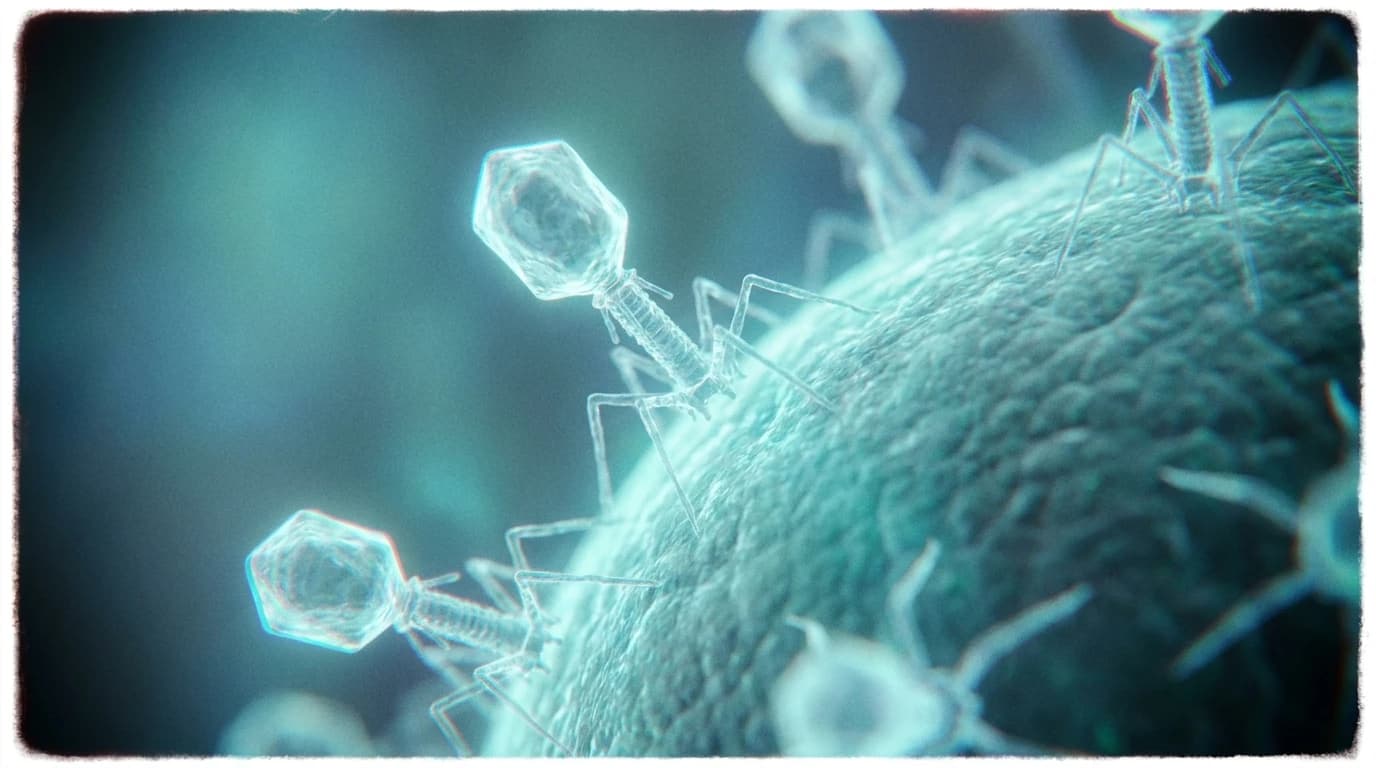
Scientists have adapted a natural virus into a highly efficient weapon against antibiotic-resistant bacteria. This updated MRSA phage therapy reduces bacterial levels faster in laboratory settings and sustains the suppression of regrowth. The breakthrough offers a direct utility. We can force-evolve viruses in the lab to defeat deadly superbugs. This method provides a clear path to generating custom medicines for infections that ignore standard drugs.
These results were observed under controlled laboratory conditions, so real-world performance may differ.
Problem: The Superbug Threat
Methicillin-resistant Staphylococcus aureus, commonly known as MRSA, is a highly dangerous bacterium. One specific type, called USA300, causes rapidly progressive necrotising pneumonia. This severe lung infection destroys tissue and carries a high risk of death. Standard antibiotics often fail. Doctors desperately need new weapons. Bacteriophages offer a potential answer. These are natural, microscopic viruses that hunt and kill specific bacteria. A known virus called phage K actively attacks MRSA. However, its medical use has limits. The bacteria quickly build resistance to it. The virus struggles to maintain its attack over time. The natural defence mechanisms of the bacteria simply outsmart the wild virus, allowing the superbug to recover rapidly.
Solution: Forced Evolution
Researchers decided to upgrade the virus. They used a process called experimental evolution. They placed the original phage K in a lab environment alongside the USA300 MRSA bacteria. Over time, the virus was forced to adapt to survive. This intensive training programme produced a highly specialised new variant. The scientific team named it phage KJ25. They then tested this newly evolved virus against the original version. The adapted virus proved far superior. It killed the MRSA bacteria much faster. More importantly, it suppressed the bacteria for longer periods. It sustained the suppression of regrowth, which is a common failure point in standard treatments.
Mechanism: A Slower Takeover
How exactly does the new virus work? The research team examined the genetic code of phage KJ25. They found a specific mutation in a gene called gp102. This gene controls a protein that binds to DNA. It regulates how the virus copies itself inside the host. When the new virus infects a bacterium, its behaviour changes completely. RNA sequencing showed that KJ25 takes over the host bacterium much slower than the original virus. It causes less initial disruption to the bacterial systems. This stealthy, delayed approach appears to prevent the bacteria from triggering their usual emergency defences. By altering its attack strategy, the virus successfully dismantles the bacterial cell from the inside out without raising the alarm.
Impact: Protecting Lung Tissue
The team tested this new virus in advanced laboratory models. They used human lung epithelial cells and precision-cut slices of mouse lung tissue. The results were highly positive. Phage KJ25 significantly reduced the total number of MRSA bacteria. At the same time, it preserved the delicate structure of the lung tissue. The original infection normally causes severe cellular damage, but the treated tissue remained intact and healthy. This study measured direct bacterial reduction in a controlled setting. It suggests that force-evolving viruses could become a standard method for creating custom treatments. As superbugs continue to resist traditional antibiotics, this strategy may provide a reliable way to protect patients from fatal respiratory infections. We can tailor natural viruses to meet urgent medical needs.