Molecular 'Traffic Control' Boosts Perovskite LED Efficiency and Lifespan
Source PublicationNano Letters
Primary AuthorsLuo, Zheng, Hua et al.
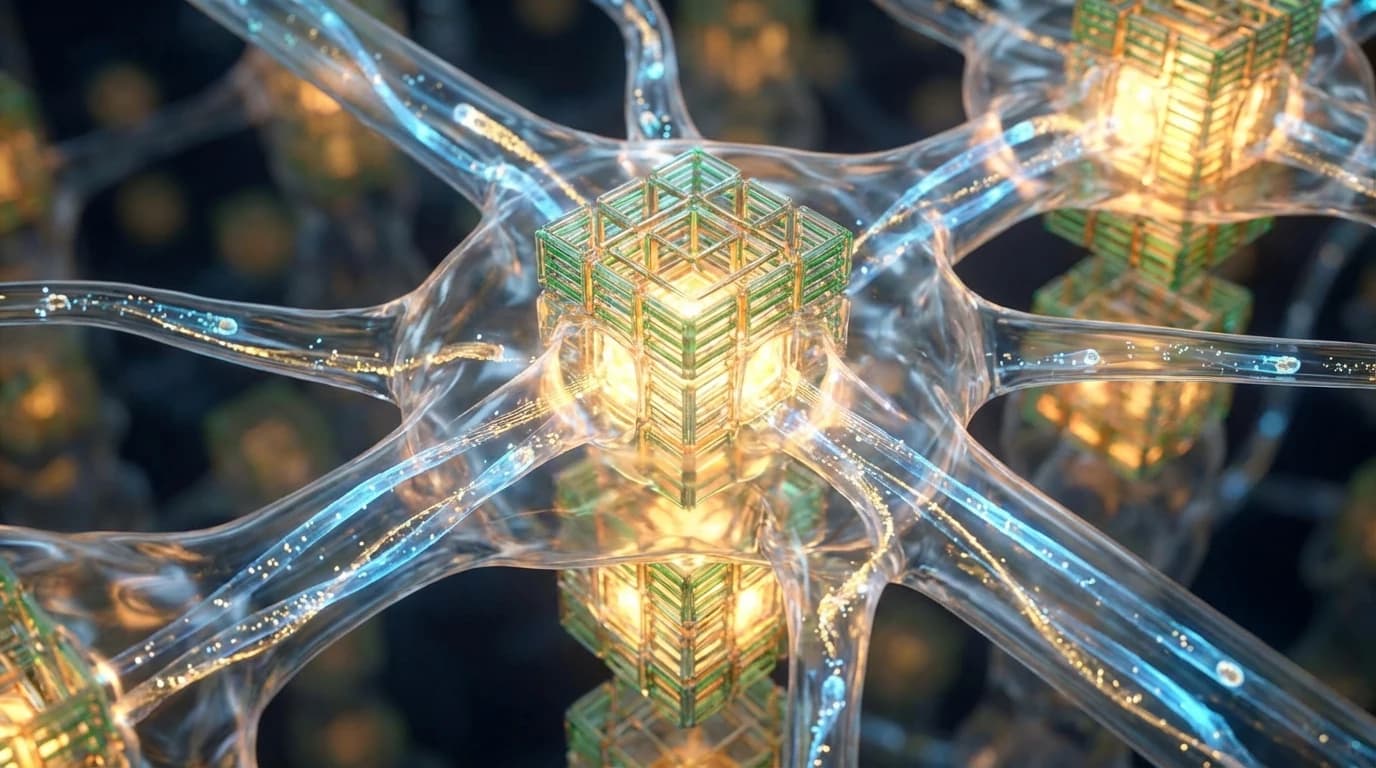
Perovskite light-emitting diodes (PeLEDs) represent a promising frontier in display technology, yet their full potential has been hindered by a chaotic phenomenon known as energetic disorder. This irregularity occurs within the polymer layers responsible for transporting electric charge—specifically in poly(9-vinylcarbazole), or PVK—acting as a significant barrier to both device efficiency and long-term stability.
In a recent breakthrough, scientists employed a molecular engineering strategy to bring order to this chaos. They introduced a self-assembled monolayer (SAM) composed of a molecule known as 2PACz. This underlying layer acts as a structural template, promoting highly ordered π-π stacking in the PVK film above it. This specific alignment of molecular rings results in prolonged coherence lengths, effectively smoothing the path for charge transport as confirmed by advanced X-ray scattering techniques.
The impact of this structural organisation was profound. PeLEDs utilising this modified layer exhibited a significant leap in external quantum efficiency (EQE)—the ratio of photons emitted to electrons injected—reaching 30.4%, alongside a nine-fold increase in operational lifetime. Crucially, the technique proved versatile; when applied to notoriously difficult-to-optimise blue PeLEDs, efficiency jumped from 15.5% to 25.3%. By successfully mitigating energetic disorder, this research underscores a robust strategy for unlocking the full capability of diverse light-emitting emitters.