Molecular Chaperones: Bringing Order to Wide-Bandgap Perovskite Solar Cells
Source PublicationNanoscale
Primary AuthorsWang, Zhang, Sun et al.
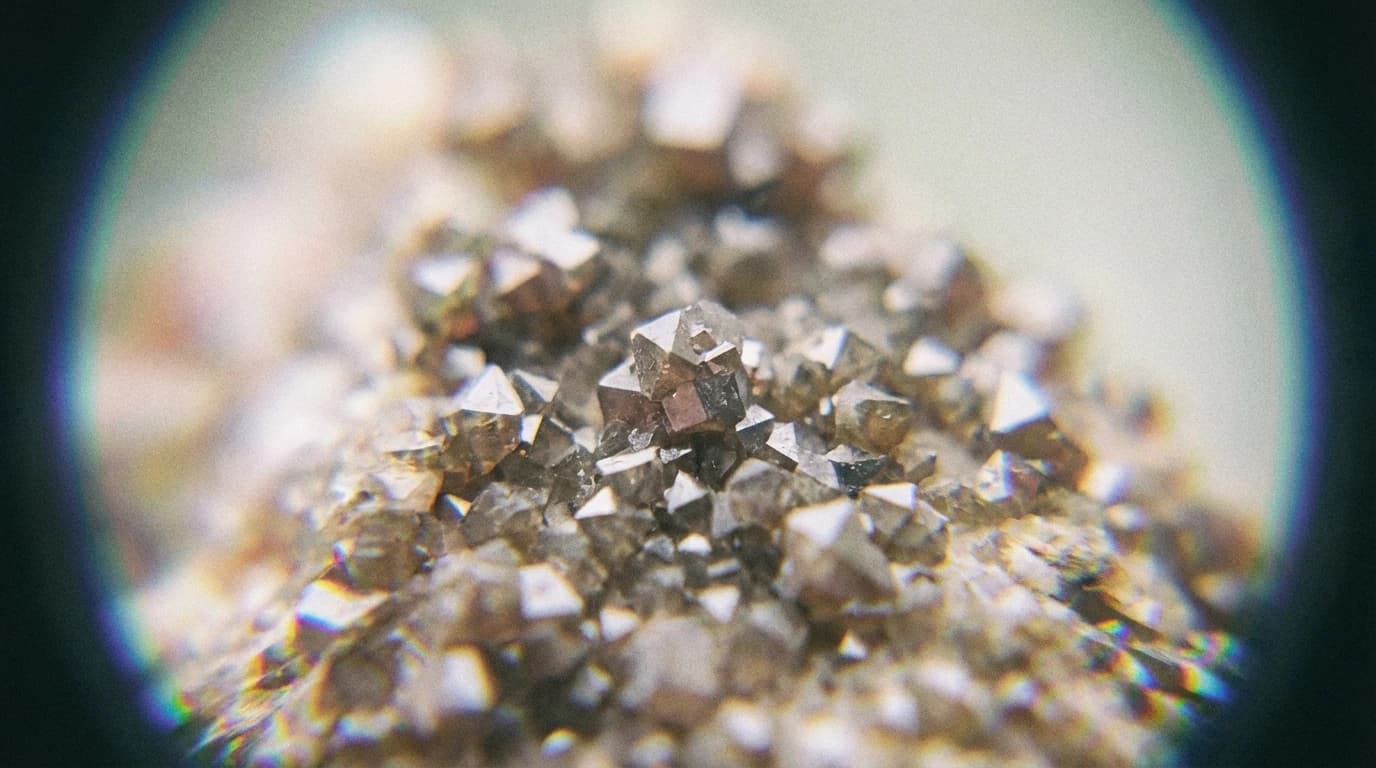
Is the sheer messiness of biological life actually a form of high-functioning art?
Look closely at a living cell, and you might see chaos. Proteins collide, membranes flutter, and ions rush about in a frenzy. Yet, evolution relies on this apparent disorder. It organises a genome not by forcing it into a rigid grid, but by allowing flexible loops and folds that bring distant elements together exactly when needed. Structure dictates destiny.
Materials scientists, however, usually prefer a tighter ship. They want perfect lattices. This is particularly true for wide-bandgap perovskite solar cells (PSCs), a technology that promises to pair beautifully with silicon for tandem photovoltaics. But there is a snag. These materials suffer from halide phase segregation. As the film forms, bromine-rich domains tend to clump together rather than spreading out evenly. It is a chemical mutiny.
When this segregation happens, defects appear. These defects act as non-radiative recombination centres—traps where electricity goes to die. The device loses efficiency, and stability plummets.
Taming the Crystal Lattice
To fix this, researchers introduced a new character to the mix: H3TATB. This is a planar molecule with high symmetry and three carboxyl groups, looking rather like a three-pointed star. The study found that introducing this additive significantly alters the behaviour of the perovskite precursor.
The molecule acts as a chaperone. It preferentially coordinates with the bromine-rich species, effectively holding them in check. This interaction slows down the crystallisation kinetics. Instead of rushing to form a messy, segregated solid, the film grows more deliberately. The result is a film with homogeneous composition and far fewer defects.
Here creates an interesting parallel to genomic organisation. Just as histone proteins manage the winding of DNA to prevent tangles and control expression, this additive manages the spatial arrangement of ions. It imposes a structural logic that prevents the 'noise' of defects from drowning out the signal of the current. Why does nature organise a genome with such complex folding? To ensure stability amidst activity. H3TATB appears to offer the perovskite lattice a similar benefit.
Measuring the Impact
The physical changes were measurable. The team recorded an average contact potential difference of 0.23 V in the modified films, compared to 0.32 V in the control. This reduction implies a shift in the work function and suggests n-type doping characteristics, which may facilitate better electron extraction.
The performance metrics reflect this structural healing. The wide-bandgap PSCs achieved a power conversion efficiency of 19.26%. Perhaps more importantly, the stability improved. The devices retained over 88% of their initial efficiency after 800 hours in ambient air. By borrowing a trick from the playbook of organised complexity, we might finally make these crystals durable enough for the real world.