Microbiome disease prediction: Why classic algorithms are still beating advanced AI
Source PublicationSpringer Science and Business Media LLC
Primary AuthorsMu, Tang, Chen
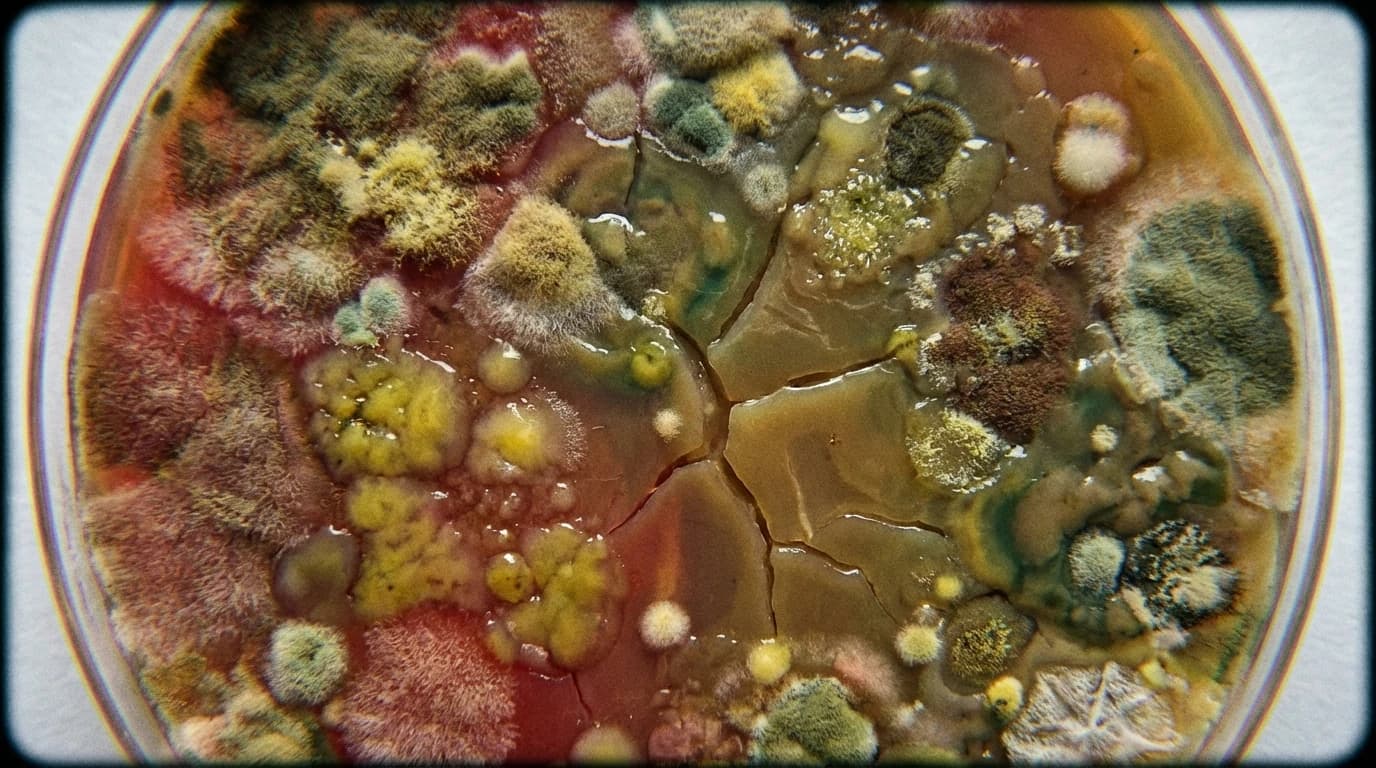
For years, scientists have struggled with microbiome disease prediction due to sparse, highly variable data across different patient groups. A new early-stage preprint systematically evaluates whether advanced AI foundation models can finally overcome this persistent bottleneck.
The Context: The Data Challenge
The trillions of microbes living in our digestive tract hold vital clues about our overall health. Yet, turning this complex biological information into a reliable diagnostic tool is exceptionally difficult.
Microbiome data is notoriously compositional and disorganised. A bacterial profile collected from one research cohort rarely matches data from another, creating massive inconsistencies known as inter-study heterogeneity.
Researchers naturally hoped that the recent boom in large language models and foundation models might solve this. In theory, these massive AI systems should generalise this information far better than older, traditional algorithms.
The Discovery: Benchmarking Microbiome disease prediction
This preliminary computational study benchmarked classical machine learning against newer AI paradigms. The research team analysed 83 public case-control cohorts covering 20 different diseases.
They tested general-purpose tabular models, GPT-derived semantic embeddings, and a dedicated microbiome-specific foundation model. The study measured actual predictive performance across these diverse datasets under multiple conditions.
The findings were unexpected. GPT-derived embeddings consistently underperformed standard numerical data representations. Meanwhile, the general-purpose tabular AI showed strong out-of-the-box capabilities.
However, even the most advanced AI did not consistently beat well-tuned traditional methods, such as regularised logistic regression and random forests. The dedicated microbiome model also lagged behind the classical baselines. This suggests that current microbiome-specific pretraining does not yet provide a clear advantage when dealing with varied study data.
The Impact: The Next Decade of Diagnostics
What does this mean for the next five to ten years of clinical diagnostics? It suggests that the medical community cannot simply plug biological data into an off-the-shelf AI and expect flawless results.
Instead, the trajectory of this field will focus heavily on refining how we build and train these specific systems. Over the coming decade, developers will need to massively scale up pretraining data and improve the taxonomic resolution of their models.
Downstream applications will eventually benefit immensely from this rigorous, critical testing. By identifying the current limits of AI, scientists know exactly where to focus their engineering efforts. Once researchers optimise these microbiome-specific models, the bioinformatics sector could see:
- Foundation models with the massive scale and taxonomic resolution needed to handle complex biological data.
- Highly robust computational tools that function reliably across diverse, heterogeneous study populations.
- A clearer pathway for translating these algorithms from computational benchmarks into reliable future applications.
For now, classical machine learning remains highly effective and difficult to beat. As this early-stage research advances, it will guide developers toward building the highly reliable, generalisable tools required for the future of human health.