Microbial Ecology in Extreme Environments: A Saline Route to Future Biotechnology
Source PublicationMarine Biotechnology
Primary AuthorsGao, Zhao, Guan et al.
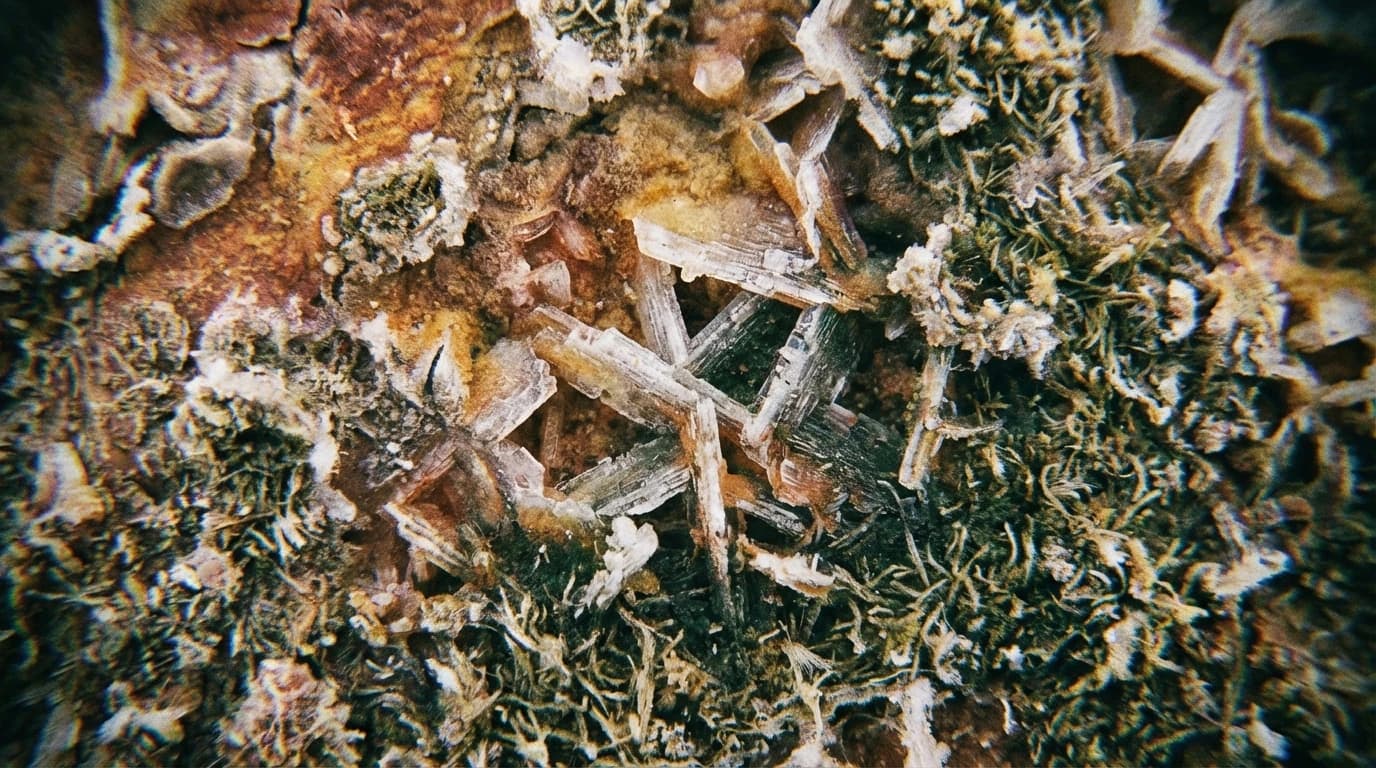
Our current biotechnological toolkit is often limited to organisms that thrive in comfort. Yet, industrial processes and environmental remediation often require resilience that standard lab strains lack. We need a radical departure from traditional sourcing methods. The solution may lie in the most hostile corners of our planet.
These results were observed under controlled laboratory conditions, so real-world performance may differ.
A recent study investigating microbial ecology in extreme environments—specifically salt drying systems—provides a compelling dataset. These environments are not merely barren wastelands; they are pressure cookers for evolution. Researchers utilised high-throughput amplicon sequencing to observe how prokaryotic and eukaryotic communities behave across a sharp salinity gradient. The environment is harsh. It is unforgiving. Yet, life persists.
The measurements were precise. Beta diversity analysis indicated significant variations in community composition as salt levels rose. Interestingly, the data revealed that species turnover was the primary driver of these patterns. The local species pool regulated this turnover, rather than it being a random occurrence. Comparisons of niche indices showed that seawater eukaryotic communities possessed stronger adaptability to salinity than prokaryotes. Furthermore, the neutral community model measured a higher dispersal ability in eukaryotes. While prokaryotic assembly appeared deterministic—governed by strict environmental filtering—eukaryotic assembly was more stochastic.
How microbial ecology in extreme environments reshapes biotechnology
This study does more than catalogue bacteria in brine. It helps validate the potential for harnessing extremophiles in biotechnology. If we view these salt pans as vast, natural selection laboratories, the implications become clear. Organisms in these niches must develop unique adaptation mechanisms to survive osmotic stress and intense competition. These stress-response strategies are the raw materials for future bio-engineering.
The trajectory of this technology suggests a shift in how we approach industrial biology. Currently, we often struggle to maintain microbial cultures in fluctuating conditions. The future lies in understanding community assembly. By applying the same ecological analyses used in this study—mapping beta diversity and species turnover—to other extreme niches, we could identify the rules that allow complex communities to stabilise under stress.
Consider the challenge of bioremediation in polluted, high-salinity soils. The environment is hostile and variable. The mechanisms that allow a halophilic eukaryote to thrive and disperse in a salt pan might be adapted to spread beneficial traits in damaged ecosystems. The high dispersal ability observed in eukaryotes in this study suggests robust mechanisms for movement and establishment. Decoding these rules could lead to more resilient environmental interventions.
We are moving away from trial-and-error. We are moving towards a model where we simulate and sequence the microbial ecology in extreme environments to predict bioactive potential. This is not just about understanding salt. It is about reading the genetic instruction manuals of survivors to build better biological systems.