Meet the Asgard Archaea: The Missing Link in Our Evolutionary History
Source PublicationNature Reviews Microbiology
Primary AuthorsPanagiotou, Geesink, Köstlbacher et al.
Imagine tracing the history of a modern mega-corporation. You start with solo street vendors. These represent simple bacteria and archaea, life's earliest and most basic forms.
These results were observed under controlled laboratory conditions, so real-world performance may differ.
Then, you look at today's massive tech giants, complete with specialised departments, internal communications, and boardrooms. These represent eukaryotes—complex life forms like plants, animals, and humans.
For decades, biologists were missing the middle step. They could not find the first small business that decided to organise into distinct departments.
Enter Asgard archaea. These microscopic organisms are the long-lost middle managers of the evolutionary family tree.
Tracking Down the Asgard Archaea
For a long time, scientists knew life was split between simple cells and complex cells. But the jump from simple to complex seemed too sudden.
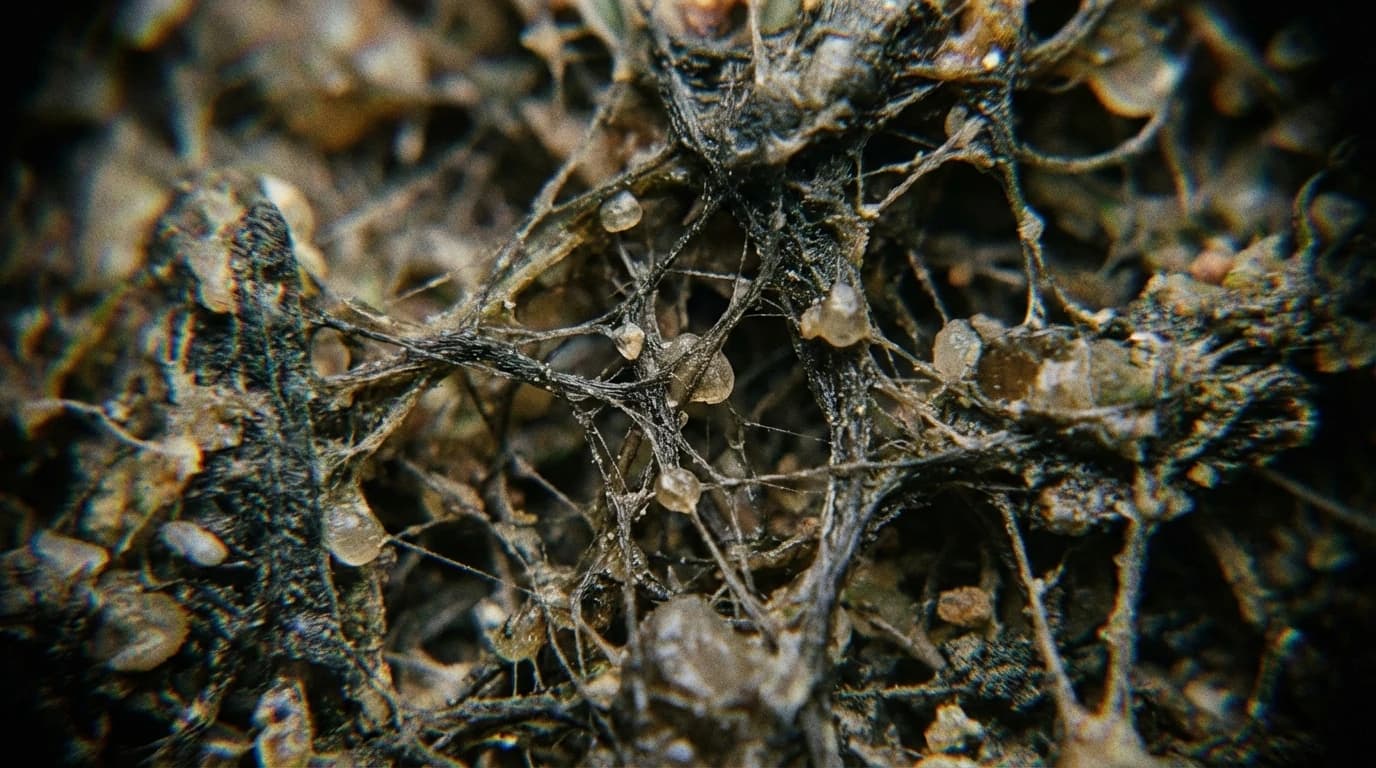
About a decade ago, researchers started scooping up marine sediments from the ocean floor. They analysed the raw genetic material hidden in the mud.
Deep in this muck, they found traces of microbes that did not fit the usual categories, which we now call Asgard archaea.
These microbes contained 'eukaryotic signature proteins'. Returning to our corporate analogy, they had the blueprints for internal departments, even if they were still operating out of a muddy garage.
What the Latest Review Measures
A recent scientific review summarises everything researchers have measured over the last ten years regarding these microbes. The data shows a massive expansion in their known genetic diversity.
By sequencing their genomes, scientists found highly varied metabolic systems. This means these microbes have diverse ways of generating energy and surviving in extreme environments.
More recently, researchers have managed to characterise cultured representatives of these microbes in the lab. While evidence of their physical behaviour is currently limited to these specific lab-grown strains, observing them has revealed unique cell biology.
These cultured cells display bizarre biological characteristics. They hint at entirely undescribed, mysterious lifestyles and new ways of interacting with their environment.
Rewriting the Origins of Complex Life
The genetic and structural evidence suggests that Asgard archaea played a central role in the emergence of all complex life. They could be our deepest, oldest ancestors.
Comprehensive genetic analyses provide compelling evidence that these microbes were instrumental in the jump to eukaryotes. Somehow, their unique biology helped bridge the gap between simple cells and the complex organisms we see today.
This review sets the agenda for future research. Scientists now want to figure out exactly how these microbes behave in the wild.
Future studies will need to answer three main questions:
- How does their unique cell biology actually function?
- How do they interact with their environment and organise their local ecology?
- How exactly did they transition into the complex cells that make up you and me?
By answering these questions, we could finally understand exactly how life took its biggest evolutionary leap forward.