Mapping the Density Hotspots of Antarctic Krill Microplastics
Source PublicationScientific Reports
Primary AuthorsGallagher, Manno
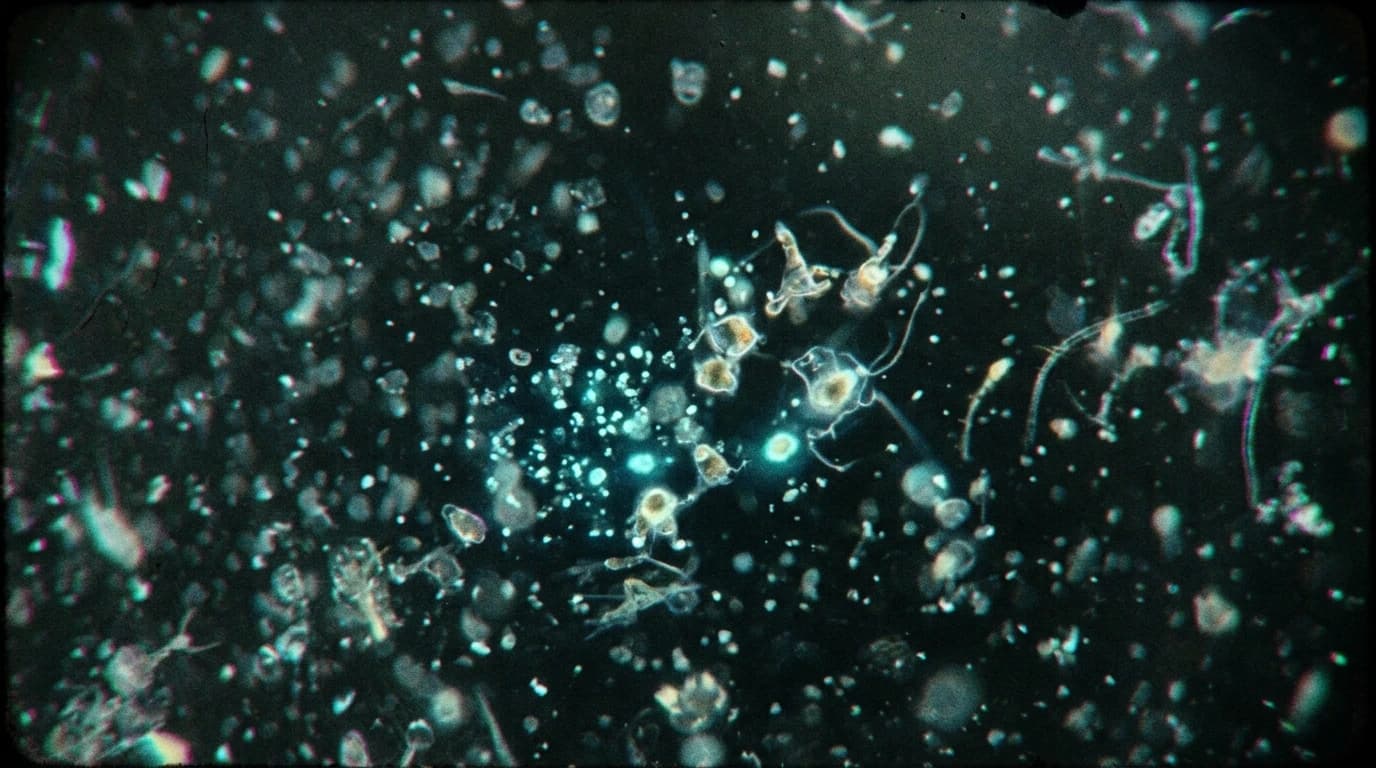
Identifying Antarctic Krill Microplastics Hotspots
Current environmental monitoring often fails to account for the vertical movement of marine life when predicting pollutant exposure. New research addresses this by simulating the transport of drifting particles alongside the daily migration patterns of krill.
These results were observed under controlled laboratory conditions, so real-world performance may differ.
Antarctic krill are the most abundant euphausiid on Earth, serving as a critically important energy link between primary producers and secondary consumers. Because microplastics have been found throughout the Southern Ocean, understanding where these organisms meet synthetic debris is vital for assessing ecosystem health. Based on these physical ocean models, researchers can now pinpoint specific overlap zones.
Scientists used a physical ocean model to track krill and plastic movement around the West Antarctic Peninsula. They identified several persistent hotspots where ocean currents and biological behaviours cause both to aggregate in high densities. The study measured how near-surface and deep-water currents dictate these overlaps, finding that vertical movement is a primary driver of exposure.
The Future of Precision Conservation
This data suggests that the next decade of marine science will focus on high-resolution risk maps. By predicting where Antarctic krill microplastics interactions are most intense, researchers can move beyond general observations toward predictive ecology.
In the next 5 to 10 years, we can expect:
- The integration of species-specific vertical behaviours into global plastic transport models to identify critical exposure windows.
- Refined bioaccumulation models that better predict the health of secondary consumers like seals and penguins.
- Enhanced monitoring of keystone species within identified hotspots to track the long-term impact of synthetic debris on the food web.
By integrating biological behaviour with physical oceanography, we gain the ability to forecast ecosystem shifts with greater precision. This transition to proactive monitoring allows for a more grounded and nuanced understanding of how the Southern Ocean habitat responds to anthropogenic pressures.