Making Waves: How Contact Electrochemistry Turns Seawater into Disinfectant
Source PublicationNature Communications
Primary AuthorsQian, Liu, Wu et al.
"Like rubbing a balloon on your hair to create static electricity, but using that exact friction-generated charge to split water molecules and create disinfectants."
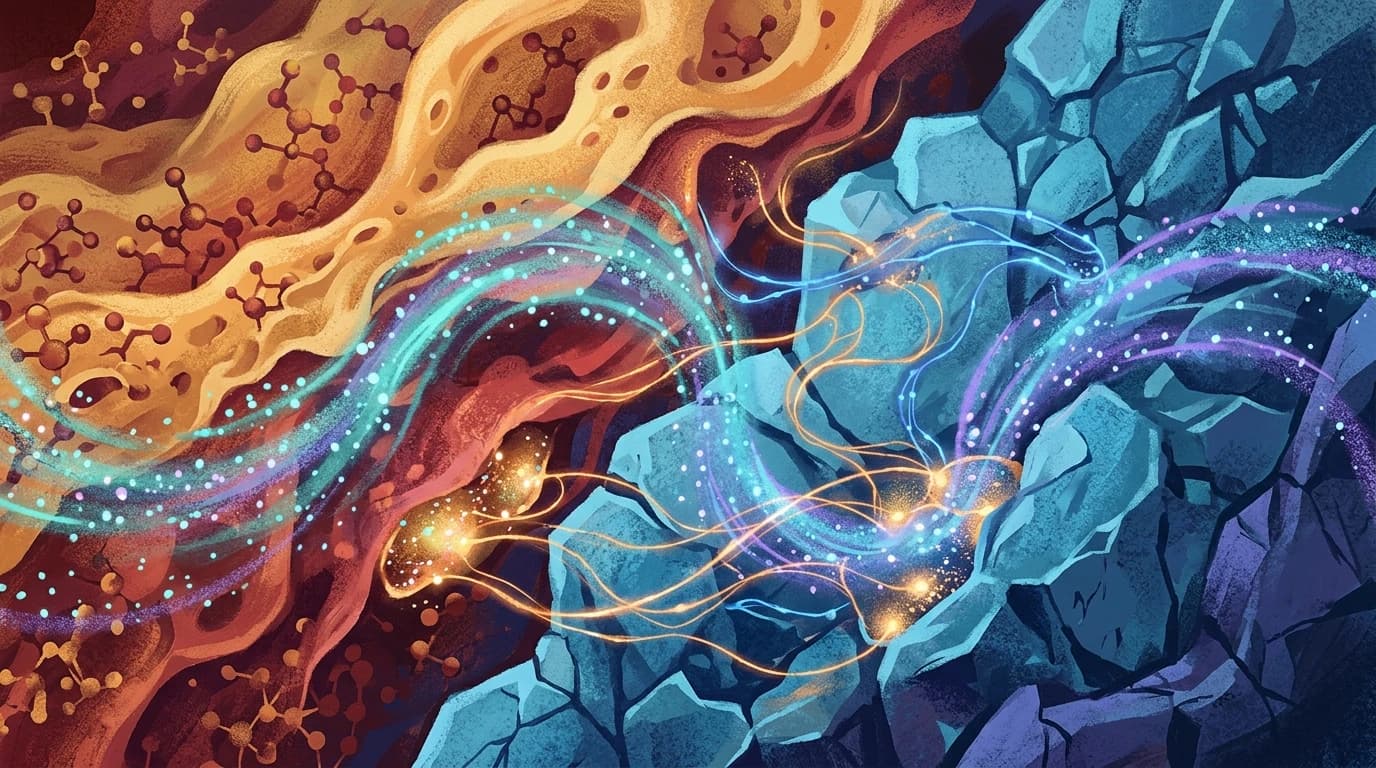
Ever shuffled across a carpet in wool socks just to zap your friend with static electricity? That tiny spark is contact electrification. It is usually just a funny prank, but scientists have figured out how to make that exact "static zap" perform useful chemical reactions.
These results were observed under controlled laboratory conditions, so real-world performance may differ.
We currently need heavy machinery, external electricity, or expensive metal catalysts to manufacture chemical disinfectants. This traditional setup is expensive and often relies on fossil fuels. Finding a way to generate disinfectants using simple physical movement could eventually help remote communities clean their water supplies without relying on heavy chemical shipments.
The Power of Contact Electrochemistry
In a recent lab study, researchers placed fluorinated ethylene propylene (FEP) plastic particles into natural seawater and shook them using ultrasound. The constant contact and separation between the plastic and the water created strong electrical double layers. This process, called contact electrochemistry, generated hydroxyl and chlorine radicals. While this proof-of-concept is currently limited to lab-scale ultrasonic vibration, the study measured several key outcomes:
- Active chlorine production reached 208.8 micromoles per gram per hour.
- The system operated continuously for over 700 hours.
- No toxic chlorine gas or plastic dissolution was detected.
Why This Matters for Your Future
So, why is this a game-changer? While we aren't quite ready to power entire municipal water systems with ocean waves just yet, this research proves that we can harvest ambient mechanical energy to drive crucial chemical reactions. Instead of shipping heavy chemical disinfectants to remote areas, future setups might use mechanical agitation to generate active chlorine right where it is needed. It’s a green, clever way to bypass the power grid, taking us one step closer to sustainable, on-site chemistry.