Magnetic Ghosts and the Origin of Planetary Water
Source PublicationScientific Publication
Primary Authorsxiao
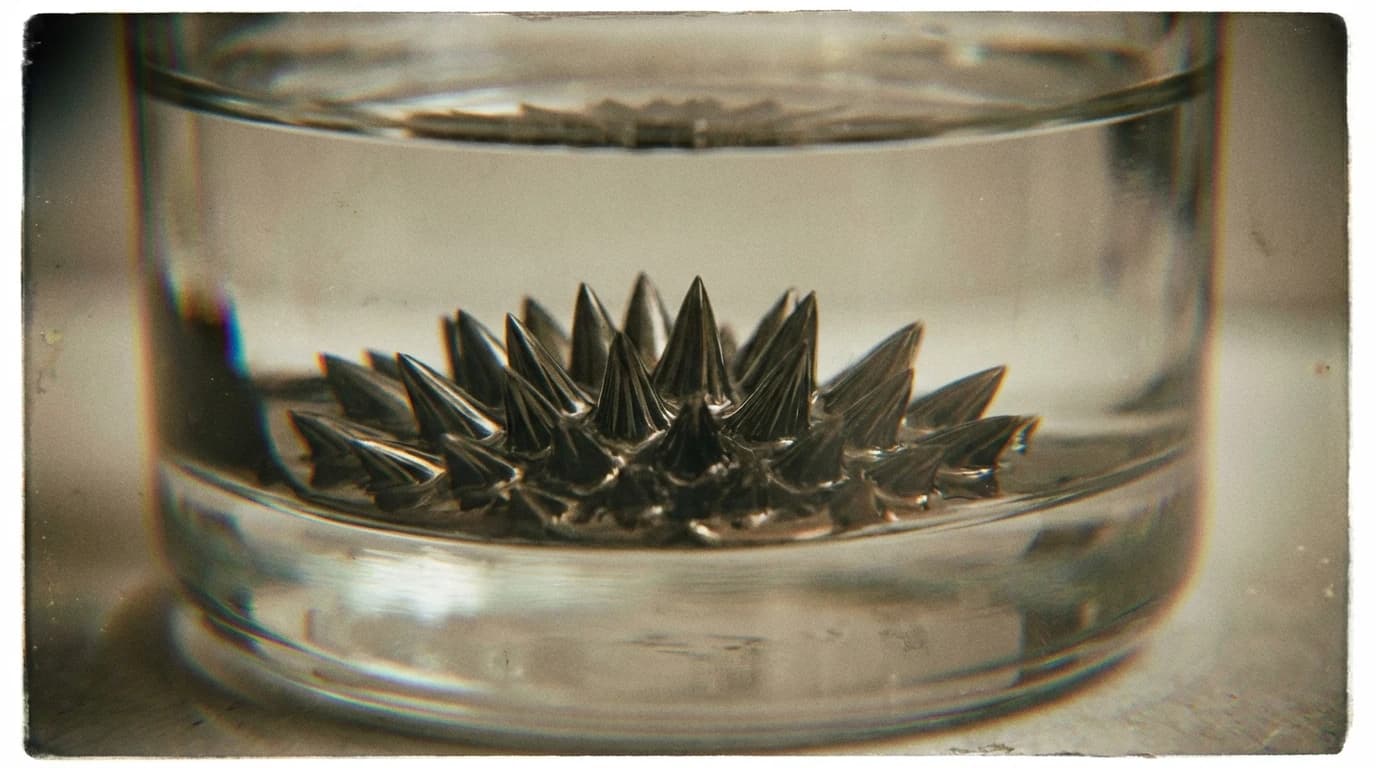
Is there not a strange, mathematical beauty hiding inside the apparent disorder of the cosmos? We often imagine the universe as a place of violent collisions and random scatter, yet occasionally, the numbers align with suspicious elegance. A new study challenges our standard assumptions about how wet worlds come to be, suggesting that magnetism, rather than mere icy bombardment, might be the silent author of our oceans.
The researchers base their work on a concept known as the space-wide magnetic particle cosmic evolution theory. They posit that magnetic particles are not just passive debris but active participants in the assembly of matter. Specifically, the team derived a quantitative equation to measure how these particles interact with hydrogen and oxygen nuclides. The results are startlingly precise.
Rethinking the origin of planetary water
According to the paper, the adsorption ratio of magnetic particles to hydrogen and oxygen is approximately 2.05 to 1. This figure sits tantalisingly close to the 2:1 ratio essential for H₂O. The authors argue that this is no coincidence. They propose a mechanism where magnetic particles act as a scaffold. First, they attract the precursor elements through polar adsorption. Then, they provide a form of magnetic confinement that stabilises the water phase, ensuring long-term retention through mass-energy synergy.
This perspective shifts the narrative. Instead of water being an accident of delivery, it becomes an inevitability of structure. The study suggests that these magnetic particles—which the authors boldly claim constitute the essence of dark matter—exert a constraining effect on where water can exist and persist.
From an evolutionary standpoint, this genomic organisation of the cosmos is fascinating. Biology is thrifty; it reuses successful code. Perhaps the universe operates on similar principles. If a magnetic field can organise energy, why not use it to organise matter? It implies that habitability is not just about being in the right place relative to a star, but about possessing the right magnetic architecture to trap the necessary ingredients.
While the researchers report a model fitting error of less than 5% and claim triple verification through simulation and observation, the link to dark matter remains a provocative hypothesis. The data indicates a strong correlation between magnetic surface polarity and adsorption, offering a potential new tool for detecting habitable exoplanets. However, whether these particles are truly the ghost in the machine remains a question for future observation.