Light-Based Neural Stimulation Could Revolutionise Auditory Implants
Source PublicationJournal of Neural Engineering
Primary AuthorsCoventry, Luu, Bartlett
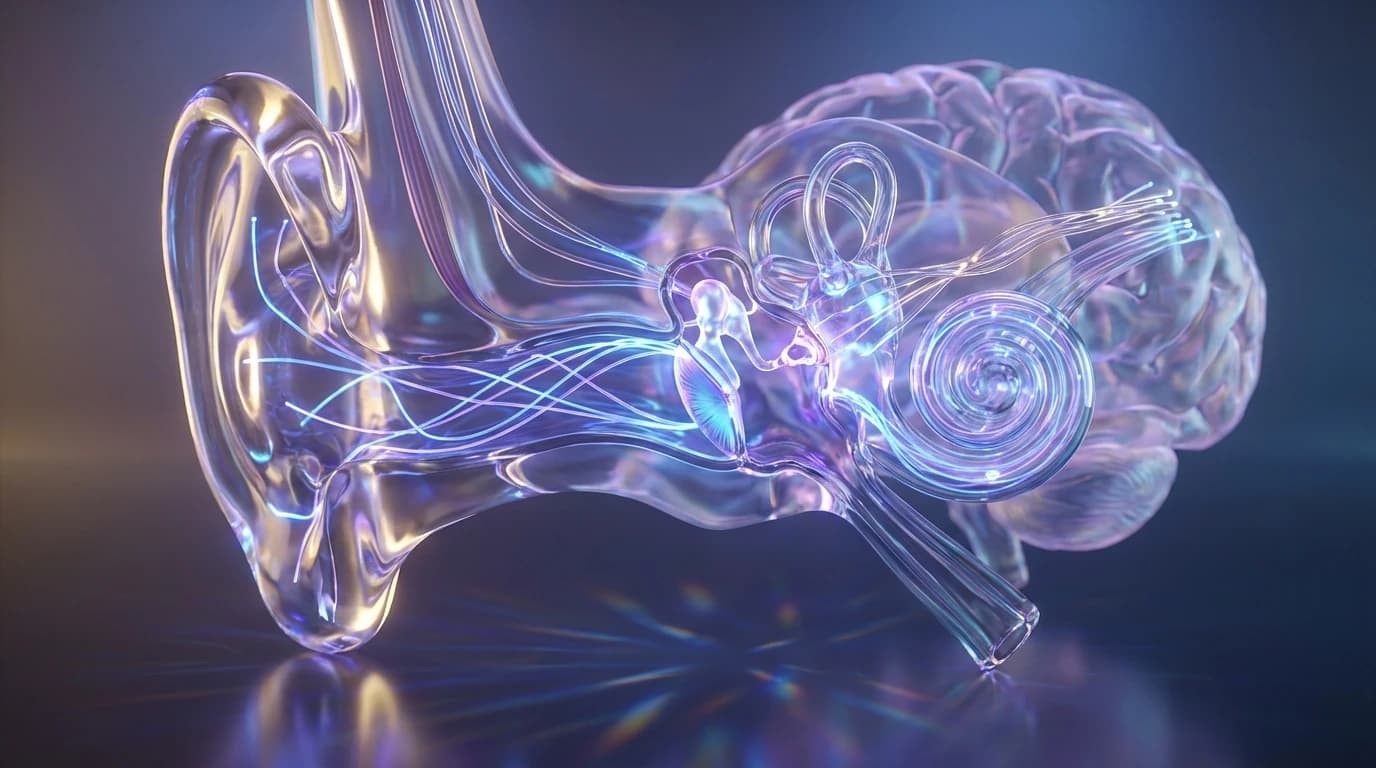
For decades, electrical stimulation has been the gold standard for neuroprosthetics, such as cochlear implants. However, electricity tends to spread, making it difficult to target specific neurons without inadvertently activating their neighbours. Infrared neural stimulation (INS) offers a promising solution by using light to provide precise, focal stimulation with superior spatial profiles. Yet, until now, the exact neural dynamics triggered by this method remained largely a mystery.
In a recent study involving the auditory circuits of rats, researchers successfully mapped how the brain responds to INS. They found that the stimulation significantly increased the amplitude of Local Field Potentials—the electric signals generated by clusters of neurons. This response followed a 'log-linear' pattern, meaning the brain’s reaction scaled predictably with the energy of the infrared pulses.
Crucially, the stimulation entrained, or synchronised, with specific brain wave frequencies known as beta and gamma bands, extending up to 200 Hz. While most activity was rhythmic, a subset of neurons displayed chaotic oscillations. Far from being random noise, this non-linear behaviour appears linked to the transfer of information across cortical circuits. These findings provide essential design principles for future 'all-optical' auditory neuroprostheses, suggesting that light could one day restore hearing with far greater clarity than current electrical implants.