Inside the Strange Geometry of Spherical Nucleic Acids
Source PublicationAccounts of Chemical Research
Primary AuthorsForsyth, Chan, Fink et al.
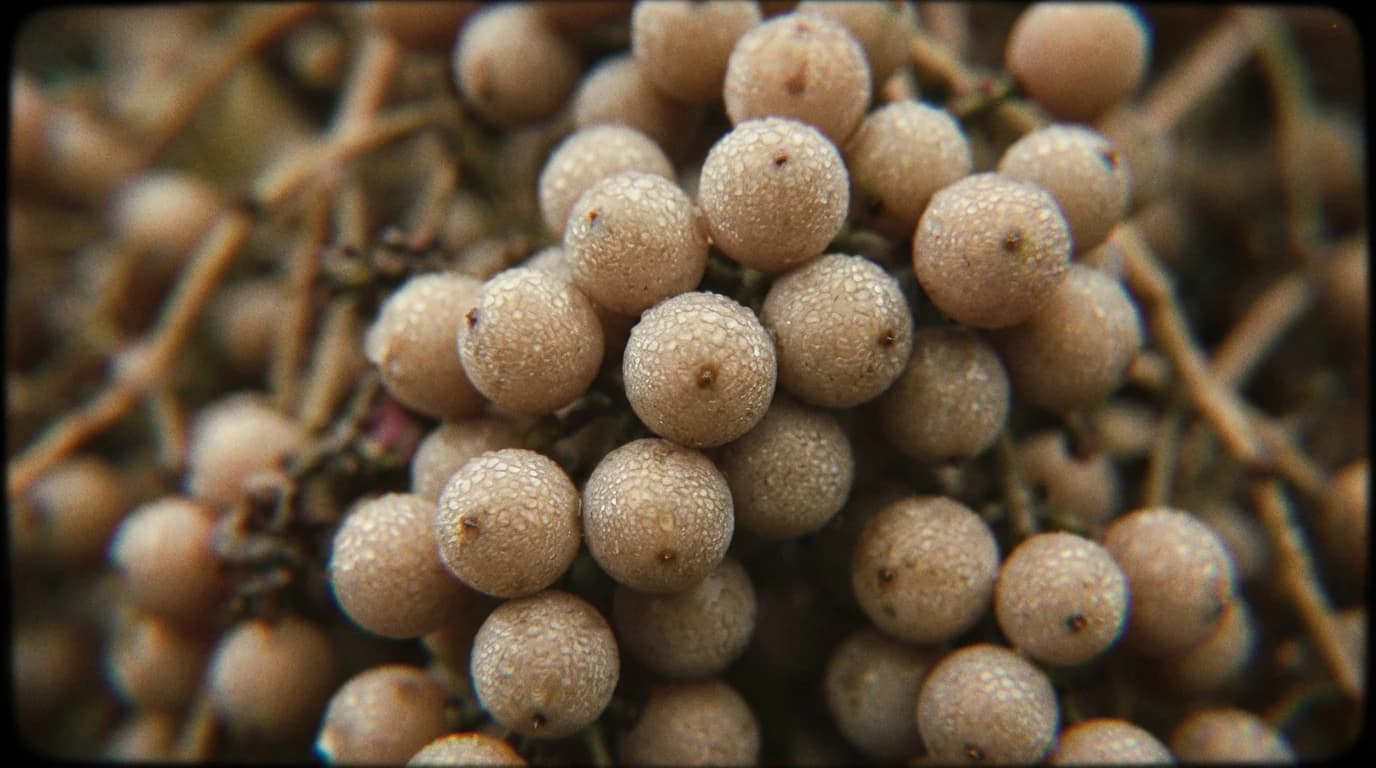
The Spaghetti and the Meatball
Imagine a regular strand of DNA as a lone piece of cooked spaghetti. It is floppy, vulnerable, and difficult to push through the protective membrane of a living cell.
Now, imagine taking hundreds of those spaghetti strands and sticking them into a tiny meatball, pointing outwards like a microscopic Koosh ball. That spiky, three-dimensional geometry changes how the entire structure behaves.
This is the basic idea behind spherical nucleic acids (SNAs). By simply rearranging how genetic material is packaged, scientists have solved some of the oldest problems in nanotechnology.
Why Spherical Nucleic Acids Matter Right Now
For decades, researchers have struggled to deliver genetic instructions safely into human cells. Free-floating DNA is fragile. When injected into the body, defensive enzymes usually chop it to pieces.
To get around this, scientists normally have to hide DNA inside complex lipid bubbles or hollowed-out viruses. These delivery methods can sometimes trigger unwanted immune responses or require toxic chemical additives.
SNAs offer a completely different approach. Because of their dense, bristly shape, they act like VIPs walking past a nightclub bouncer. They naturally slip right through cellular membranes without needing any extra chemical helpers.
What the Evidence Shows
A recent review examines 30 years of data on these fascinating structures, which were first invented in 1996 using gold nanoparticles as the centre.
Researchers measured how these dense DNA shells interact with their environment. They found that the tightly packed strands physically block destructive enzymes from getting close enough to cut the genetic material.
Furthermore, the studies show that SNAs bind to complementary DNA much more strongly than linear strands do. They also tend to avoid setting off the immune system's alarm bells, unless scientists specifically design them to do so.
Building the Future, Block by Block
Because SNAs are modular, chemists can swap out the central nanoparticle or change the DNA sequences to build highly specific tools. This flexibility suggests they could reshape multiple scientific fields.
According to the review, these spiky nanostructures may be used to:
- Deliver CRISPR gene-editing tools directly into specific cellular compartments.
- Act as highly targeted vaccines or biological labels for disease detection.
- Organise themselves into 3D crystals to form entirely new optical materials.
By mastering the synthetic design of these particles, researchers have created a reliable framework. It suggests that the physical shape of our genetic medicines may be just as important as the code they carry.