How Two Proteins Power Soybean Lipid Metabolism
Source PublicationPlant Biotechnology Journal
Primary AuthorsLi, Li, Xu et al.
"Think of a busy bottling plant where one machine makes the oil and another fills the barrels. The proteins FA9 and VAP are like the docking mechanism that connects the factory floor to the storage barrels, ensuring the oil is packed away safely."
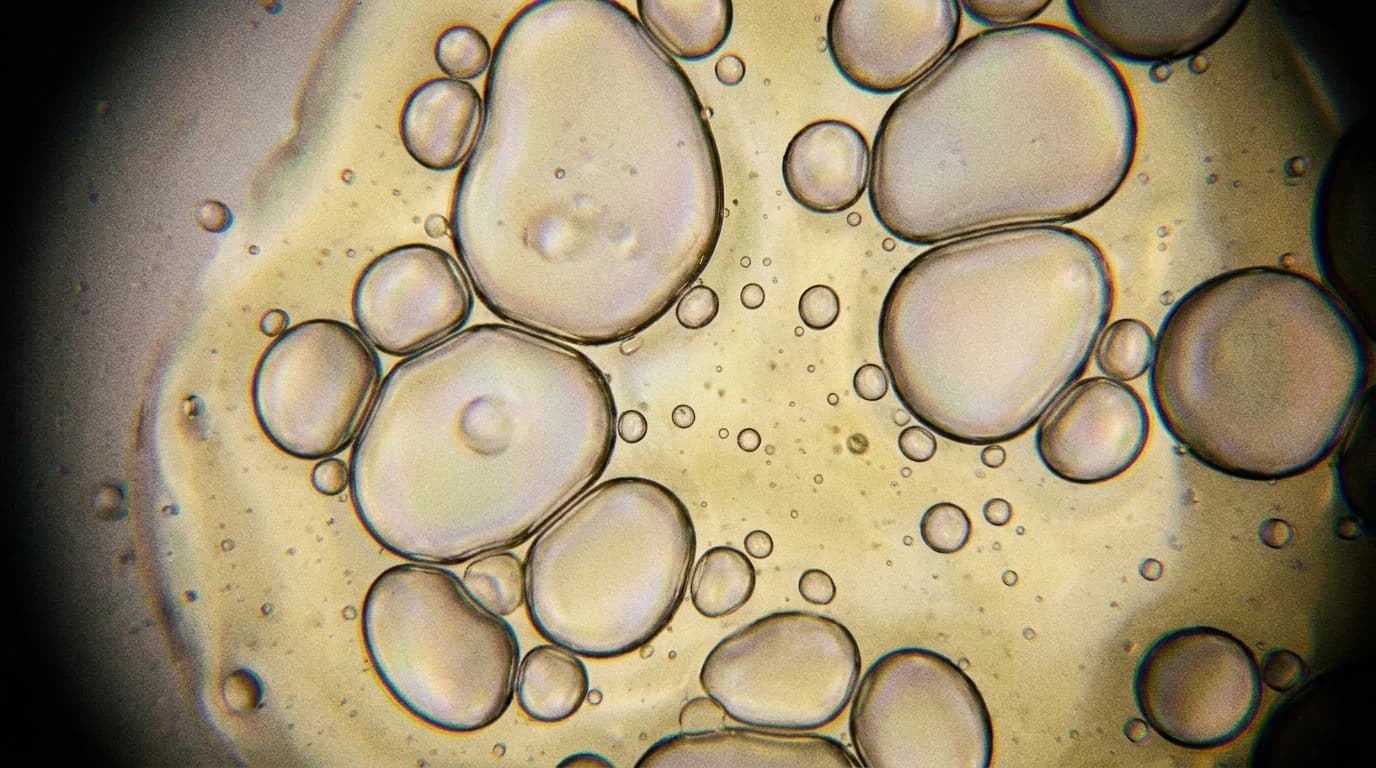
Imagine a massive distribution warehouse preparing for a long, cold winter. The workers need to pack as much energy-rich fuel into storage barrels as possible to survive. They have plenty of raw fuel on the factory floor, but getting it safely into the barrels requires a specialised loading dock. If the pump and the dock fail to connect, the fuel spills, and the barrels stay empty. But if two specific machines lock together perfectly, the fuel flows smoothly, filling the warehouse rapidly.
The Mechanics of Soybean Lipid Metabolism
This warehouse scenario is exactly what happens inside a growing soybean seed. Soybeans are one of the most important sources of edible oil and plant protein on Earth. To pack that valuable oil into the seed, the plant relies on a microscopic loading dock. When we look closely at soybean lipid metabolism, we see a fascinating biological factory at work.
Researchers recently wanted to find out exactly how this factory operates. They focused on a protein known as FA9. Think of FA9 as the pump on our factory floor, which in a plant cell is called the endoplasmic reticulum. To understand its role, the team mapped the seeds cell by cell. They read the genetic instructions active inside each individual cell, creating a highly detailed map of the plant's internal structures. This allowed them to see exactly where FA9 goes to work. But they soon noticed that FA9 does not act alone.
The cellular mapping revealed a second protein named VAP. This is the docking station. The researchers found that FA9 physically connects to VAP to get the job done. Step-by-step, here is how the process works. First, the plant cell makes raw fat molecules at the endoplasmic reticulum. Next, the FA9 pump binds directly to the VAP docking station at the membrane. Finally, this physical connection creates a bridge that pushes the fat into safe storage bubbles known as lipid droplets.
To prove this mechanism, the scientists used gene-editing tools to remove these specific proteins from the plants. If you remove VAP, then the plant struggles to store fat, just like a broken loading dock. When both FA9 and VAP were removed, the soybean seeds ended up with much lower total fat and surprisingly higher protein. Conversely, when the researchers added extra FA9 and VAP to plant cells in the lab, they saw a massive increase in the formation of lipid droplets.
This tells us exactly how these molecules operate together to build oil reserves. Understanding this cellular behaviour could lead to better, more nutritious crops. The study suggests that by adjusting these specific genes, plant breeders might be able to design soybeans with custom oil or protein levels. It provides a clear, practical target for agricultural scientists looking to improve our global food supply.