How transient food packaging could protect fresh snacks and vanish without a trace
Researchers reviewing transient food packaging describe how adding tiny nanomaterials to natural polymers can block spoilage and later trigger the wrapper to safely dissolve away.
Reading level
The full story with proper science words explained.
A wrapper on a mission
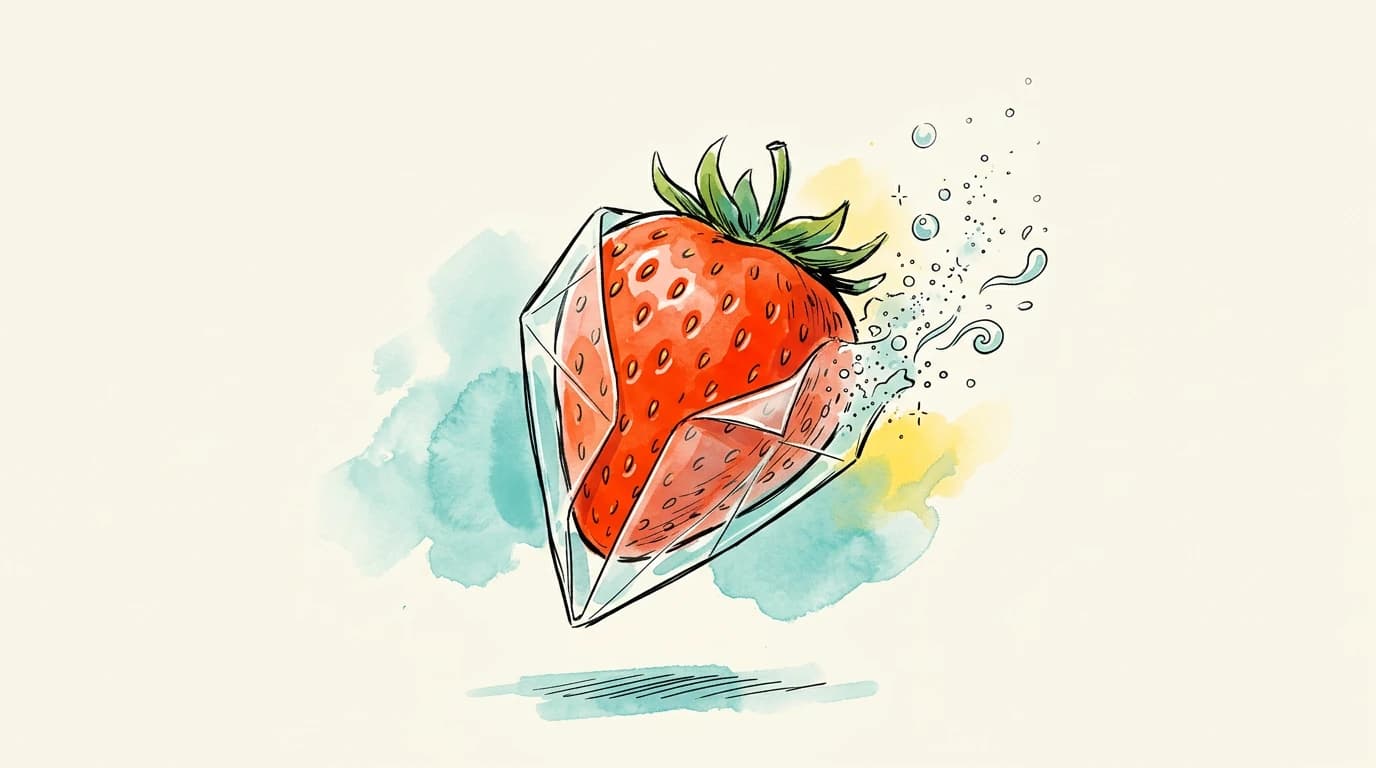
Every snack wrap you toss in the bin can linger in soil or oceans for decades. Even compostable films often demand hot factory composters to rot away. Without high heat, many simple bioplastics break down into tiny plastic specks that persist in nature. A new scientific review studies a clever way forward: transient food packaging designed to keep food fresh and then vanish without a trace.
Think of it as a top-secret spy note. It locks away its secrets until an exact cue dissolves it into safe dust. But before a food film vanishes, it has to do heavy physical work to shield fresh food from air and rot.
Microscopic roadblocks against air
To stop food rotting, films must keep out moisture, oxygen, and carbon dioxide. Plant-based biopolymers, which are large molecules made from renewable crops, are often weak and full of tiny gaps on their own. For example, polylactic acid softens at just 55 to 60 °C. That makes it too heat-sensitive for hot food filling unless scientists modify it.
The review shows that blending tiny bits of matter into the mix changes everything. Adding modified cellulose nanocrystals into polycaprolactone films forms a tight obstacle course. Scientists call this a tortuous diffusion path, which is a winding, maze-like route that slows gas and moisture down. This tiny maze cuts oxygen, carbon dioxide, and moisture flow by around 98%. Adding clays or guava-derived specks to starch films also raises tensile strength by 30 to 70%. These flat specks force air molecules to take a long detour around every corner.
Sensing spoilage and breaking down
These films do not just sit there like dumb plastic. They are programmable materials, meaning they react to their surroundings in steps rather than breaking down in one simple snap. Chemists build them with dynamic chemical bonds, such as esters or imines, that react to moisture, light, or acid released by spoiled food.
Some films even use nanozymes, which are artificial nanomaterials that mimic natural enzymes to speed up chemical reactions. When a buyer opens the film or food turns bad, these clever links snap. The long molecular chains then fall apart into harmless parts. Yet making these films commercially practical takes careful balance. Adding pricey carbon nanotubes or graphene sheets must stay below 5 to 10% of total film weight. Keeping this ratio low cuts costs and helps future recycling. Also, films built to split easily can struggle to stay strong during shipping.
What we still do not know
One major worry stops these vanishing films from hitting grocery shops right now. The base film might break down neatly, but the fate and long-term toxicity of loose nanoscale specks left behind are still unknown. Metallic specks like silver, zinc oxide, or titanium dioxide could slip into food and harm living cells. Standard tests on how these tiny specks travel through wildlife and food webs are still scarce. Until researchers establish shared safety rules, these self-erasing wraps will stay inside the lab.
Science words
- Transient materials
- Materials designed to fully degrade into harmless components within a set timeframe without leaving lasting residues.
- Programmable materials
- Smart materials engineered to carry out multi-stage, feedback-controlled reactions when exposed to changing conditions.
- Tortuous diffusion path
- A winding, maze-like route created by embedded particles that dramatically slows the passage of gas and water molecules.
- Nanozymes
- Engineered nanomaterials that mimic the catalytic activity of natural enzymes to speed up chemical reactions.
- Safe-by-design
- A development strategy that anticipates and removes potential toxicity and environmental hazards from the very start of design.
Check it yourself
This story is based on a real research paper in Discover Nano by Singh, Paul, Victor et al. We write with AI help and check it against the paper, but the original is the final word.