How Transcranial Magnetic Stimulation for Chronic Pain Rewires the Brain
Source PublicationopenRxiv
Primary AuthorsMercer Lindsay, Haziza, Mackey et al.
"It's like using a magnet to flip a master circuit breaker in your brain from 'alarm mode' to 'chill mode,' and then using chemical glue to keep that switch stuck in place."
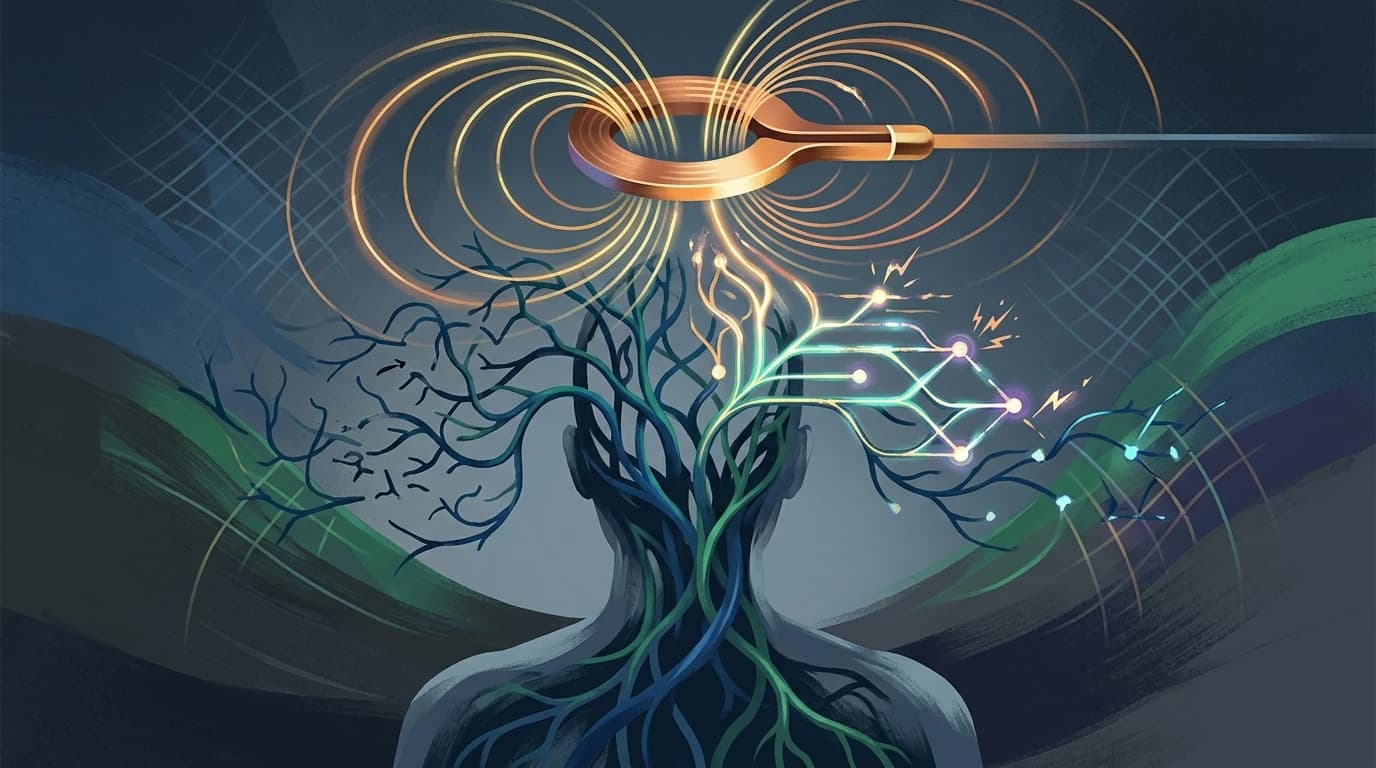
Did You Know Magnets Can Quiet Pain?
Did you know that zapping your brain with magnets could switch off chronic pain for weeks, without relying on heavy painkillers? While standard pain medications often only work for a few hours, scientists are finding that magnetic fields can reorganise brain activity to provide long-lasting relief.
How Transcranial Magnetic Stimulation for Chronic Pain Works
To find out how, researchers designed a miniature device to deliver transcranial magnetic stimulation for chronic pain to mice. A single session eased pain behaviours for up to two weeks. The magnetic pulses activate specific neurons in the motor cortex that connect directly to a deep brain centre called the RVM.
To map this pathway, the team:
- Designed a millimetre-sized magnetic stimulator for targeted delivery.
- Identified the exact neural pathway linking the motor cortex to the brain stem.
- Enhanced the pain-relieving effect using natural opioid boosters.
The Brain's Natural Pharmacy
The study suggests this relief relies on a combination of NMDA receptors and the brain's natural opioid peptides. This stimulation shifts the balance of RVM cells, turning down 'pain-on' neurons and boosting 'pain-off' neurons. When researchers boosted these natural opioids during the magnetic session, the pain relief lasted even longer. This suggests that combining magnetic therapy with specific drugs could offer a more durable strategy for managing human pain.