How to map plant DNA switches using chloroplast ChIP-seq
A lab protocol shows how to trap, isolate, and read protein-DNA interactions inside plant chloroplasts. By capturing the machinery that copies genes, scientists can track chloroplast activity with high precision.
Reading level
The full story with proper science words explained.
Freezing proteins in place
Light-harvesting systems contain some of the most common proteins on Earth. Yet mapping the proteins bound to chloroplast DNA has proved tough. Standard lab tests designed for the cell nucleus fail to hold these proteins in place inside chloroplasts.
To fix this, scientists improved a method called chloroplast ChIP-seq (or ptChIP-seq). First, they used cross-linking, a method that uses chemicals to stick proteins and DNA together. The team chilled the plant tissue on ice for four hours in a 4% formaldehyde bath. Typical nuclear tests use just 0.5% to 1.0% formaldehyde, which is too weak for chloroplasts. The stronger mix freezes fast-moving protein-DNA contacts without causing unwanted clumping.
Filtering out the background
Plant leaves are packed with nuclear DNA, which often drowns out signals from smaller cell parts. In standard leaf mash, chloroplast DNA makes up only 2% to 8% of the total genetic sample. The team used cloth filters and gentle spins in a centrifuge to separate unbroken chloroplasts first.
This cleanup step lifts chloroplast DNA to 40-60% of the read sample in mature leaves, and 25-50% in young seedlings. A small pinch of 5 grams of two-week-old Arabidopsis leaves provided enough substance for at least ten tests. Just 100 tiny four-day-old seedlings gave enough for two tests.
Next came sonication, blasting the burst chloroplasts with high-pitch sound waves to snap long DNA strands into bits 200 to 300 letters long. Tiny magnetic beads coated with antibodies then pulled out targeted proteins. These targets included RpoB, a key piece of PEP (plastid-encoded RNA polymerase), the main enzyme that copies genes in mature chloroplasts. Heating the mix with digestive enzymes freed the trapped DNA fragments for reading.
Tracking gene-reading traffic
Because the circular chloroplast chromosome, or plastome, is quite small, reading it does not require heavy computer power. Unique tags let scientists mix over 100 samples into one test lane, needing only 1 to 2 million reads each.
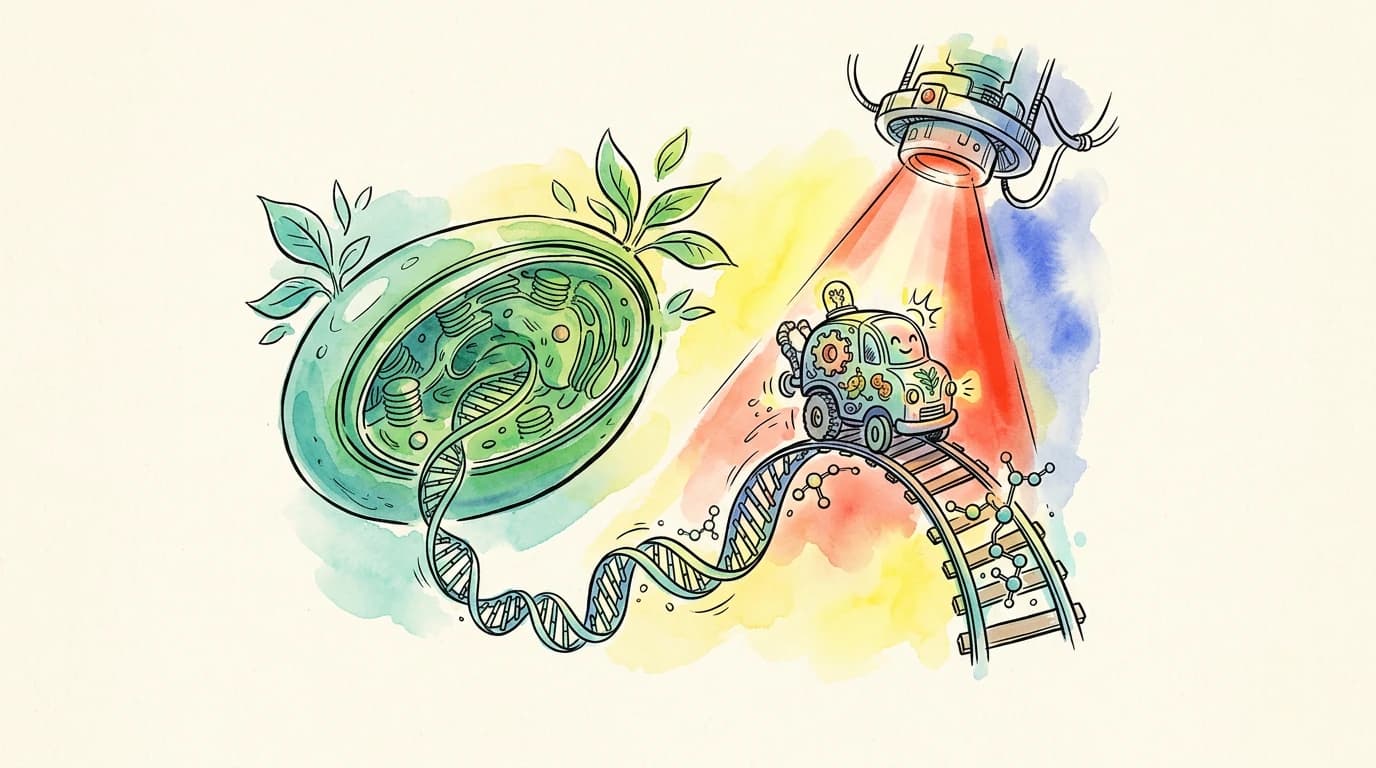
This method monitors gene copying far better than standard RNA tests. Plant cells heavily chop and alter finished RNA, which clouds direct counts. Watching RpoB acts like a road sensor clocking enzymes right on the DNA track, rather than counting cars at the end of a trip. Still, this sensor tracks position rather than driving speed: RpoB presence acts as a stand-in for gene copying, not a direct speed check.
Importantly, because core plastid proteins are vital to life, plants die if you delete them. That means tests lack complete knock-out checks. Scientists must balance results against an input control (untreated chopped DNA) or runs without antibodies to confirm their tools stick only to the right target.
What we still do not know
The system works well in young and old leaves, but limits remain. Tiny seedlings yield so little DNA that basic glowing dye tests cannot spot it. Also, pigment-based tests fail in mutant plants that lack green chlorophyll. Lastly, scientists do not yet know how non-green plastids act, or how nuclear proteins help shape the 3D form of the chloroplast nucleoid.
Science words
- Chloroplast ChIP-seq
- A lab method that isolates and maps proteins bound to chloroplast DNA.
- Cross-linking
- Using a chemical to form firm bonds between proteins and nearby DNA to hold them together.
- Sonication
- Using high-pitch sound energy to chop long DNA strands into small, even pieces.
- PEP
- Plastid-encoded RNA polymerase, the main bacterial-like enzyme that copies genes in mature chloroplasts.
- Plastome
- The small, circular DNA ring found inside plant chloroplasts and related plastids.
- Input control
- A sample of chopped, raw DNA used as a baseline to measure true protein enrichment.
Check it yourself
This story is based on a real research paper in Current Protocols by Palomar, López‐Morales, Fujii et al. We write with AI help and check it against the paper, but the original is the final word.