How tiny ocean drifters sense blue light across the globe
A pole-to-pole ocean survey reveals that microscopic plankton carry an unexpected variety of blue-light sensors, with roots tracing back to ancestors that never performed photosynthesis.
Reading level
The full story with proper science words explained.
Blue light travels deeper into the sea than any other colour of the rainbow. For tiny floating cells called stramenopiles, spotting these blue beams is vital. Stramenopiles form a broad group of living things that includes giant kelp, glass-shelled algae, and microscopic hunters.
To catch these rays, they use specialised proteins. These proteins carry a light-sensing part called a LOV domain. Biologists long thought these blue-light sensors belonged only to plankton that harvest solar rays to make food. But a global study has revealed a surprise. Microbes that do not make food from sunlight possess these sensors too.
The frozen oceans hold the richest toolkit
Scientists examined metatranscriptomes collected during the ‘Sea of Change’ ocean voyage. A metatranscriptome is a snapshot of all active RNA molecules taken straight from a wild mix of microbes. The team also tested 201 laboratory datasets covering 96 species. They catalogued 323 forms of a specific sensor type called aureochromes, or AUREOs for short.
AUREOs combine a light-sensing LOV part with a DNA-binding region called a bZIP domain. This built-in grip lets the protein clamp directly onto DNA to flip genes on or off. Surprisingly, the richness of these sensors did not drop off in icy waters. Instead, variety grew toward the frozen poles. This trend held true even after adjusting for species counts and sequencing depth.
Polar microbes face months of total winter darkness, followed by non-stop summer sun. Yet polar plankton use the exact same protein build as their warm-water cousins. The 128-block protein chain that senses light showed no major structural differences between polar and warm seas.
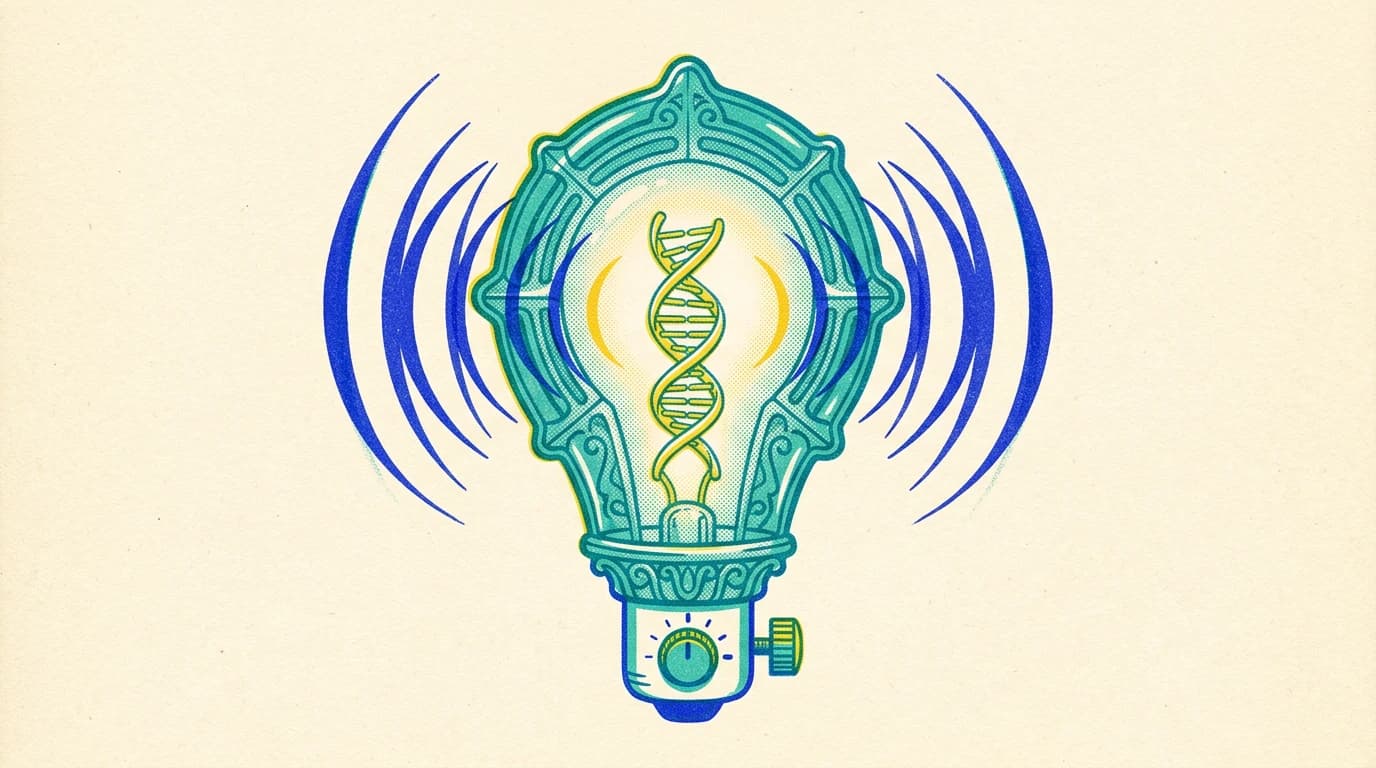
Think of an AUREO like a household lamp fitted with a dimmer switch. Polar cells do not redesign the light bulb to survive harsh winters. Instead, they just adjust the switch and timer settings. They alter how many proteins they make rather than changing the protein build itself.
Light switches in the dark
By building family trees of the genes, scientists found that this sensor group expanded through three ancient gene duplications. These splits gave rise to distinct branches over time: an early split between AUREO 2 and AUREO 1, followed by splits into types 1a, 1b, and 1c.
Unexpectedly, the team found AUREO genes in ancient heterotrophic stramenopiles. These are predatory single-celled microbes, such as Platysulcus tardus, that lack green plastids and cannot turn sunlight into food. This finding changes our view of how these sensors began. Rather than evolving just to help algae harvest light, they likely first arose in non-photosynthetic ancestors as simple switches inside the cell.
What we still do not know
This study comes with one key caveat. Looking at RNA reveals which genes are active at the moment of sampling. It does not measure the permanent DNA stored in every genome. Activity can change quickly if conditions shift.
In addition, an ancient branch in the family tree remains blurred because the historical trace is faint. Scientists still do not know if the common ancestor had a working blue-light sensor that was later lost, or a dark regulator that only learned to sense light later. The real daily jobs of strange new sensor shapes, such as polyketide cyclase-LOV, also remain unknown.
Science words
- LOV domain
- A protein section that senses environmental signals, typically blue light, using a bound cofactor.
- Aureochrome (AUREO)
- A blue-light sensor protein unique to stramenopiles that binds directly to DNA to regulate genes.
- bZIP domain
- A structural part of a protein that clamps onto specific stretches of DNA.
- Stramenopiles
- A major group of single-celled and multicellular organisms including diatoms, brown seaweeds, and non-photosynthetic predators.
- Heterotrophic
- Describing an organism that gets its energy by consuming organic food instead of photosynthesising.
- Metatranscriptome
- The collection of all active RNA molecules extracted straight from an entire mixed community of wild microbes.
Check it yourself
This story is based on a real research paper in Communications Biology by Misir, Kroth, Wohlrab. We write with AI help and check it against the paper, but the original is the final word.