How tiny bits of plastic leave chemical clues inside marine life
By tagging microscopic plastics with gold and palladium, researchers tracked how marine copepods absorb, excrete, and react to different plastic types in their food and water.
Reading level
The full story with proper science words explained.
Heads up: this study is a preprint, which means other scientists haven’t finished checking it yet.
Tagging a hidden threat
How do you track a microscopic bit of plastic inside a sea creature you can barely see? Finding nanoplastics in marine life is tough. These specks measure under one micrometre across. Because they hide so well within living tissue, standard lab tools struggle to count them. To solve this, scientists created model plastics tagged with tiny amounts of metal, such as gold or palladium.
Inside the copepod diet
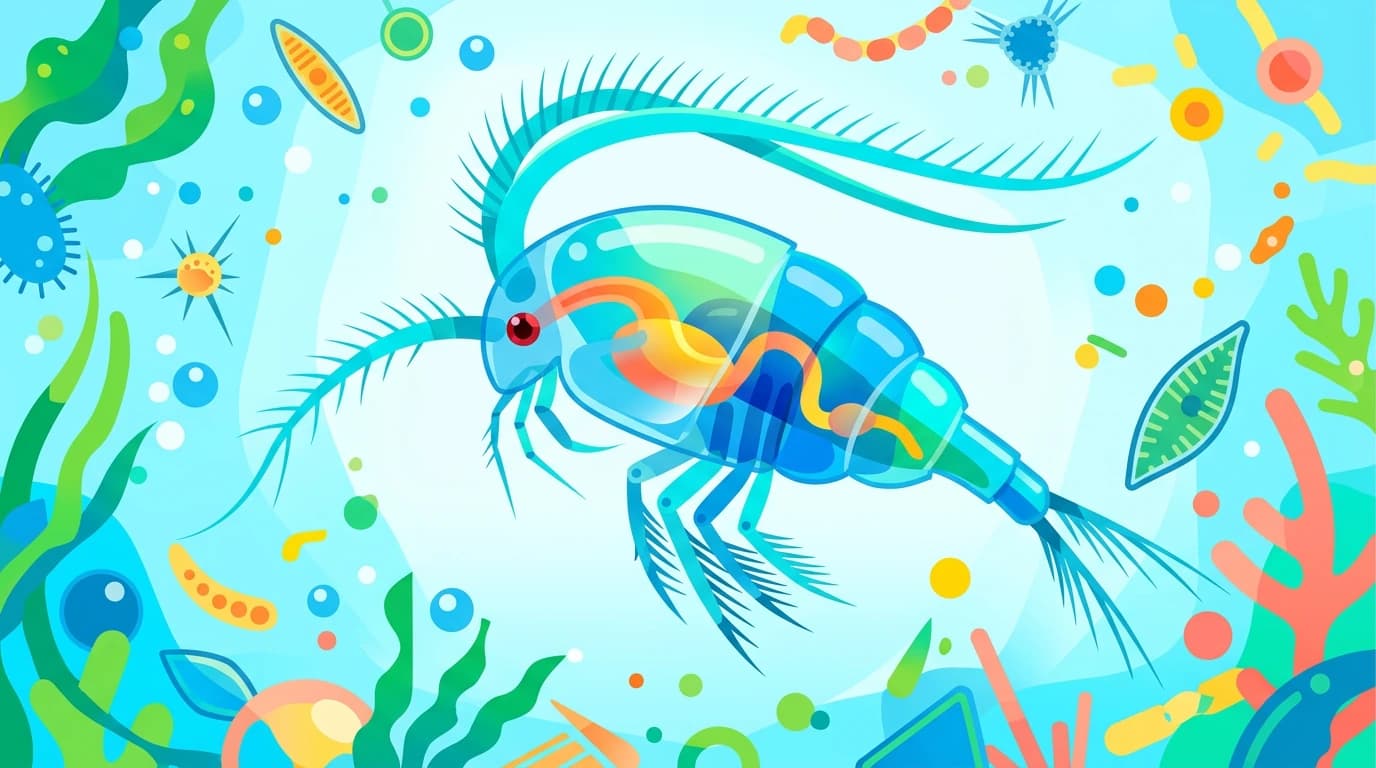
The team tested Acartia tonsa, a tiny marine copepod. They exposed these small creatures to plastics through the water or through food. For the food route, the plastics were first fed to microalgae, which the copepods then ate. By measuring the metal tags, the team tracked plastic moving into the animals and passing out in their faeces.
Every type of tested plastic was excreted. Yet the amount left inside varied greatly by polymer type. Palladium-doped polystyrene built up the most, followed by gold-doped polypropylene. Gold-tagged PVC and polyethylene were also tested. This shows that the chemical makeup of a plastic shapes how much of it stays trapped inside an animal.
Switching on stress genes
The way plastics got inside also mattered. Scientists looked at gene transcription, which is how cells turn DNA codes into working messages. Shifts in general stress genes and oxidative stress genes differed depending on the route. Copepods that ate contaminated algae did not respond the same way as those swimming in tainted water.
What we still do not know
The method raised fresh questions. Polystyrene tagged with gold or palladium changed gene activity. However, plain polystyrene without metal did not change those same genes. This suggests the metal tags or the tagging process itself might alter cell reactions.
Scientists also only tested a small set of stress genes. We do not yet know what exact traits cause polystyrene to build up faster, or how these gene shifts affect future generations of copepods.
Science words
- Nanoplastics
- Extremely small plastic particles measuring under one micrometre across.
- Acartia tonsa
- A species of tiny marine crustacean (copepod) used to study ocean toxicity.
- Metal-doped
- Artificially embedded with trace metals to make tiny particles detectable.
- Gene transcription
- The process by which cells copy DNA instructions into RNA messages.
- Oxidative stress genes
- Genes that switch on to protect cells from damage caused by reactive oxygen molecules.
Check it yourself
This story is based on a real research paper in Scientific Publication by Hafez, Yabar, González-Soto et al.. We write with AI help and check it against the paper, but the original is the final word.