How the Quantum Hall Superconductor Interface Will Power Future Computers
Source PublicationNature Communications
Primary AuthorsWang, Ahadi, Liu et al.
"Think of this interface like a specialised customs border, where incoming electrons are selectively converted into outgoing 'holes' (the absence of electrons) to keep the traffic of quantum information flowing without crashing."
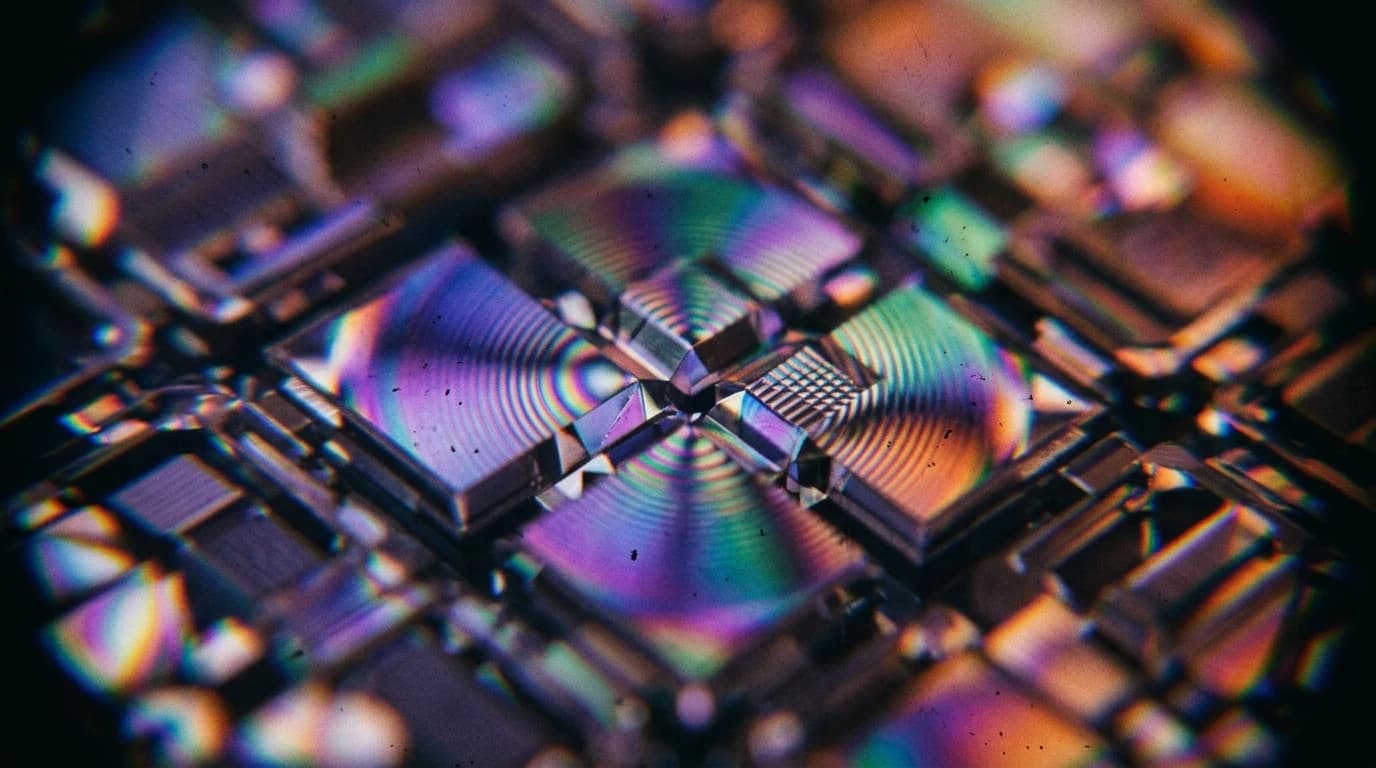
Imagine a world where quantum computers operate with perfect stability, simulation molecular structures in seconds to design new medicine. By the time you graduate from university, this vision may become reality through new quantum materials.
The Quantum Hall Superconductor Interface Explained
Current quantum systems are highly fragile, easily disrupted by external heat and magnetic noise. To solve this, researchers study how electrical currents flow along the boundaries of unique materials to protect information.
A key focus is the quantum Hall superconductor interface, where topological insulators meet superconducting materials. This boundary could host stable quasiparticles needed for fault-tolerant computing.
What Researchers Measured
Scientists coupled cadmium arsenide films with a superconducting niobium nitride strip. They observed specific oscillations in downstream resistance and thermoelectric responses under magnetic fields.
- The electrical resistance was dominated by electron-like carriers.
- The thermoelectric response alternated in sign.
- This alternating response suggests a new method to detect complex particle interactions.
Your Future in Quantum Engineering
These findings suggest that thermoelectric measurements can help engineers map quantum states. As this technology matures, the tech sector will need specialists to design these hybrid devices.
To join this field, focus your studies on physics, materials science, and programming languages like Python to model these quantum behaviours.