How the Drosophila Connectome Will Help You Organise the Next Generation of Biocomputers
Source PublicationopenRxiv
Primary AuthorsGross, Farah, Jana et al.
"If traditional neuroscience viewed the brain as a network of one-way streets, this discovery reveals a system filled with two-way roundabouts and hidden pedestrian shortcuts that keep information moving."
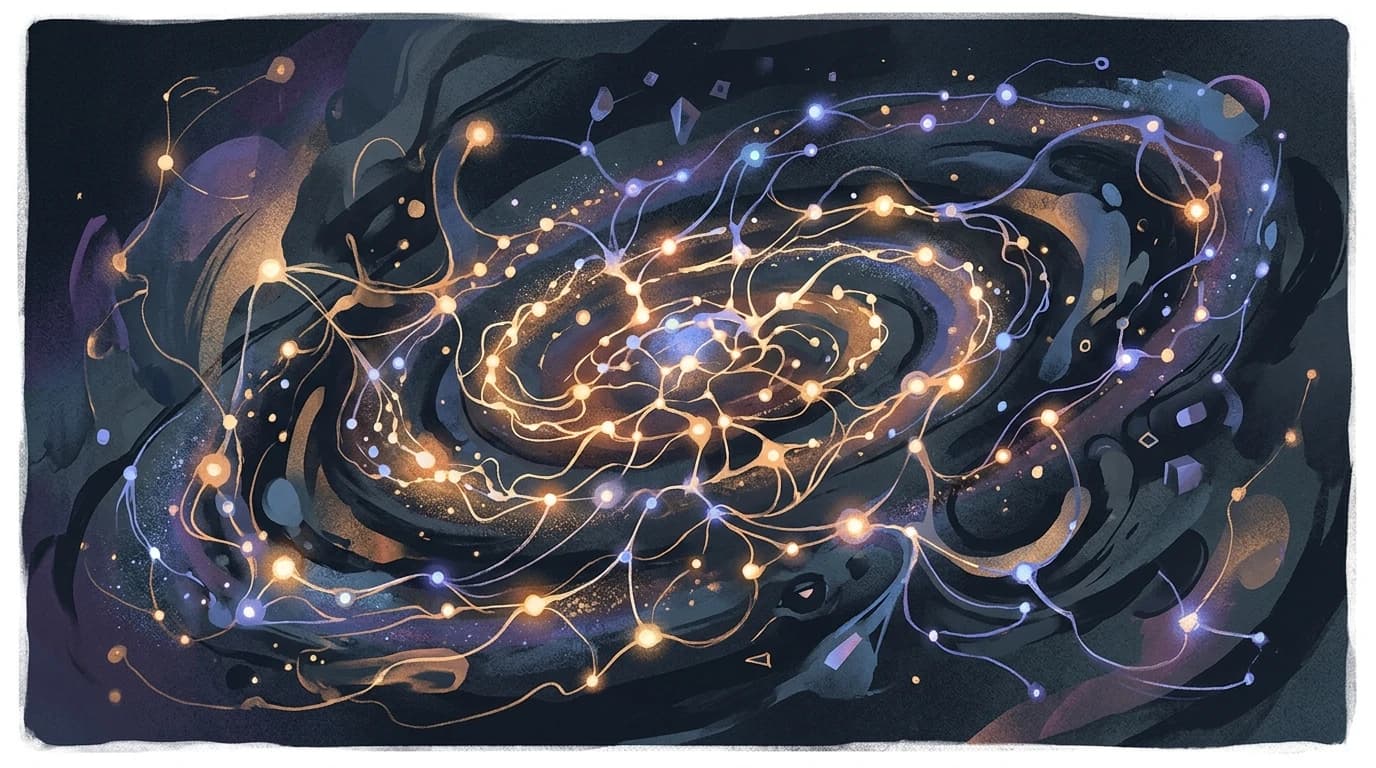
Imagine designing a computer chip that rewires itself or programming an artificial brain that learns with the efficiency of a living organism. By the time you graduate from university, engineers will likely use biological blueprints to build faster, more energy-efficient silicon.
This future relies on understanding the physical wiring of biological brains. Scientists recently mapped the complete Drosophila connectome, a digital directory of all 140,000 neurons and 80 million synapses inside a fruit fly's brain.
Traditionally, biology textbooks teach that neurons only send signals one way, from axons to dendrites. However, this study measured that one-third of these connections are non-canonical, meaning they send signals backwards or sideways, such as axon-to-axon. The researchers found that simpler neurons in visual areas prefer dendrite-based communication, whilst complex neurons in central brain regions rely on axon-to-axon links.
Engineering Circuits with the Drosophila Connectome
These structural rules suggest that complex decision-making in biological brains relies on these non-traditional, reciprocal loops. If you want to build the next generation of technology, this structural map provides the basic design principles. Future career paths will depend on this data:
- Neuromorphic engineering: designing silicon chips that mimic biological wiring.
- Computational neuroscience: building digital models of living brains.
- Bio-inspired robotics: creating machines that navigate using minimal power.
To build these technologies, you must learn to bridge biology and computer science. Master Python or study cellular biology now to prepare for this future.