How the brain works when we try to forget our own past
Scientists reviewing brain-scan studies found no clear consensus on how we choose to forget personal memories, and they suggest pairing two scanning tools to solve the puzzle.
Reading level
The full story with proper science words explained.
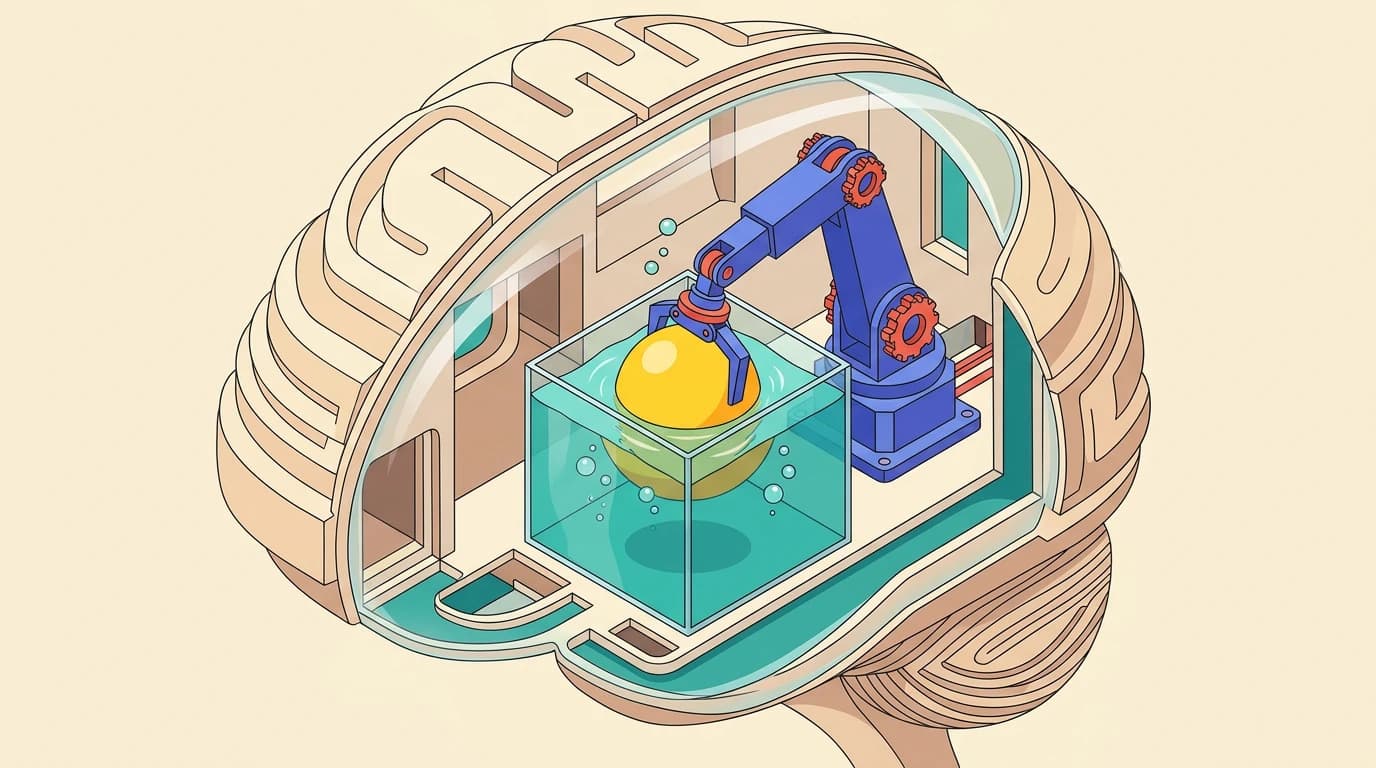
Pushing a ball under the surface
Try pushing a floating plastic ball under the surface of the bath. It takes real, continuous muscle work to hold it down, or it quickly bobs right back up. That constant push mirrors intentional forgetting, which is the conscious, voluntary effort to suppress or erase specific memories from the mind. When you try to block an autobiographical memory—a real event from your own past life—your brain tackles a complicated task.
A messy picture in the lab
Researchers want to see what brain circuits do when people push these thoughts away. A review of brain scans looked at past tests where people tried to wipe out personal life events. The findings showed a clear split in the field. Right now, there is no shared agreement about which brain parts actually manage this mental block.
Why one scanner is not enough
Part of the puzzle comes down to the scanners. Most past tests used just one tool at a time, leaving big blind spots. One tool, EEG, records electrical brain waves with superb timing down to tiny fractions of a second. Yet it cannot show exactly where deep inside the head those signals start. Another tool, fMRI, creates crisp maps that reveal exact spots of brain action, but it scans far too slowly to catch quick mental shifts.
Using them alone is like trying to track a sprinter with either a fast stopwatch or a sharp map, but never both at once. Researchers suggest an integrationist approach, which is a research method that combines multiple tools to capture both timing and location at once. Joining EEG and fMRI together helps fix past errors by showing both when and where the brain acts.
What we still need to learn
Even a joined scan setup brings built-in limits. Also, most past tests were quick, single-visit tasks. Real human recall changes across weeks, which calls for a longitudinal design—a study design that observes participants repeatedly over an extended period. For now, the exact neural bases behind this chosen forgetting remain unknown.
Science words
- Intentional forgetting
- The conscious, voluntary effort to suppress or erase specific memories from the mind.
- Autobiographical memory
- Memories related to a person's own past personal experiences and life events.
- EEG
- A tool that tracks brain activity with high precision in timing.
- fMRI
- A brain scanning technique that maps brain activity with high spatial detail.
- Integrationist approach
- A research method that combines multiple tools to capture both timing and location at once.
- Longitudinal design
- A study design that observes participants repeatedly over an extended period.
Check it yourself
This story is based on a real research paper in Scientific Publication by Aggarwal, Smith. We write with AI help and check it against the paper, but the original is the final word.