How Texas Cities Rewrite the Sky: The Hidden Link Between Urbanization and Precipitation
Source PublicationNature
Primary AuthorsSui, Nielsen-Gammon, Yang et al.
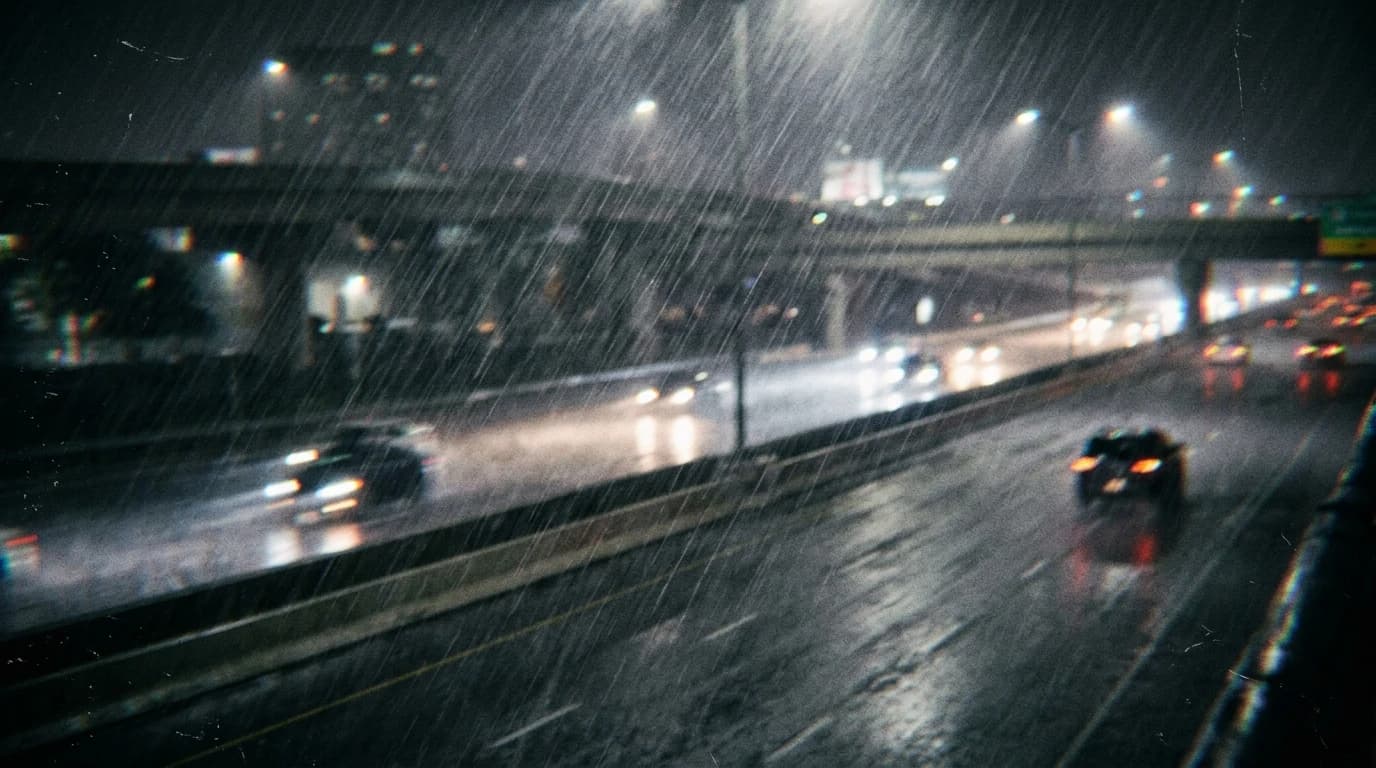
As night falls over Houston, the concrete city centre radiates trapped heat into the humid Texas air. Above the skyscrapers, invisible thermal currents collide with incoming clouds, silently rewriting the rules of the sky. For decades, meteorologists struggled to explain why some cities seemed to summon torrential downpours while others left rain clouds withered.
These results were observed under controlled laboratory conditions, so real-world performance may differ.
To resolve this mystery, researchers analysed three-dimensional radar data from 1995 to 2017, tracking more than 40,000 warm-season storms across Dallas, Austin, San Antonio, and Houston. Rather than finding a simple wet-or-dry effect, they discovered that cities selectively alter storms based on their scale and dynamics.
- Isolated storms: Driven by atmospheric instability, these single-cell storms increased in frequency by 7% to 31% over cities, especially at night.
- Cold fronts: These systems weakened by 16% to 28% as they encountered urban friction and heat.
- Warm fronts: These storms showed enhanced reflectivity, suggesting heavier rainfall.
- Tropical systems: While frequency remained unchanged, high-reflectivity rain cells shifted to lower altitudes over concrete basins.
The Future of Urbanization and Precipitation
This research suggests that city planners can no longer rely on outdated, generalised weather models. By understanding how specific urban structures modify different storm types, engineers may be able to design more resilient drainage systems to protect vulnerable neighbourhoods from localised flooding.