How smart gum disease hydrogels could transform dental healing
A review of materials chemistry explores how chitosan hydrogels can stick inside infected gum pockets to release medicines and encourage tissue repair on demand.
Reading level
The full story with proper science words explained.
A stubborn oral battle
Severe gum disease destroys the bone and tissue that hold teeth in place. This chronic condition, called periodontitis, causes tooth loss if left untreated. Dentists typically clean below the gumline using scaling and root planing. They may also prescribe antibiotics. Even so, these standard tools have clear limits. Pills can cause side effects across the whole body. Saliva washes mouth rinses away before they finish their work. Furthermore, basic cleaning does not help lost bone or soft tissue regrow.
Gels that sense danger
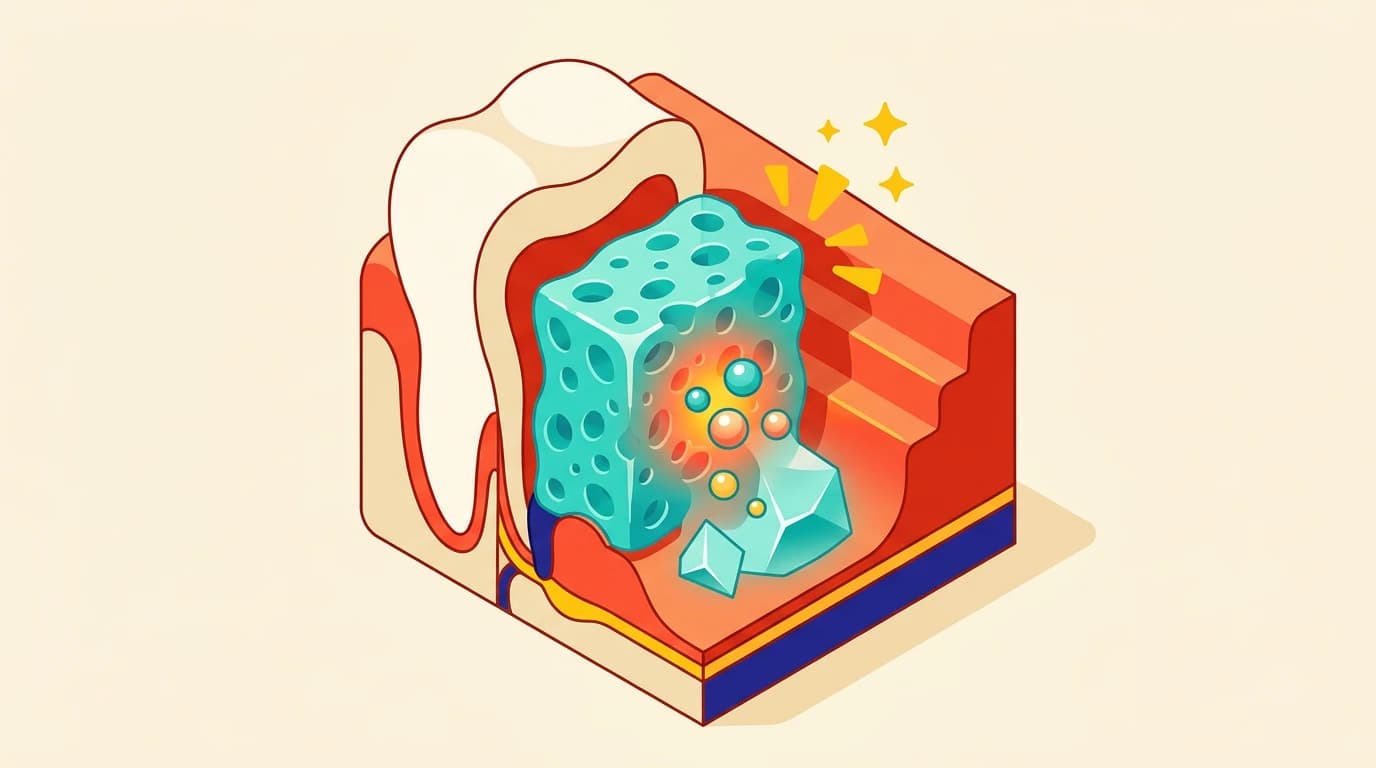
Researchers are developing smart gum disease hydrogels made from chitosan, a natural polymer that breaks down safely in the body. Chitosan is mucoadhesive, which means it naturally clings to wet, slimy surfaces. Because of this stickiness, it stays inside deep pockets between the tooth and gum.
These water-swollen networks can hold many helpful tools. Chemists can pack them with antibiotics, plant extracts, tiny nanoparticles, and signals that prompt new tissue growth. Even better, these gels are stimuli-responsive, meaning they change shape or open up when they sense specific local shifts. When harmful bacteria multiply, the chemistry inside the gum changes. Levels of heat, acidity, bacterial enzymes, and reactive oxygen species rise. These reactive oxygen species are unstable, oxygen-packed molecules that harm normal cells when levels climb too high. Once the gel senses these warning signs, it opens its mesh and releases its medical cargo directly where the damage occurs.
What we still do not know
Important questions remain before these treatments reach dental clinics. This research paper is a broad review of chemical designs rather than a study on human patients. Making sure a gel releases drugs in a steady, predictable order inside a wet mouth is very difficult. Researchers do not yet know how multi-trigger gels will work in people. They also need to ensure that clearing harmful germs leaves good mouth bacteria unharmed.
Science words
- Periodontitis
- A chronic inflammatory gum disease driven by bacteria that destroys tooth-supporting structures and causes tooth loss.
- Scaling and root planing
- A deep-cleaning dental procedure that scrapes plaque and tartar from above and below the gumline.
- Mucoadhesive
- The ability of a material to adhere to wet mucous membranes.
- Stimuli-responsive
- Materials designed to alter their structure or release their payload when exposed to specific triggers like pH or enzymes.
- Reactive oxygen species (ROS)
- Unstable, oxygen-containing molecules that cause tissue damage and oxidative stress at high levels.
Check it yourself
This story is based on a real research paper in Chemistry & Biodiversity by Kumar, Nandish, Rao et al. We write with AI help and check it against the paper, but the original is the final word.