How Scientists Organise Living Cells to Master Protein Crystallization
Source PublicationNature Nanotechnology
Primary AuthorsYang, Lin, Li et al.
"It is like building a microscopic Lego castle inside a living cell, where every brick is programmed to release a specific medicine at just the right time."
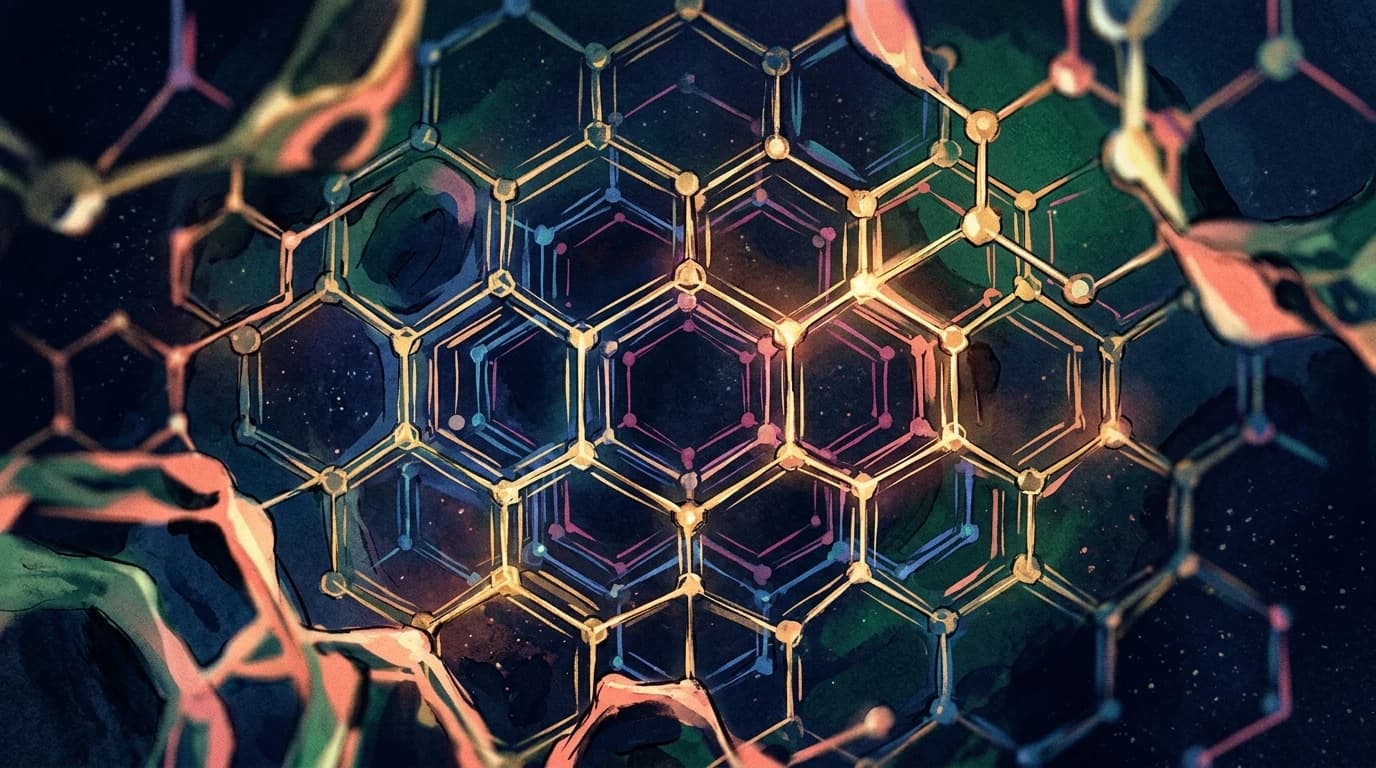
A Microscopic 3D Printer Inside Cells
Did you know that crystals aren't just shiny rocks you find in the earth? Your own cells can grow them, and scientists just figured out how to programme them like microscopic 3D printers.
These results were observed under controlled laboratory conditions, so real-world performance may differ.
Normally, protein crystals grow randomly, making them hard to use. However, researchers have developed a way to control this process, allowing them to organise structures at a microscopic scale.
Mastering Protein Crystallization
By using a new cellular platform, the team managed to direct protein crystallization inside living cells. They combined genetic tags and rapid chemical reactions to lock different target materials into precise positions within the growing crystal.
Using this method, the researchers achieved several key milestones:
- Controlled the speed and pattern of crystal growth in real time.
- Organised cargo materials with a precision of 100 nanometres.
- Released different trapped molecules in a specific, timed sequence.
What This Means for Medicine
As a test, the team loaded these programmed crystals with growth factors. When placed in cell cultures, the crystals released their cargo in waves, successfully triggering specific cellular communication patterns.
This platform suggests a new way to manufacture complex materials. In the future, these programmable crystals could help deliver drugs to specific organs or act as tiny catalysts for bio-manufacturing.