How Nonviral RNA Delivery Could Change Medicine: A Guide for Young Scientists
Source PublicationMacromolecular Rapid Communications
Primary AuthorsShao, Chen, Liu
"Imagine trying to post a fragile message written on tissue paper in the rain. Nonviral RNA delivery is like building a tiny, waterproof, magnetic delivery van that protects the message until it reaches exactly the right letterbox."
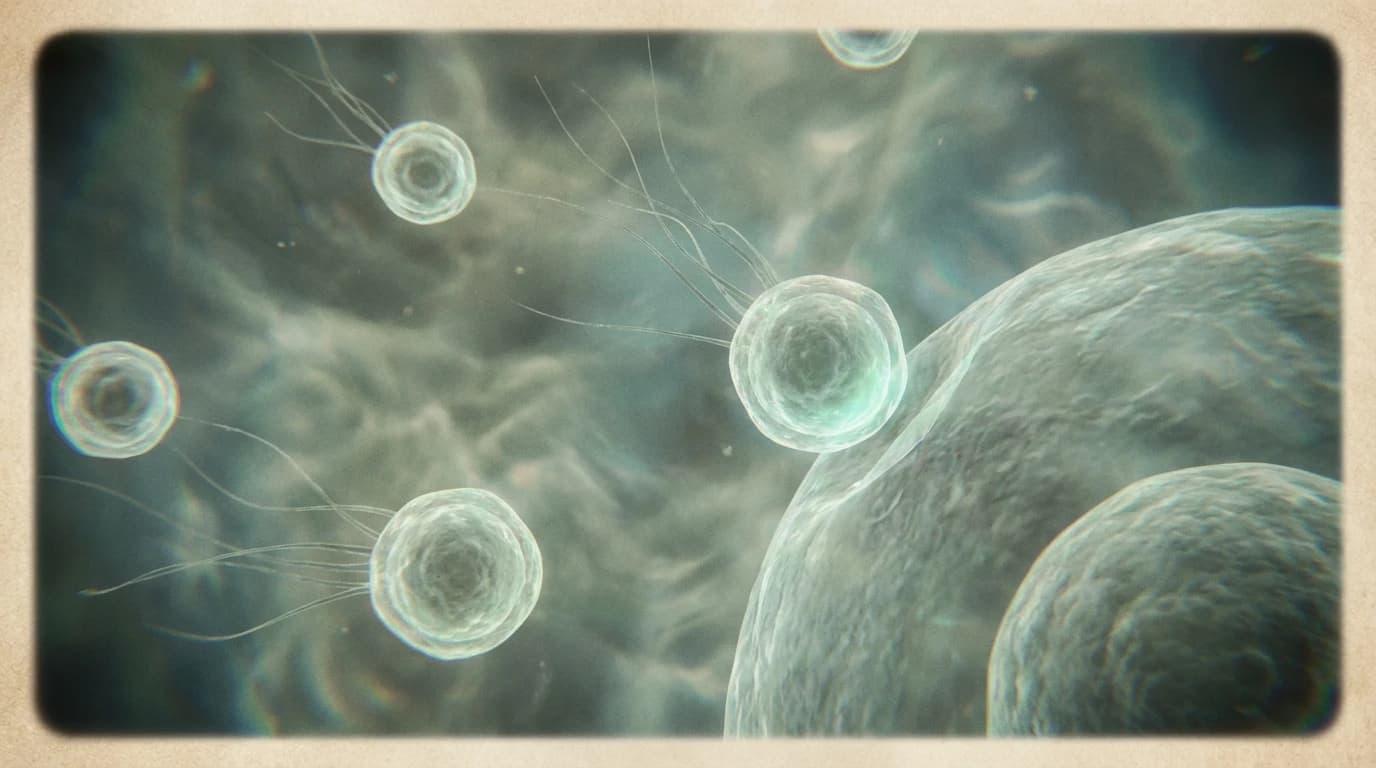
Have you ever tried to post a very fragile parcel? If you just throw a delicate glass ornament into a postbox, it will probably break before it reaches its destination. Our bodies face a similar problem when trying to send important medical instructions to our cells.
These instructions are written on a molecule called RNA. RNA tells our cells how to build proteins. These proteins can fight off viruses or fix diseases. But RNA is incredibly fragile. If doctors inject it straight into the blood, our body's natural defences will destroy it immediately. It needs a protective delivery van.
The Secret to Nonviral RNA Delivery
To solve this problem, scientists use tiny protective bubbles. Recently, researchers have been looking closely at nonviral RNA delivery. This means they are making artificial delivery vans instead of using empty viruses to carry the instructions.
A recent scientific paper looked back at older methods of making these tiny vans using special plastics called polymers and fats called lipids. Today, doctors mostly use fat-based bubbles called lipid nanoparticles. These were famous for delivering the mRNA vaccines. They are safe and easy to manufacture. However, scientists think that looking at older polymer designs could help them build even better delivery systems. They want to understand exactly how these materials organise themselves on a microscopic level.
How It Works: Opposites Attract
How do you pack a long, stringy piece of RNA into a tiny ball? It comes down to basic science.
RNA has a negative electrical charge. So, scientists use materials with a positive charge. Just like the opposite ends of two magnets, the positive materials and the negative RNA pull towards each other. They snap together. This action folds the RNA up tightly into a tiny, neat package.
This process creates a microscopic delivery van. The van travels safely through the body, slips inside a cell, and then falls apart to release the RNA message. Once the package is open, the cell reads the instructions and starts doing its job.
Building Better Medicines
The researchers evaluated how the shape, charge, and breakability of these materials affect their behaviour inside the body. They looked at how these tiny particles form and how they release their cargo once inside the cell. They found that changing the physical structure of the delivery van changes how well it works. For example, some materials break down quickly, while others hold on tightly to the RNA.
This review suggests that blending old ideas with new technology might help us design smarter medicines. By tweaking the chemistry, scientists could direct RNA to very specific parts of the body, like the liver or the lungs. It shows that sometimes, looking at past ideas helps us build a healthier future.