How mRNA Antiviral Therapeutics Could Defend Against Future Outbreaks
Source PublicationCell
Primary AuthorsLi, Yan, Wang et al.
"A smart biological tripwire installed inside host cells that detonates only when an invading viral enzyme attempts to cut through it."
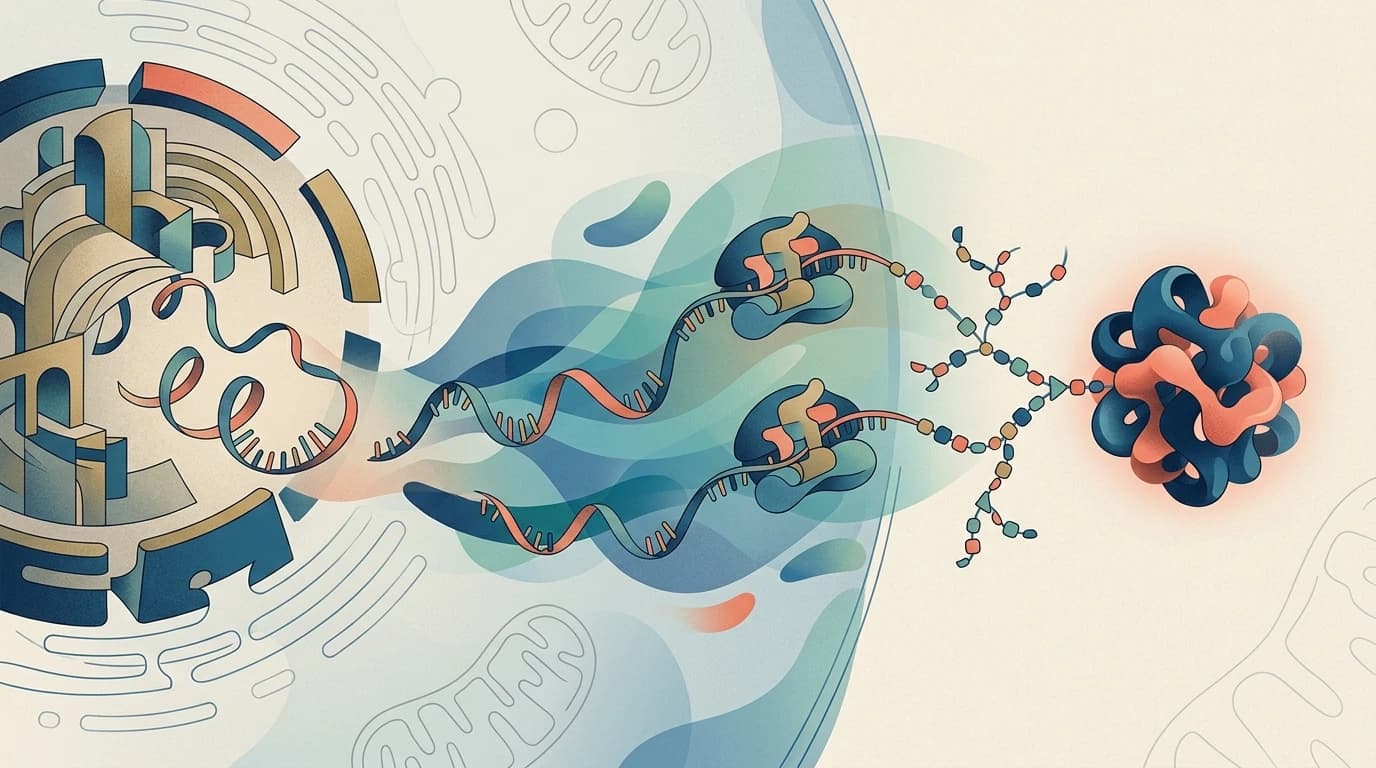
By the time you graduate from university, doctors might treat viral outbreaks not with broad remedies, but by programming host cells to destroy themselves the instant a pathogen enters.
These results were observed under controlled laboratory conditions, so real-world performance may differ.
Current treatments often struggle to keep pace with rapidly mutating pathogens. Developing adaptable mRNA antiviral therapeutics offers a method to target viral enzymes directly inside infected human cells.
Designing mRNA Antiviral Therapeutics with AI
Researchers engineered a human protein called gasdermin-D to function as a selective biological sensor. They inserted specific cleavage motifs that only target viral enzymes, known as proteases, can cut. When a virus invades, its own protease cuts the protein, triggering controlled cell rupture that halts viral replication.
In animal models infected with Hepatitis A, lipid nanoparticles delivered the engineered mRNA, stopping viral replication and protecting liver tissue. The team also demonstrated the platform against Zika virus and used generative artificial intelligence frameworks to design custom cleavage sites specifically for SARS-CoV-2, successfully neutralising the viruses in cell cultures. While these results are currently limited to early preclinical models, the findings show significant potential.
Future Impact and Career Paths
This approach destroys infected cells while signalling nearby immune cells to mount a broader response. If clinical trials confirm safety and efficacy, bioinformaticians will routinely design bespoke genetic circuits during future health emergencies.
Creating these biological tools requires a dual understanding of software engineering and molecular biology. Learning computational biology or bio-coding today could allow you to write the genetic software that neutralises tomorrow's biological threats.