How modern life drives gut bacteria evolution to change their genetic toolkits
Living in an industrialised society is linked to gut microbes swapping genes and expanding their protein toolkits to adapt to new environments.
Reading level
The full story with proper science words explained.
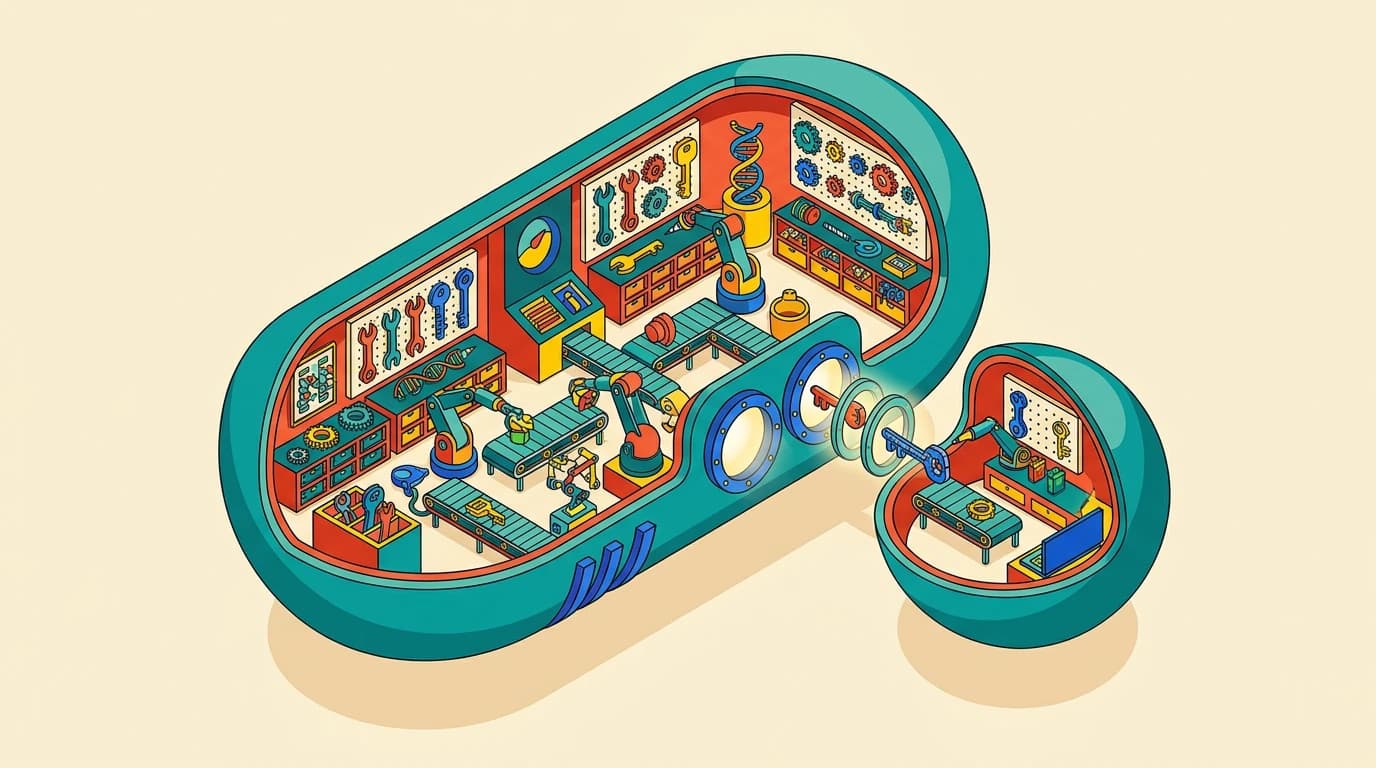
Trading tools in a modern world
Inside our guts, countless single-celled microbes adapt every day to human habits. New research on gut bacteria evolution suggests that modern living changes their DNA. Think of each microbe as a worker in a busy shop. To handle new tasks, it borrows fresh tools from its neighbours instead of building them from scratch.
Sharper genetic views
To test this pattern, scientists gathered gut bugs from people living in diverse places and ways of life. They examined isolate genomes, which are full genetic blueprints grown from single cell colonies. They matched these against metagenome-assembled genomes (MAGs), which computers piece together from mixed community samples. Culturing pure colonies proved essential because it picked up far more functional parts and gene swaps that mixed samples missed.
Microbes from industrialised hosts had a bigger proteome size, meaning their DNA can make a wider range of proteins. These strains also showed higher pangenome fluidity, which measures how fast gene content turns over between strains of the same species. Much of this gain came from recent horizontal gene transfer (HGT), where bugs pass genetic code side-to-side to nearby cells rather than down to offspring.
Shared survival tactics
Different bug species also showed convergent evolution, hitting on the same genetic tricks independently to survive modern host life. Across separate lineages, the microbes adapted their central fuel use, boosted their stress defences, and altered their outer cell walls.
These discoveries show that modern city living shapes microbial life in systematic ways. Understanding these shifts helps us track how fast changing environments guide DNA adaptation. Even so, the study did not test whether these genetic shifts alter human health or raise disease risks. The trends also depend on which human groups were sampled, leaving the long-term health effects unknown.
Science words
- isolate genomes
- Complete genetic blueprints read from single colonies grown in pure culture.
- metagenome-assembled genomes (MAGs)
- Genomes pieced together with computers from mixed environmental DNA samples.
- proteome size
- The total number and variety of distinct proteins an organism can produce.
- pangenome fluidity
- The speed at which gene content shifts and turns over among different strains of the same species.
- horizontal gene transfer (HGT)
- The direct sharing of genetic code between neighbouring microbes rather than passing it from parent to offspring.
- convergent evolution
- Different species independently developing the same traits to solve the same survival challenges.
Check it yourself
This story is based on a real research paper in Cell by Rühlemann, Ma, Szánthó et al. We write with AI help and check it against the paper, but the original is the final word.